
Conversations Across Japan: The Story Behind Nitto Jozo
In August, I had the opportunity to visit Hekinan, a city in Aichi Prefecture’s Mikawa region, and meet some of the people who live and work there. I wanted to learn more about the region’s food culture and the businesses behind its local goods. While many of these products have a long history, they are often less well known outside the area.
One of the people I met was Yoichi Ninagawa, president of Nitto Jozo. The company is known for its white soy sauce and white tamari. Before visiting Mikawa, I knew relatively little about this particular seasoning. I came away with a better understanding of not only the product itself, but also the work involved in preserving traditional Japanese food culture.
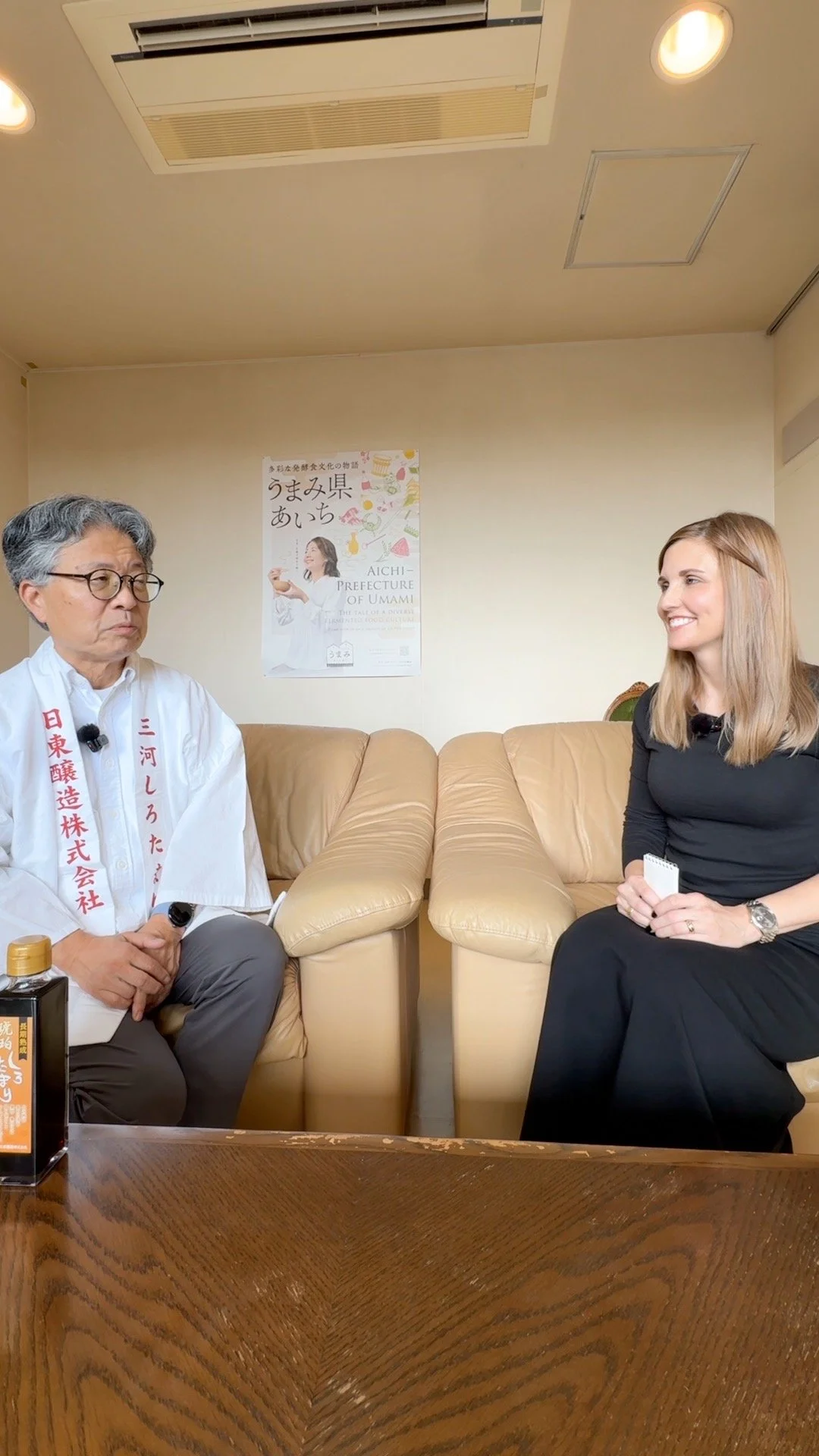
The History Behind Nitto Jozo
Nitto Jozo’s history goes back around 90 years, although the brewery itself is more than 110 years old. It began as a white soy sauce brewery established by Suekichi Kamiya in Hekinan. Since the Kamiya family did not have an heir, President Ninagawa’s grandfather took over the business and began operating it under the name Nitto Jozo. The business has since passed from his grandfather to his father and then to him.
When I asked about the company’s name, he explained that his grandfather had originally operated a factory in Osaka called Nitto Sangyo that produced soap. He was originally from Aichi and returned right before the war. When his grandfather took over the white soy sauce brewery, he changed the name to Nitto Jozo.
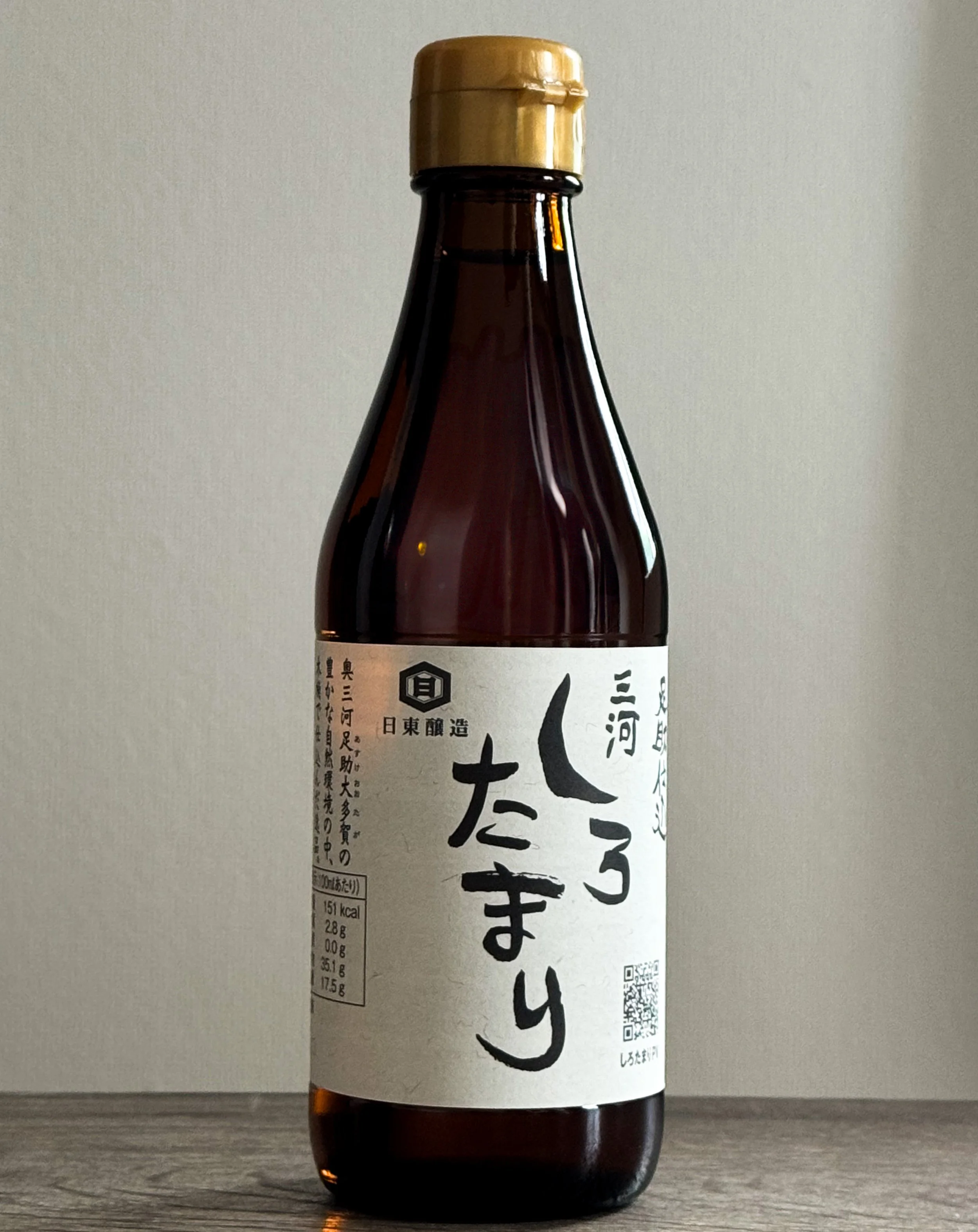
Today, Nitto Jozo is best known for its white tamari (しろたまり), a product that developed from the family’s experience making white soy sauce. They now have a second location in Asuke near Toyota City. To make use of an existing building and give it a new purpose, they purchased a closed school and renovated it to be a factory. The local people often stop by when President Ninagawa is visiting the factory to talk with him and share foods from their gardens. They regularly ask him over for tea as well. This goes to show you that the company is not only a part of the culture and community in Hekinan but is also involved in Asuke too.
What is White Tamari (しろたまり)?
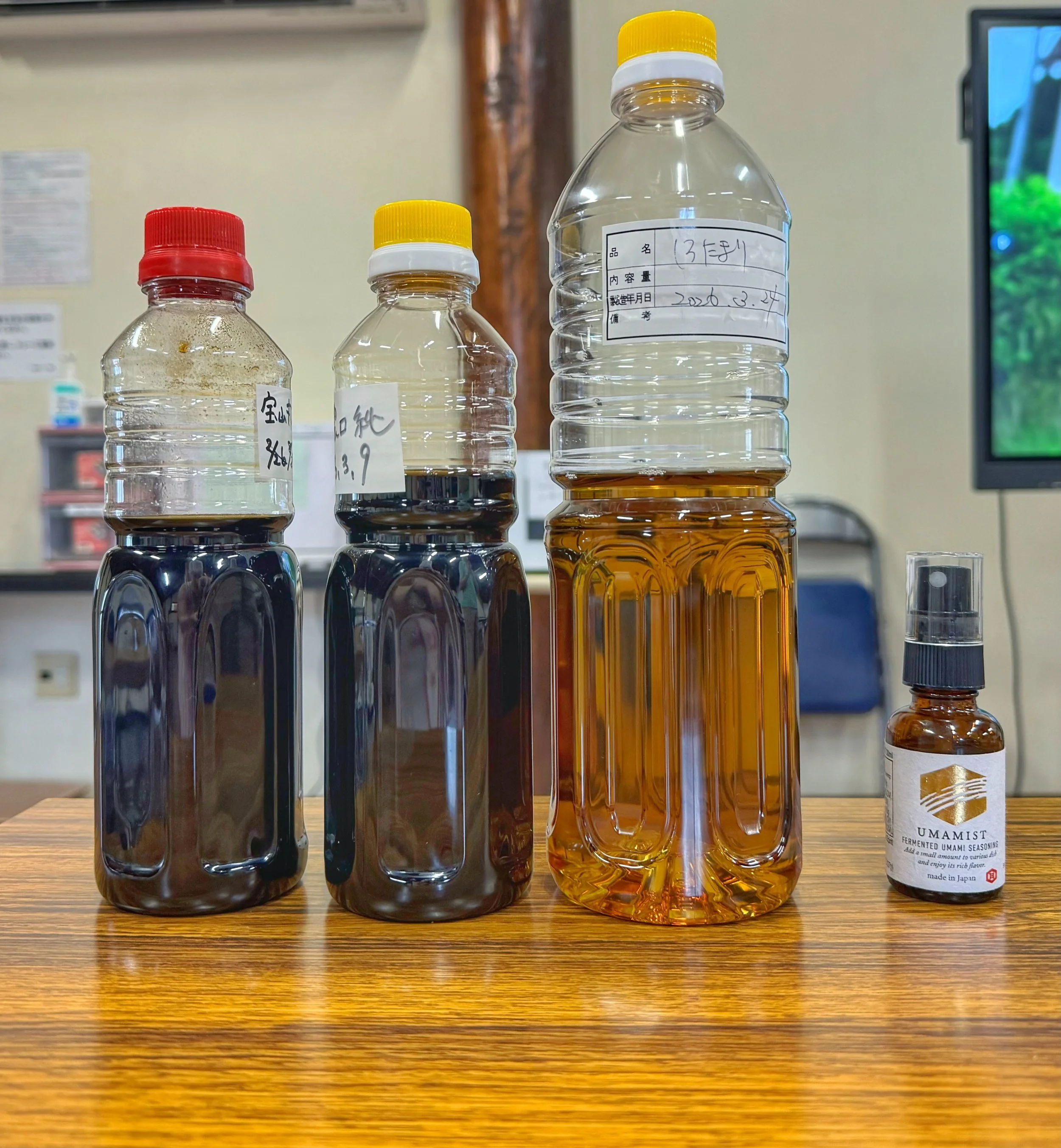
White soy sauce has a distinctive appearance, but maintaining its light color comes with some compromises. According to President Ninagawa, the salt content needs to be relatively high, and the amount of soybeans used needs to be reduced considerably. Soybeans are an important source of the umami found in soy sauce. Using fewer soybeans helps maintain the light color, but it also means that white soy sauce has relatively little umami and that its saltiness can be quite noticeable. His father wanted to develop a more flavorful white soy sauce that was less salty. A little over 30 years ago, he began working on what eventually became white tamari.
As he explained, white tamari has more umami and a natural sweetness compared with ordinary white soy sauce. Its saltiness feels lighter. The way it is produced contributes to these differences. White tamari uses a more concentrated mash with twice the usual amount of wheat koji. This results in a smaller amount of finished product but a more concentrated flavor.
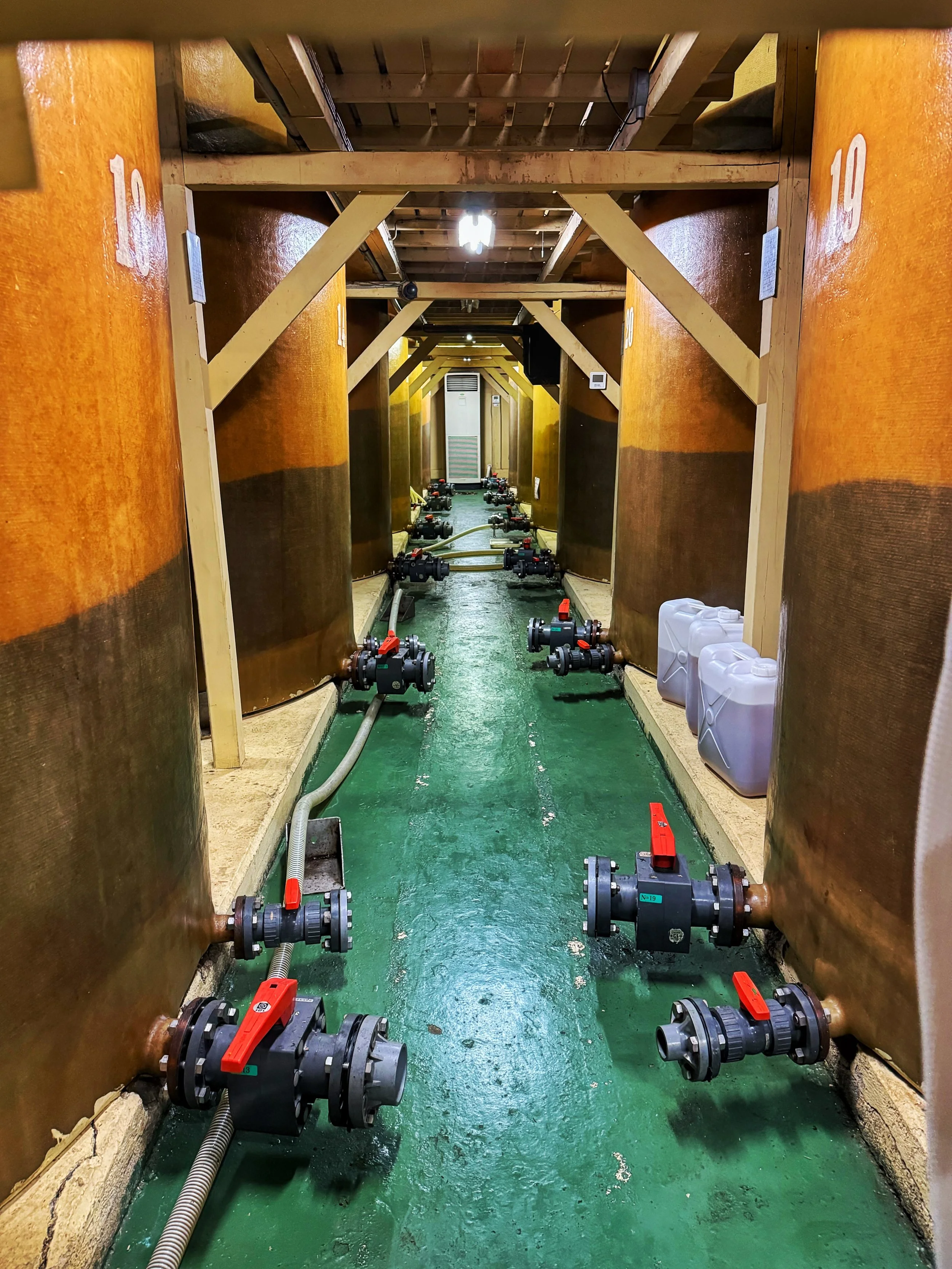
Introducing a New Product to a Traditional Market
Developing white tamari was one thing, but getting people to buy it was another. While the development of Nitto Jozo’s white tamari took years to perfect, they also had to think about marketing. White soy sauce has been made by several companies in the region for over 100 years, but white tamari was relatively unfamiliar to consumers. Nitto Jozo and other companies producing white tamari had to introduce a product that many people had never heard of before.
President Ninagawa explained that the company knew it would probably take time for white tamari to find an audience. Rather than giving up, they decided to continue making it and gradually introduce it to more people. When production began, the company used five small fermentation barrels. Today, it has 22 large barrels.
That might not sound like a dramatic expansion, but it represents years of work to build awareness of a seasoning that was not already well established in the market. I think this is one of the more interesting challenges facing traditional food producers. Having a good product does not necessarily mean people will know about it, understand how to use it, or be willing to try it. Sometimes, educating consumers takes just as much work as making the product in the first place. For smaller regional businesses, that can be a long process and require many resources.
Preserving Tradition While Adapting to Change
One of the most memorable parts of this conversation was his perspective on tradition. When we discussed traditional food production, he explained that there are some things that should not change. White soy sauce has a history of around 200 years, and certain elements of its production have remained consistent. Using wheat as a main ingredient is one example he mentioned.
The same applies to the basic principles of making koji. The tools and equipment have changed over time with more mechanization replacing some of the work once done entirely by hand. However, the underlying principles of the process should remain the same. At the same time, he does not believe that traditional foods should remain unchanged in every respect.
He brought up umeboshi as an example. The pickled plums commonly sold in supermarkets today are generally less salty and sour than those made in the past. Traditionally, umeboshi were often very salty and sour. This made them difficult to eat without something like a bowl of rice. As consumers’ preferences changed, the salt content and acidity were reduced, making them easier to eat.
Tofu was another example he mentioned. He explained that the tofu people eat today differs from the version made long ago. His point was that traditional foods need to respond to changing tastes while retaining the elements that make them what they are.
I found this perspective particularly relevant when thinking about the future of Japan’s regional food culture. Many traditional businesses face the challenge of passing their knowledge on to the younger generations while finding ways to remain sustainable. Keeping everything exactly as it was may not always be the answer, but neither is changing everything to follow the latest trends. Finding the right balance seems to be an important part of keeping these traditions alive without changing them too much.
What to Eat in Mikawa
Of course, no conversation about regional food and traditions would be complete without discussing what to eat. When I asked what he would recommend to visitors from overseas, his first suggestion was miso katsu. It is a fried pork cutlet either dipped in, drizzled with, or served with a rich miso sauce.
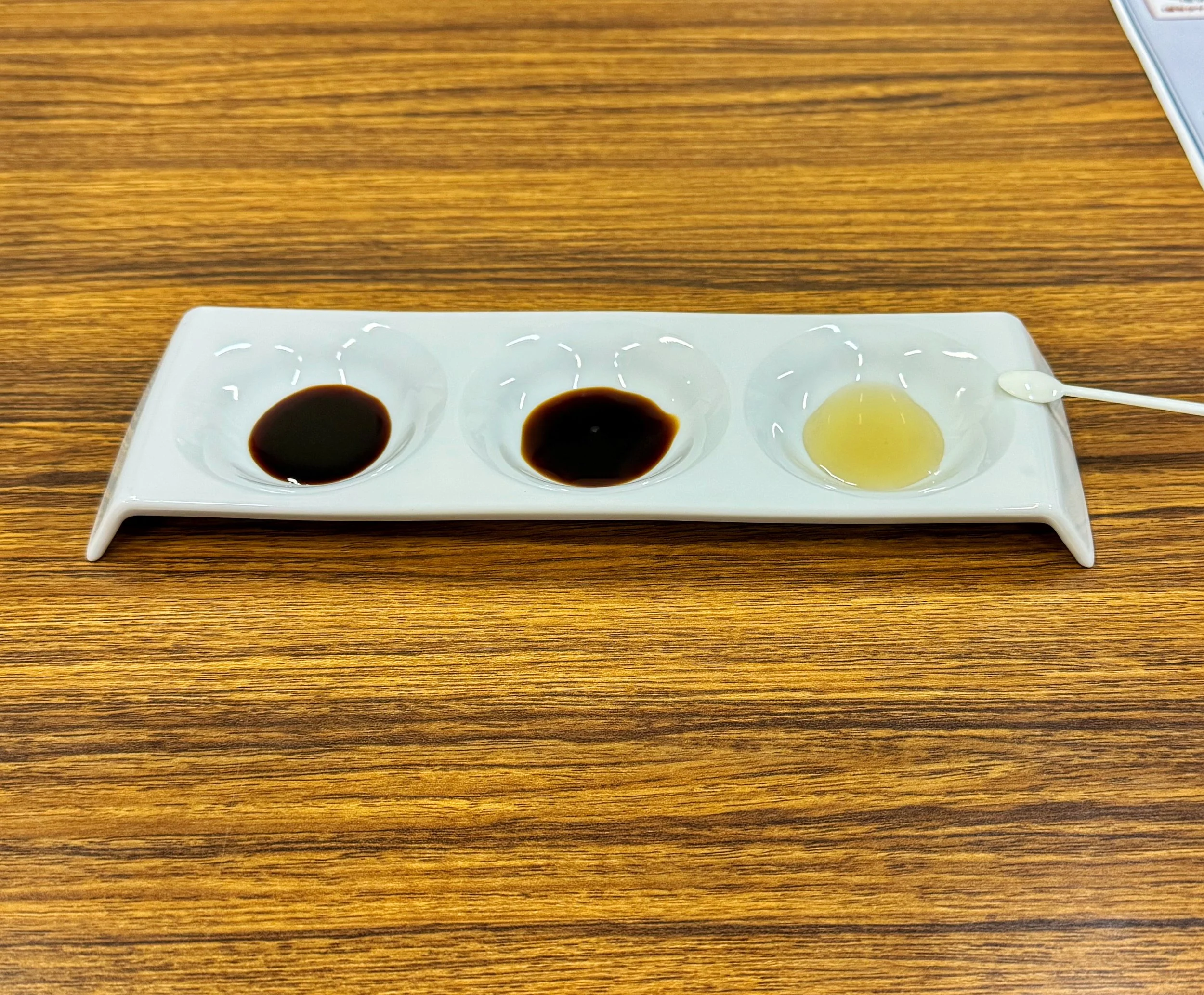
His second recommendation was to try various types of sashimi with different soy sauces. Rather than using the same soy sauce for every kind of fish, he suggested choosing one to complement the flavor of each selection. For example, he recommended tamari with tuna and white tamari with uni (sea urchin). The sweetness of the uni, he explained, becomes even more noticeable when paired with the white tamari. For fugu sashimi, he suggested using ponzu. It is a simple idea, but one that changes the way you think about something as familiar as dipping sashimi in soy sauce.
Finally, President Ninagawa recommended salt-boiled peanuts as a snack to enjoy with beer. When he mentioned peanuts, I told him that they are a popular snack in Alabama, where I grew up. People eat them roasted or boiled, and some people even put roasted peanuts in Coca-Cola. I admitted that the last option is not really for me even though it is popular. He seemed surprised by that, and it was a fun moment in our conversation. It reminded me that food can connect people across different cultures and backgrounds even when the traditions and ways of eating things might be different.
These recommendations are a good starting point for anyone interested in exploring Mikawa’s food culture. They show that learning about a regional specialty does not have to mean simply buying something. It is also an opportunity to discover different ways to enjoy foods you already know.
Final Thoughts
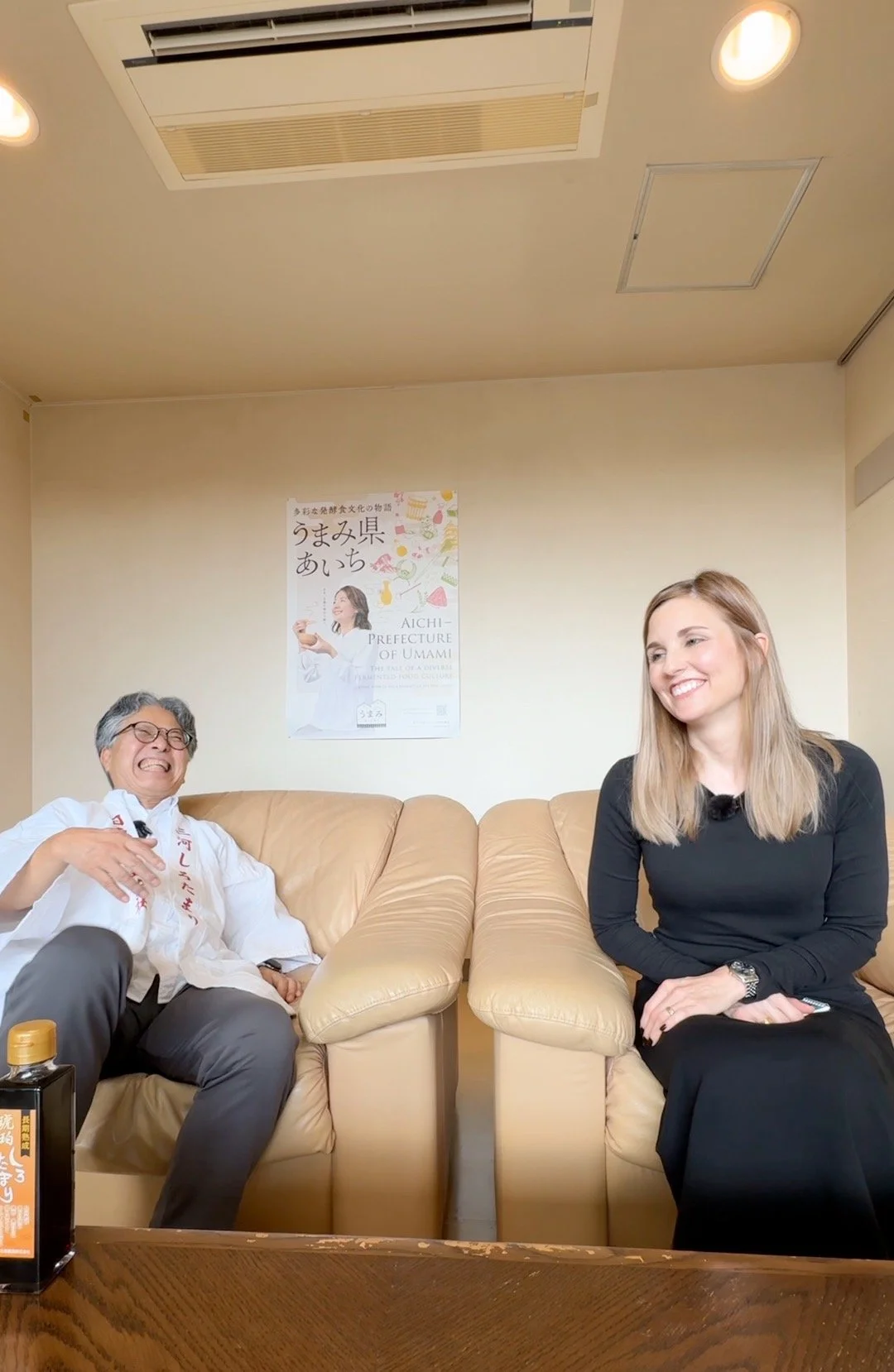
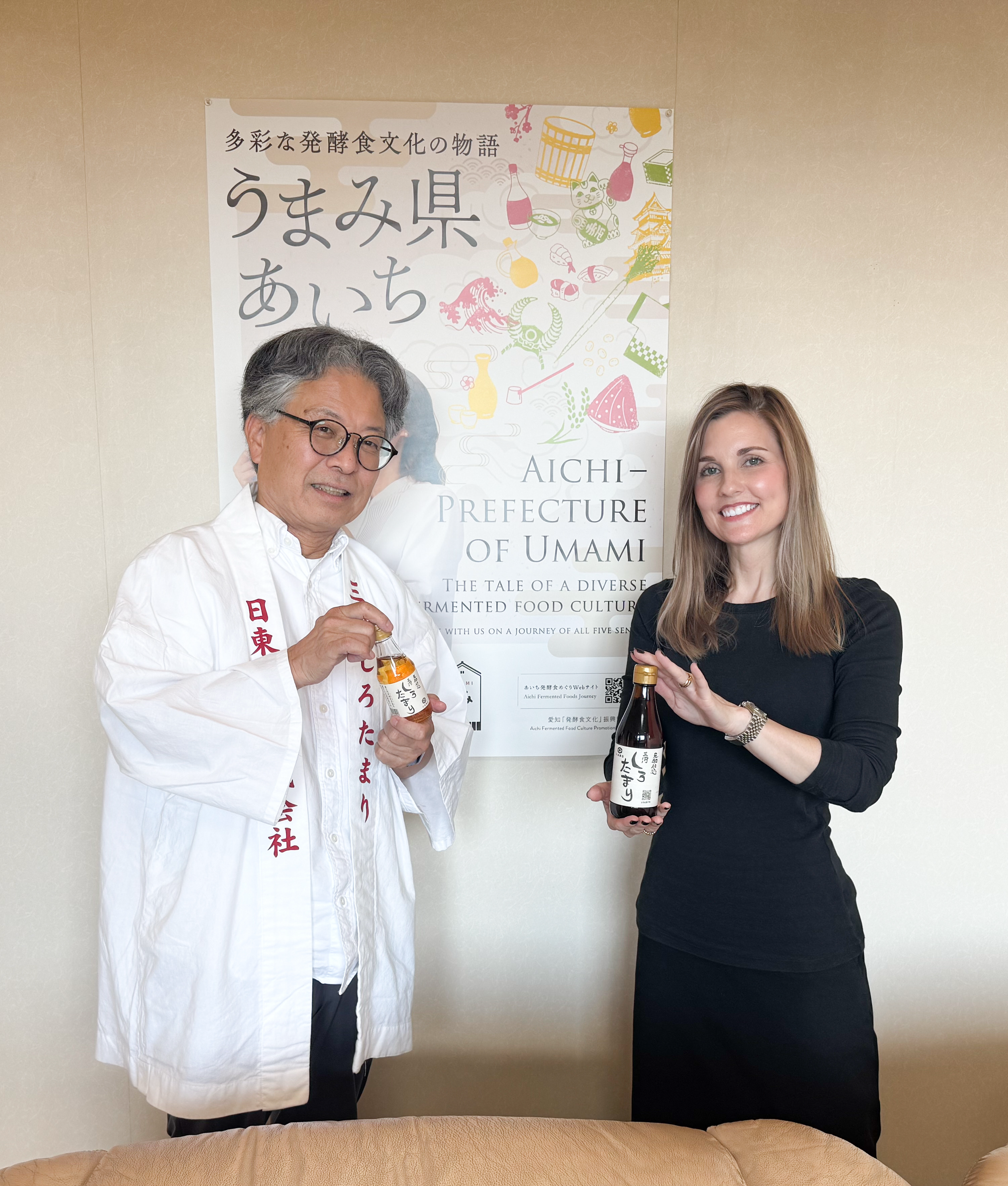
When I first met President Ninagawa, I was struck by his knowledge of Japanese cuisine and the region’s food culture as well as his charismatic personality. I had been a little nervous about conducting an interview entirely in Japanese and on video, but the conversation quickly felt like I was chatting with an old friend.
After the interview, we continued talking about Mikawa’s local specialties and the people working to preserve them. It was a reminder that there is often much more to a product than what you see on a label or store shelf. White tamari is one example. The story involves a brewery with more than a century of history, an effort to develop a new product, and the persistence required to introduce it to consumers. It reflects a wider question about how traditional Japanese foods can continue to be enjoyed as people’s tastes and lifestyles change.
I hope to keep sharing stories like this from Mikawa and other parts of Japan. Traveling around the country has given me many opportunities to discover local foods, crafts, and businesses, but meeting the people behind them adds another dimension to the experience.
If you would like to learn more about Nitto Jozo or find out about upcoming events and releases, you can follow the company on Instagram. When visiting Mikawa, consider trying some of the region’s local specialties. You might discover new foods and gain a better understanding of the people and traditions behind them.
