
Discovering Mikawa: Food, Culture, and the People of Hekinan City
“People are generally proud of their food. A willingness to eat and drink with people without fear and prejudice... they open up to you in ways that somebody visiting who is driven by a story may not get.”— Anthony Bourdain, A Cook's Tour: In Search of the Perfect Meal
Kyoto, Tokyo, or Osaka are usually the first places that come to mind when people think about Japanese food customs. However, some of Japan’s most distinctive foods and traditional goods come from Aichi Prefecture, a much less internationally known part of the country.
Aichi is perhaps best known for Toyota, Nagoya, and its role in Japanese history. Historians may recognize the region as the birthplace of Tokugawa Ieyasu, the shogun who played a central role in the unification of Japan. Yet, there is another side of Aichi that deserves more attention. The food and traditional industries of Mikawa play a larger role in Japanese cuisine and culture than many may realize.
Aichi has long played an important role in transporting goods between western and eastern Japan. Its location near Ise Bay made it an important shipping area. Aichi’s fertile lands, climate, and proximity to both mountains and ocean created ideal conditions for producing a wide variety of foods and beverages. Even today, seafood from Aichi is sent to Toyosu market for sale. The region is also known for mirin, soy sauce, shiro tamari, tofu, sake, and many other products made using traditional methods alongside modern techniques.
Some producers continue to rely heavily on methods that have been passed down through generations. That connection to traditional craftsmanship is one of the things that makes Mikawa so fascinating. Many people would never guess that Mikawa is home to a white tamari, a special mirin, and many other unique goods.
Recently, I had the opportunity to spend time in Mikawa as a guest, visiting production facilities and cultural spaces in Hekinan City. More than anything, I wanted to meet the people behind the products and learn how they view the region they call home. What I discovered was not simply a collection of traditional businesses and food. There was a strong sense of history and character running through almost everything I experienced. I felt honored to be able to sit down and talk with company presidents, executives, and locals about the region’s rich history and culture.
In Aichi, many people, even Japanese from other prefectures, feel that there is a hesitation by people from Aichi to develop relationships with “outsiders”. While there is some accuracy in this, it does not tell the whole story.
The Samurai Spirit
There is a part of Mikawa that is difficult to understand through food alone. Both the Owari and Mikawa domains were located in what is now Aichi Prefecture, and both have deep connections to samurai history. Oda Nobunaga was born in the Owari domain, and Tokugawa Ieyasu was born in the Mikawa domain. Both played major roles in the Warring States period as well as the eventual unification of Japan.
While the feudal system began to be dismantled during the Meiji Restoration, aspects of that history can still be felt in parts of the region. Business, craftsmanship, and personal relationships are all taken quite seriously in this region. For international visitors, that seriousness can sometimes feel intimidating at first. I know this from experience.
When I first arrived in Aichi in 2013, I felt like an outsider. I was the only blonde foreigner in my city. People would often tell my coworkers or boss about seeing me around town. Almost everyone seemed to know who I was, but I did not know who they were. At first, I sometimes wondered whether people simply did not like me. While that may have been true in some cases, I realized that the potential for cultural misunderstandings and language barriers also kept many from approaching me directly. It was as if each person had a wall in front of them.
Once that wall came down, however, the relationships I developed were incredibly strong. Acquaintances and friends generally kept their word and made an effort to maintain connections in both professional and personal relationships. That experience taught me something about Aichi that I did not understand when I first arrived.
Sometimes what appears to be distance is not necessarily rejection. It might be caution or the hesitation that comes with not knowing how to communicate with someone from a different background. I was reminded that sometimes the fear of the unknown can be powerful. Yet, there is beauty in sharing culture, food, and drinks with others.
Once that fear disappears, something very different can happen. In my own research and writing, I have always advocated for mutual cultural exchange, listening more than speaking, approaching other cultures with respect, and being willing to learn rather than assuming that I already understand.
That attitude has shaped many of my relationships and travels in Japan, and it was very much in the back of my mind as I explored Mikawa again. This time, I was not simply visiting. I was being invited in.
A Taste of Sanshu Mikawa Mirin at Sumiya Bunjiro Brewery
Until the morning of the tour, I had never really considered mirin something that I might drink. In Japan, mirin is most commonly associated with cooking. It is a sweet rice wine that gives dishes a distinctive flavor. I knew how it was used in Japanese cuisine, but I knew surprisingly little about how it was made or the different varieties available.
Deguchi-san greeted us early in the morning at Sumiya Bunjiro Brewery and taught us about her products before taking us on a tour around the facility. Her knowledge about the region and the intricacies of mirin production and use was fascinating. She has earned respect throughout Mikawa through her expertise and skill, and it was easy to see why.
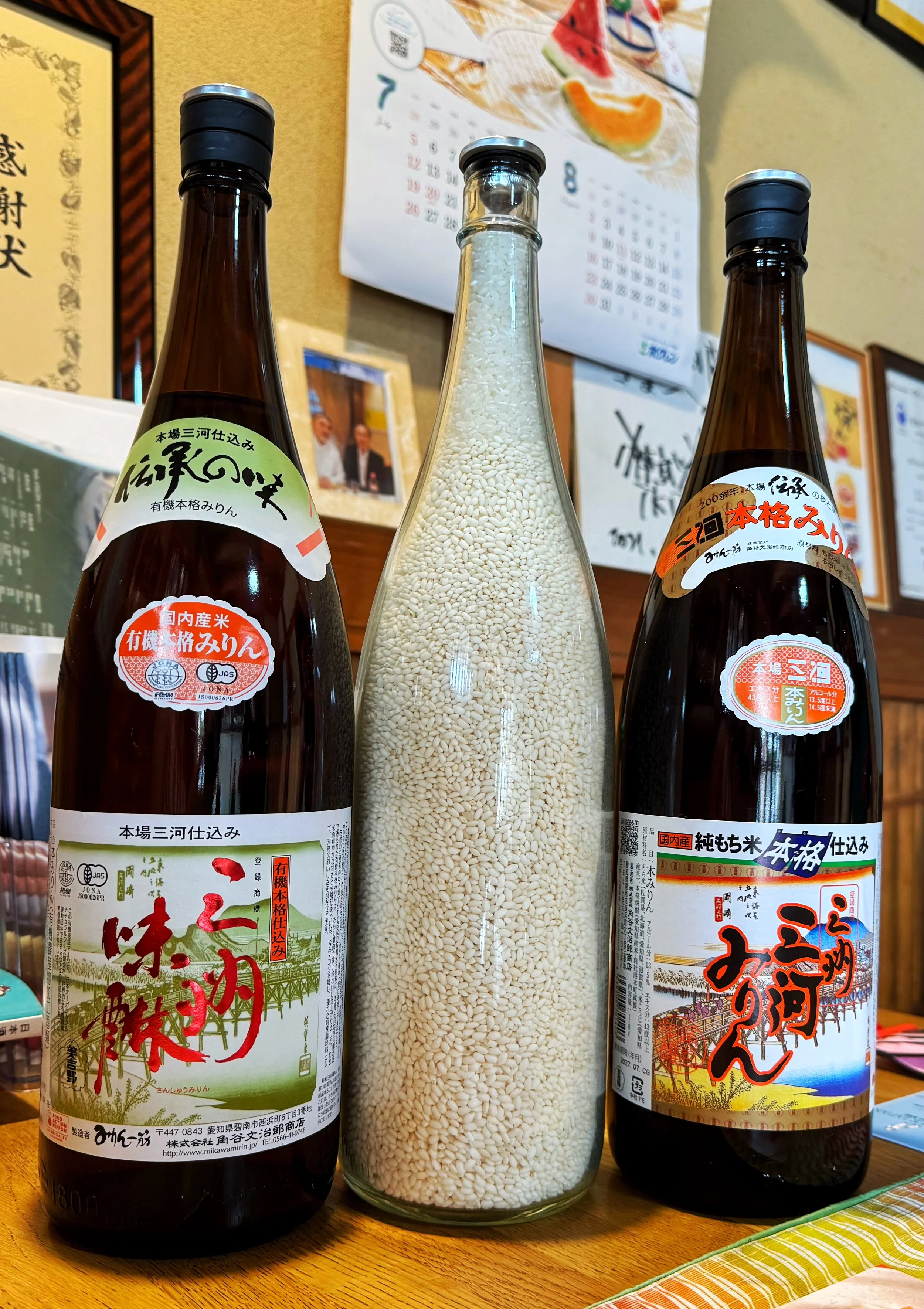
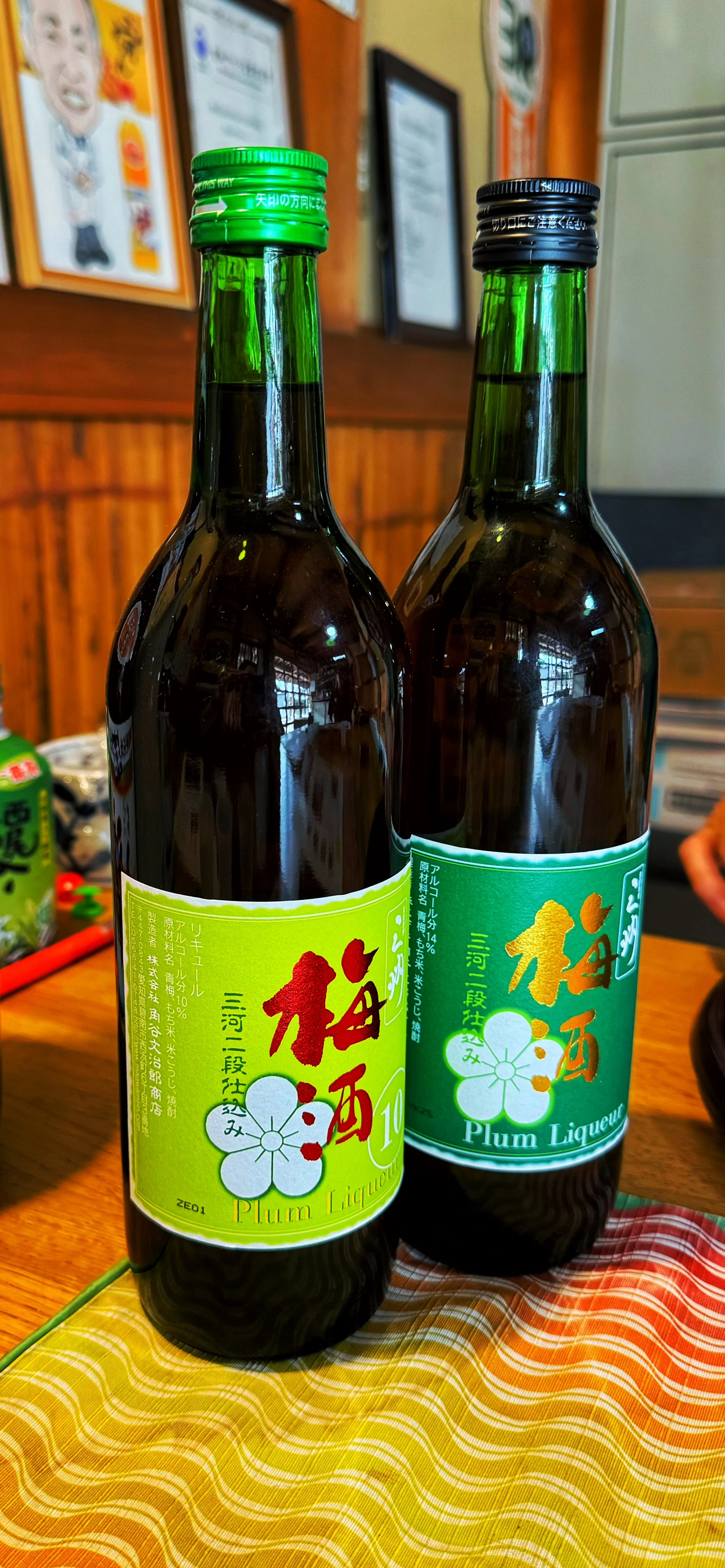
Until I sat down to talk to Deguchi-san, I did not know exactly how mirin was classified or that Mikawa mirin could be enjoyed as a drink. We tasted two types of mirin and two umeshu (plum liquor) varieties. As we tried each one, Deguchi-san explained the flavor profiles, ingredients, and production methods. She also explained how her mirin is used throughout the world. Some people choose to make drinks with the mirin, others incorporate it into chocolate or pastries, and some use it for Japanese recipes. I could not help but think of all the potential uses I could find in my own kitchen.
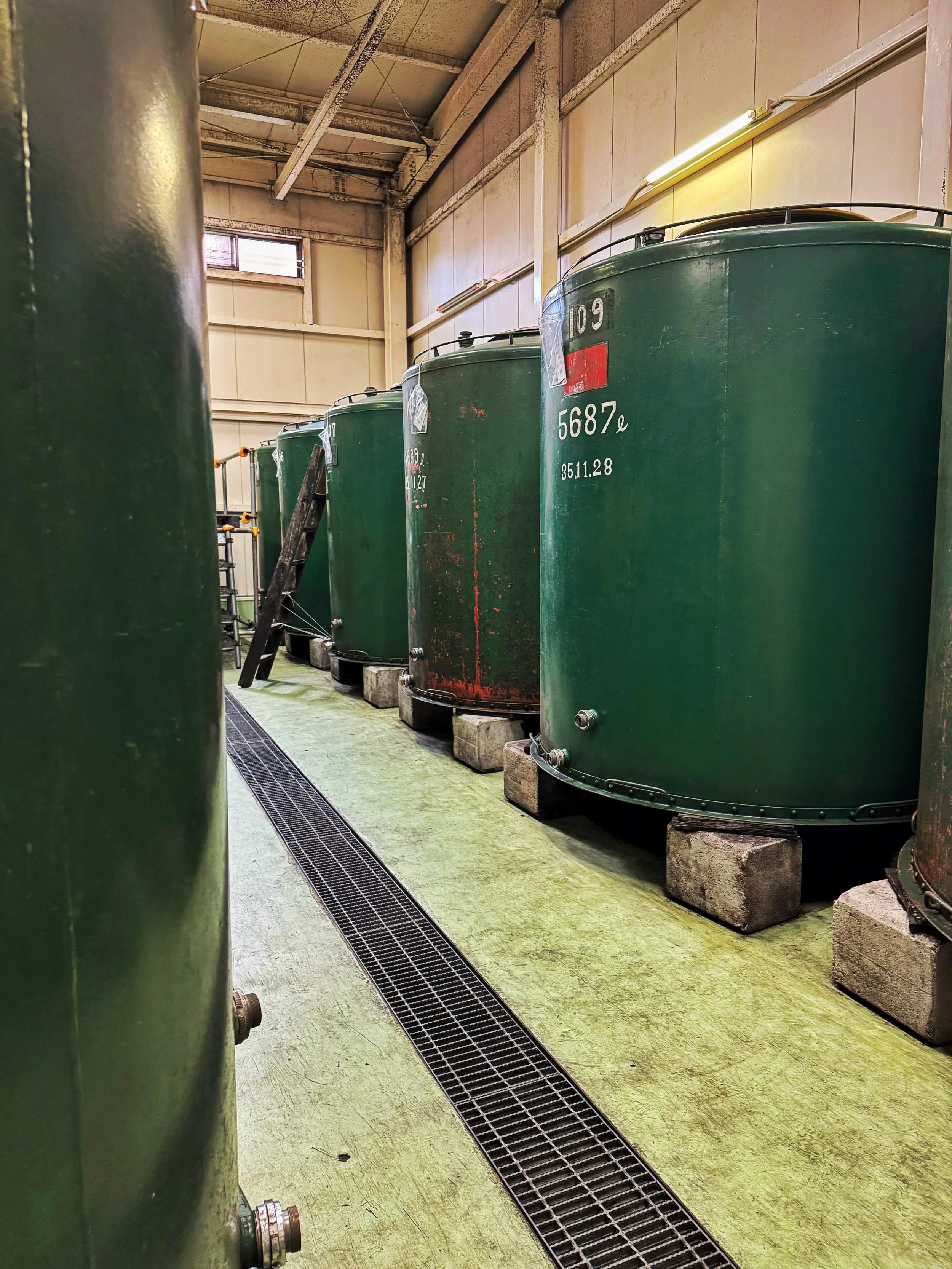
The factory tour gave me an entirely different appreciation for mirin. There were areas I could not photograph because they involved proprietary manufacturing methods, but seeing the facility gave me a better understanding of just how complex the process is. It also gave me the opportunity to compare the production method of mirin with other rice-based fermented foods. One of the most surprising things I learned was how much rice goes into making her mirin. To demonstrate this, Deguchi-san had a large bottle of rice and a large bottle of mirin sitting together. The bottle of rice showed exactly how much was needed to make the same size bottle of mirin.
Deguchi-san’s passion for her products and Mikawa’s history was obvious. There is so much knowledge involved in something that many people pick up at the supermarket to add to a recipe. There is so much more to mirin than I realized.
Understanding Shiro Tamari at Nitto Jyozo
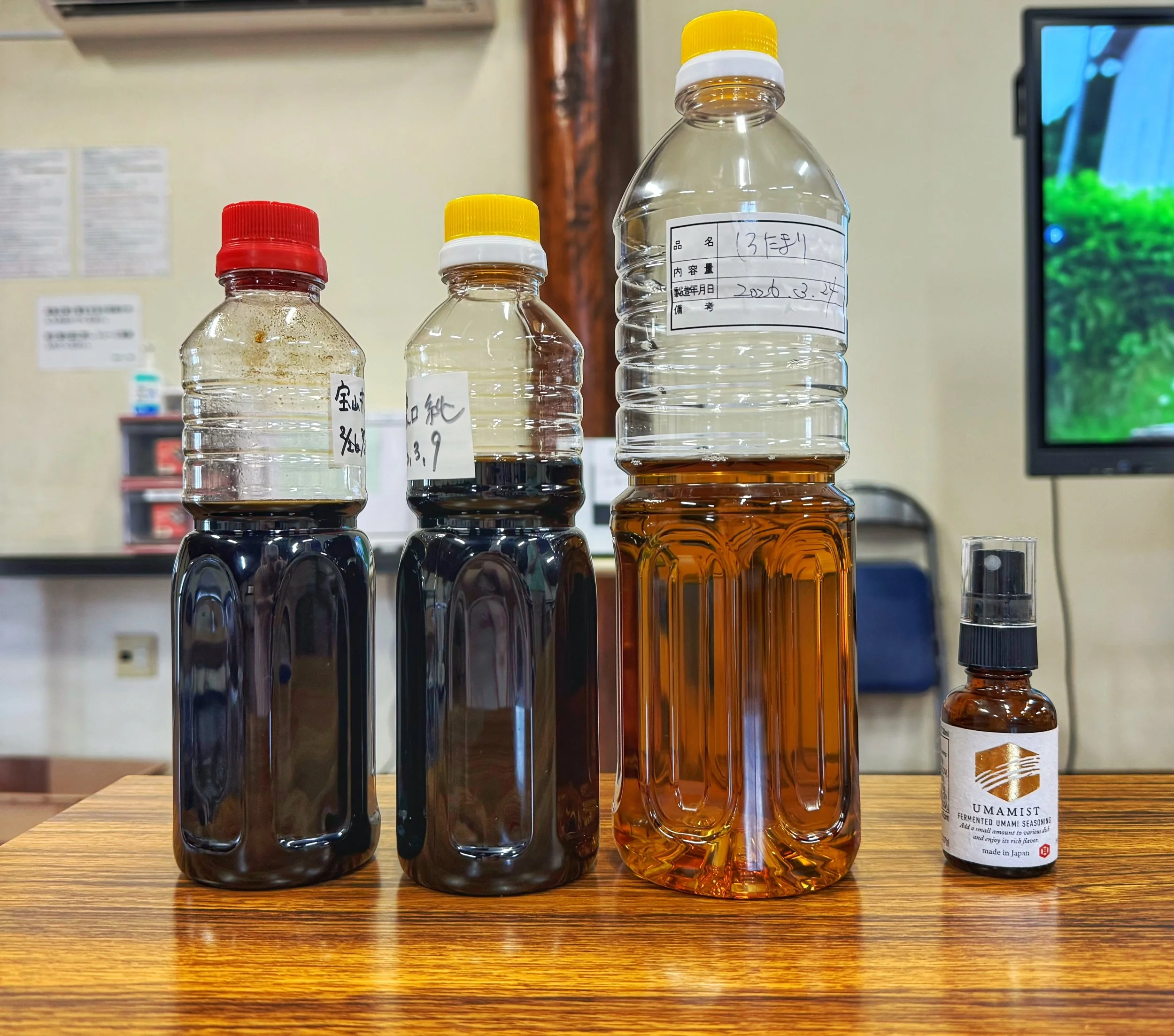
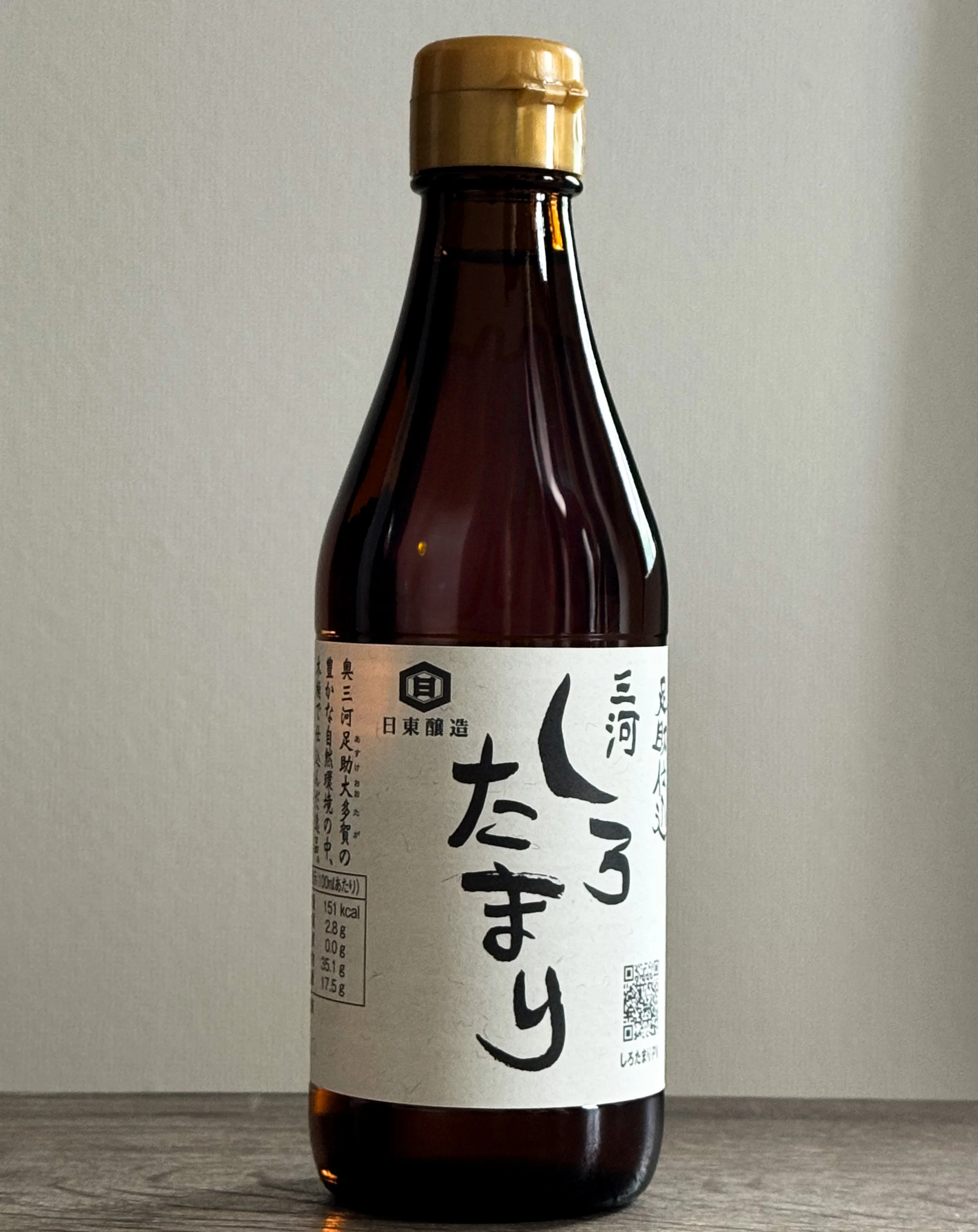
Nitto Jyozo produces shiro tamari (white tamari), which is different from conventional tamari or soy sauce because it contains no soybeans. I thought I understood most varieties of soy sauce, tamari, and similar seasonings until I visited the facility.
Ninagawa-san, the company’s fourth-generation president, greeted us at the Hekinan facility and led us to the company dining hall. There, we were taught about the varieties of soy sauce, the history of tamari and white soy sauce, and the flavor profiles of various soy and wheat seasonings. His enthusiasm for sharing his knowledge and talking about his company came through the carefully planned presentation. After he quizzed us on the ingredients used to make soy sauce and shiro tamari, I became even more interested in understanding the differences between the various seasonings and the regional preferences surrounding them.
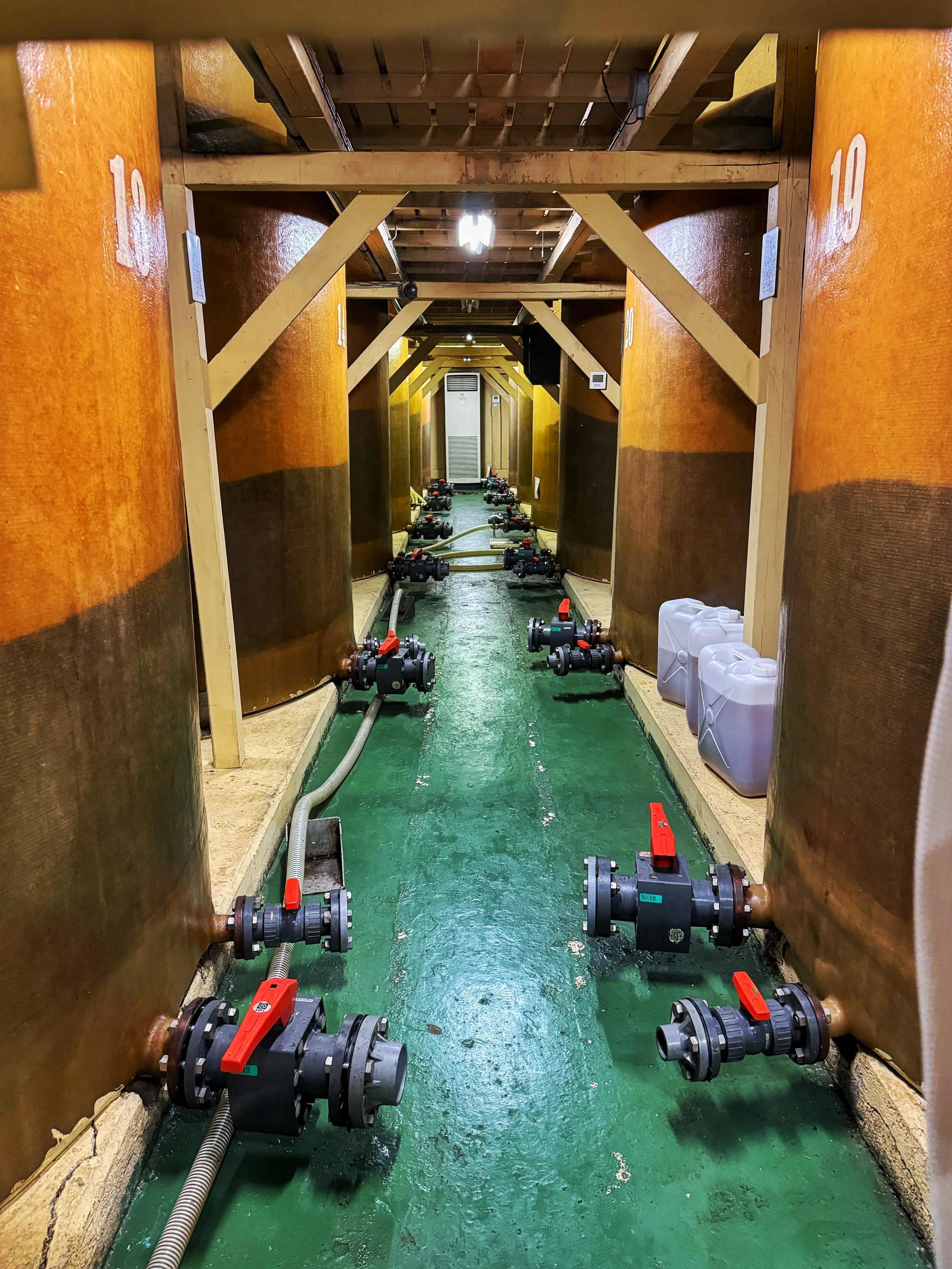
Following the discussion, we went downstairs to the production facility. Ninagawa-san carefully explained the fermentation process and showed us how producers can tell when the product is ready for the next stage. Unlike regular soy sauce, which can take months or years to mature, white tamari and white soy sauce have a much shorter aging period. The flavor reminded me of soy sauce but had sweeter notes at the beginning and a cleaner finish that did not linger as long on the tongue.
There are several theories on why white soy sauce and white tamari were invented. One is that soybeans became scarce in the region and wheat was plentiful. Using wheat with only a small percentage of soybeans for white soy sauce or no soybeans for white tamari allowed chefs to retain familiar flavors while making use of local ingredients.
Another theory is that chefs wanted to preserve the natural appearance of ingredients in certain dishes. Dark soy sauce can turn ingredients brown, while a lighter-colored seasoning allows the colors to remain visible. A white tamari would preserve a dish’s flavor while maintaining the appearance of the ingredients. Because of the lack of soy, white tamari is actually classified as a wheat-based seasoning.
Whatever the exact origin of the shiro tamari and white soy sauce, it is easy to understand why these products have become popular with chefs in Japan and other countries. What I found particularly fascinating was that this is not just a story about preserving a product passed down through generations. Ninagawa-san and his son, who will eventually become the next president, are constantly thinking of new ways to adapt their products or create new ones. There is something about that balance that is very common to Mikawa. They respect what came before but continue to find ways to move forward.
Daiseian, Where Food and Antiques Meet
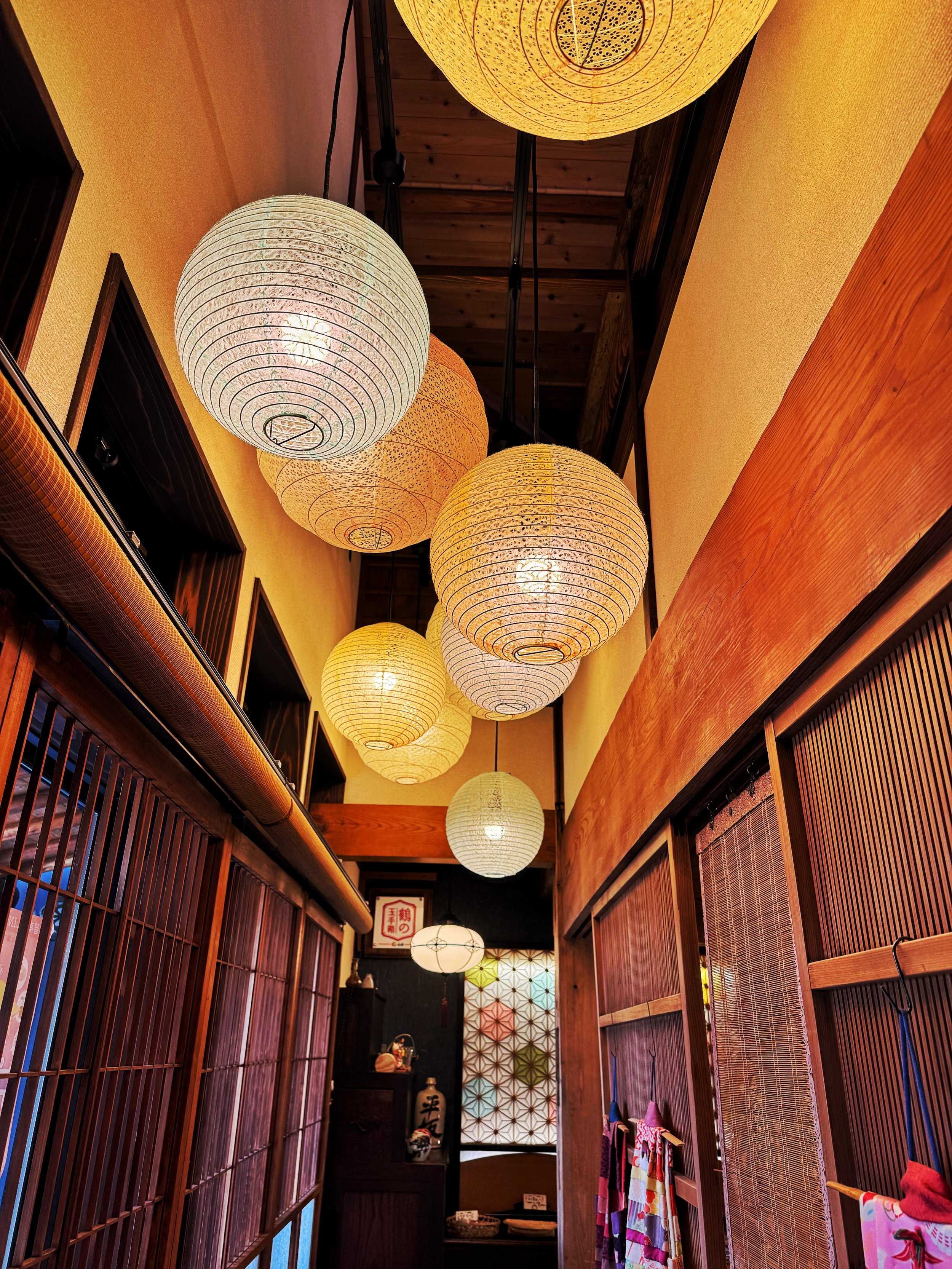
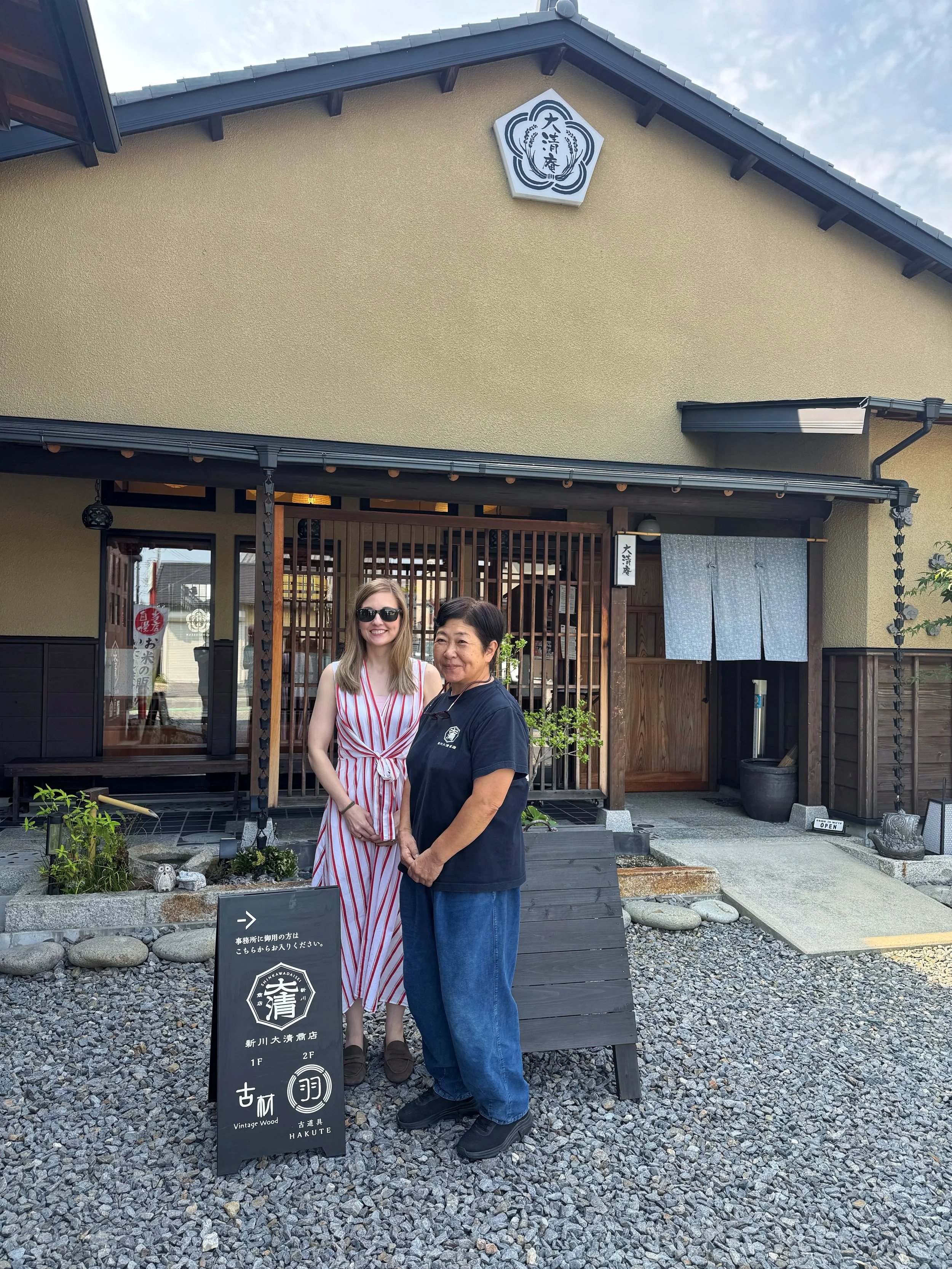
Daiseian was completely different from the production facilities we had visited. While woodworking was and still is a main focus of Shinkawa Daisei Shoten, Murakami-san opened Daiseian to showcase Japanese foods and tea, especially from the Mikawa region. The exterior of the cafe and factory has a distinctly Japanese appearance. However, inside you immediately notice the creative uses of reclaimed wood and antiques that create a warm and inviting atmosphere.
Because we were there to talk to Murakami-san and learn about Hekinan, we had a private room upstairs. The room was filled with European antiques that Murakami-san has collected over the years. One of the most unique pieces was a storage box with a tatami-covered top. It could be used for storage and seating. The European writing desk was very nostalgic because we had one when I was a child. Even though I was there primarily to try the food, I found myself spending almost as much time looking at the reclaimed wood and antiques throughout the space.
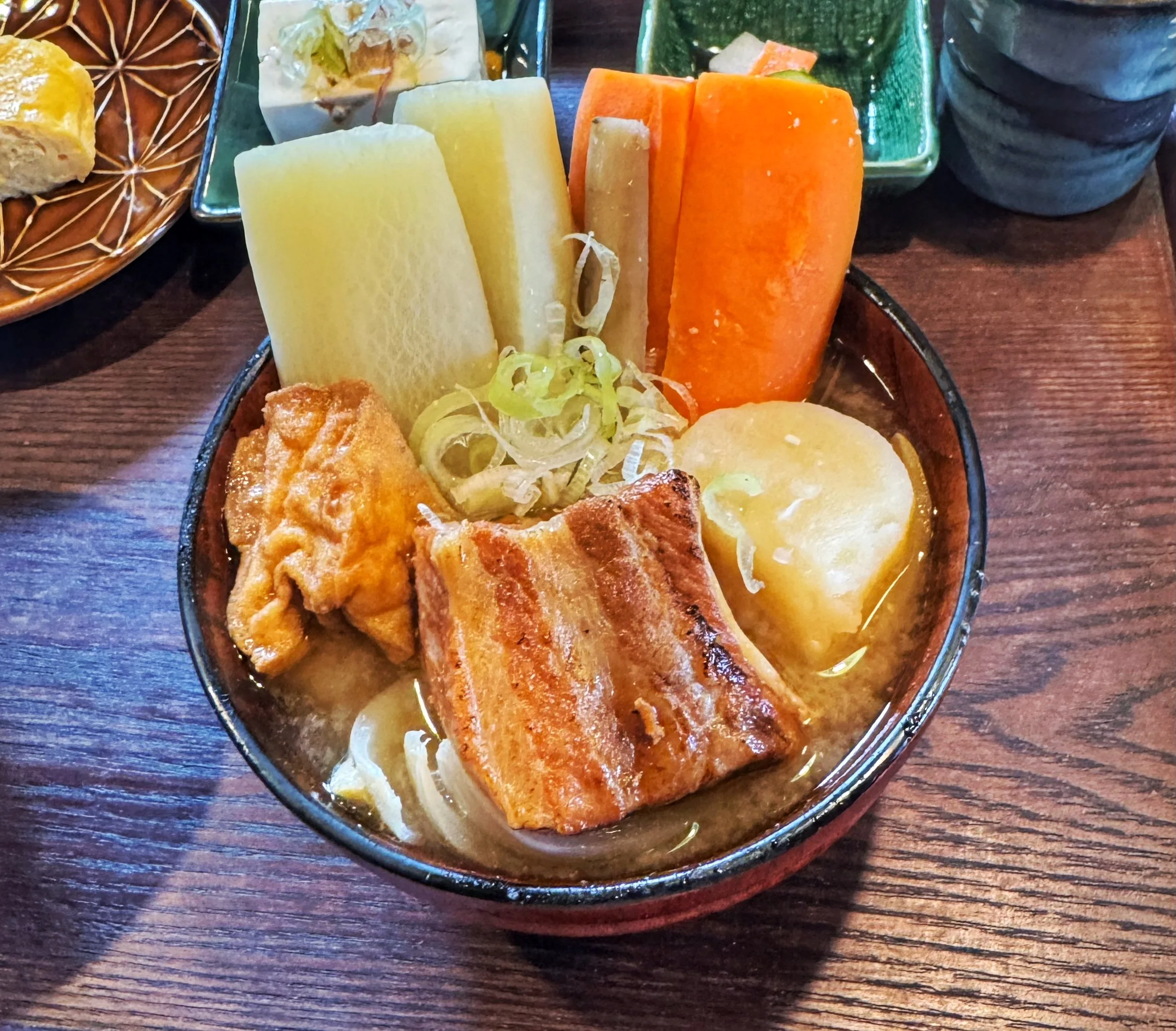
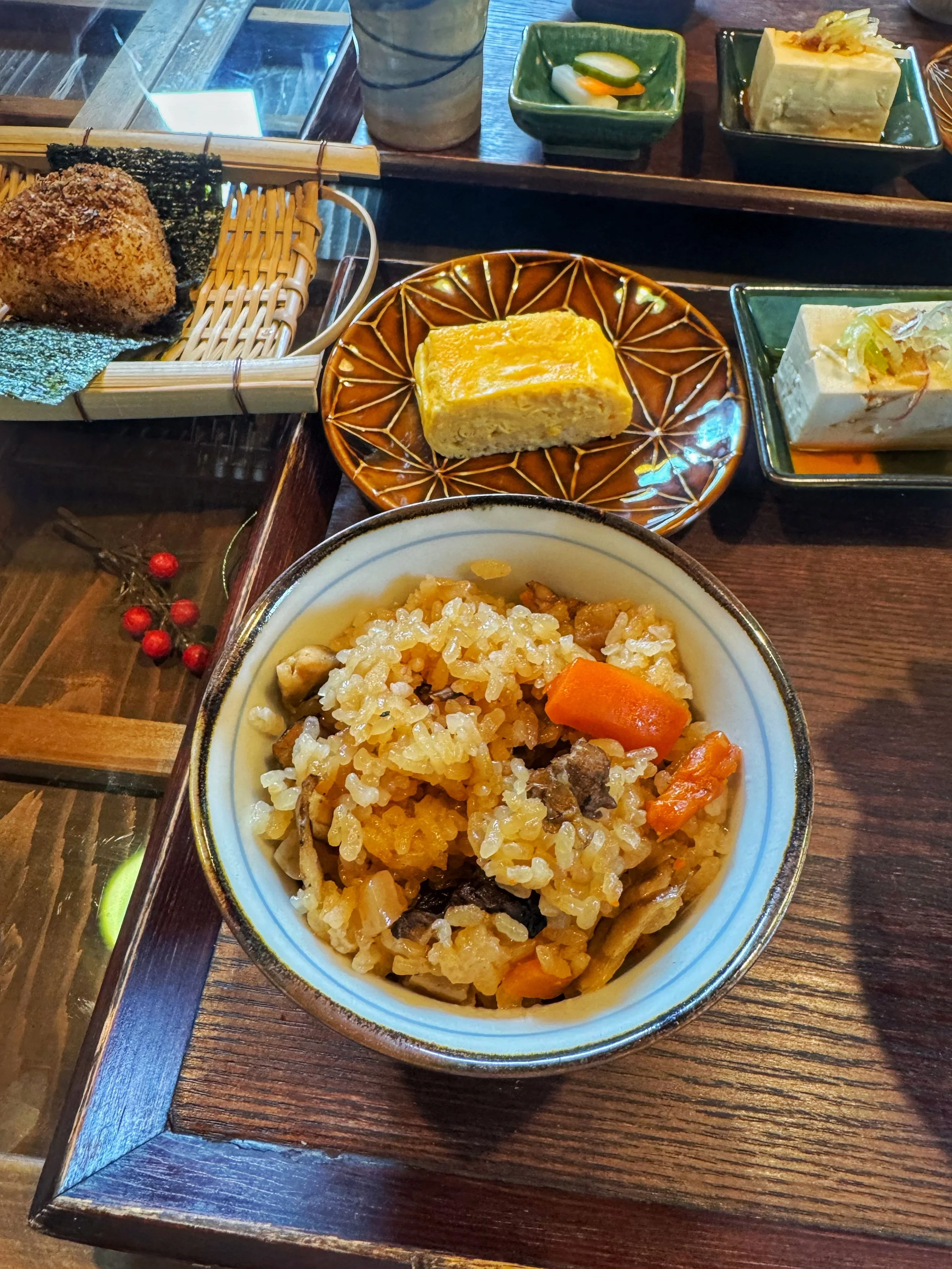
Lunch was far more substantial than I expected. We tried the ninjin gohan, or carrot mixed rice, a type of takikomi gohan made by cooking rice with other ingredients. The dashimaki, a Japanese rolled omelet, contained Mikawa shirasu. The tofu came from a local producer, and the soup was made entirely with locally sourced ingredients. The soup fell somewhere between a stew and oden. The light miso broth swirled around the generous portions of simmered vegetables and braised pork belly. It contained onions, daikon, carrots, potatoes, burdock root, and pork. The pork belly was the star of the dish. It was cooked slowly over several hours and then slightly charred before it was added to the soup.
After lunch, we walked over to the woodworking shop and visited the bar that will be opening soon. Murakami-san’s son designed the bar as his interpretation of a Western-style bar or saloon. He also created a stunningly beautiful table, combining Japanese wood with resin.
The small bar has about five tables and five seats at the counter. The offerings include whiskies, highballs, and sakes. Because we were only halfway through our tour of Hekinan, we opted for coffee and tea instead. We sat at the bar and talked about the area, the plans for Daiseian, and life in Mikawa. I always enjoy sitting down with locals and hearing about their lives. In this case, the conversation moved naturally from woodworking to food to tourism and the future of Mikawa.
This was one of the moments when the larger purpose of the trip became clearer to me. Mikawa has plenty to offer domestic and international travelers. The problem is that many of them do not know what they can see and do there. That is why sharing this region is so important.
Exploring Meditation and Culture at Muga-en Philosophy Village
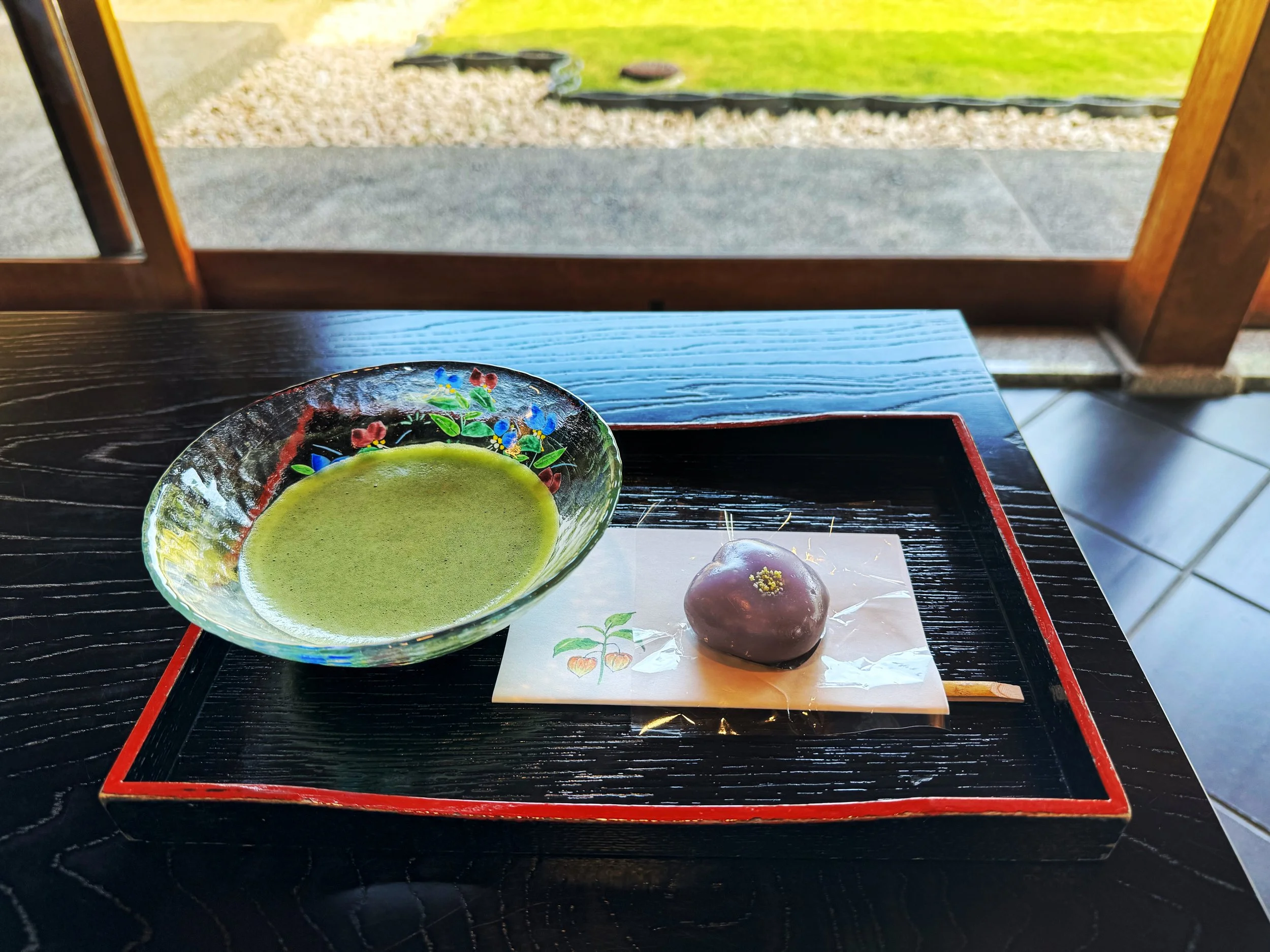
After spending the morning learning about foods in Hekinan, Muga-en gave me the opportunity to slow down, reflect, and enjoy Japanese culture. Our first stop was the cafe to try matcha grown in Aichi along with Japanese sweets. The view during tea was perfect as the sun bounced off the buildings, trees, and grass. Next door, the staff were setting up for a koto performance the next day.
After tea, we walked over to the museum. The current exhibition featured handmade pewter dolls and patchwork art made from pieces of refugees’ hijabs and khimars from North Africa. The exhibit encourages visitors to think about unity and global issues.
The second floor of the museum offers a relaxation room where visitors can sit in a chair and listen to music and sounds from nature. The room is dark, and as you recline, your body is surrounded by sound. The chair vibrates in unison with the bass from the audio. Next, we visited the meditation room where we spent a few minutes meditating in front of a painting.
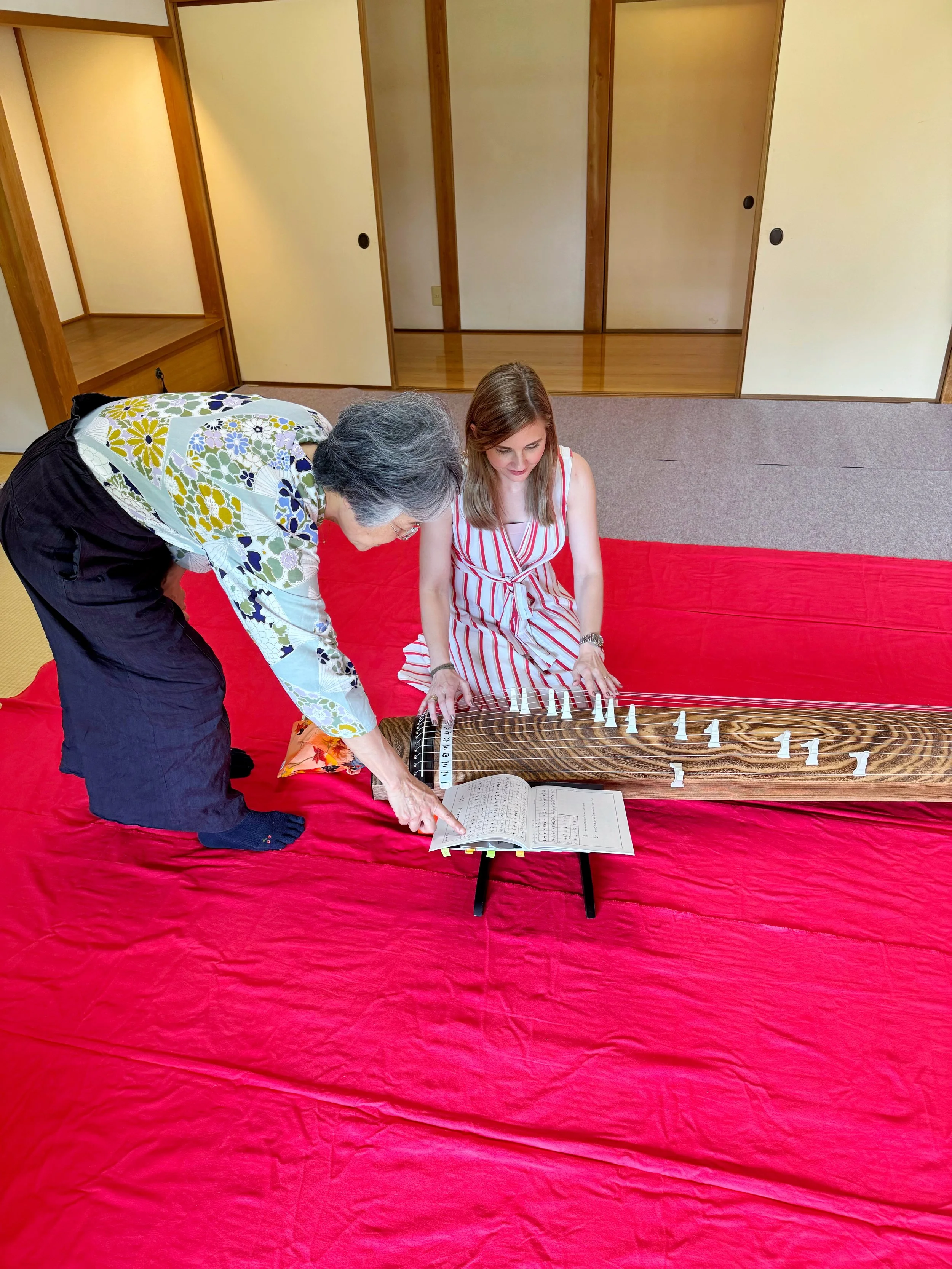
We returned to the garden where the koto teacher, Suzuki-sensei, was preparing for the following day’s performance. Even though we were leaving, she invited us to watch the practice. Then, Suzuki-sensei insisted that I try to play. I had never played a koto before and was quite intimidated by the large instrument. Sitting in seiza was no problem, but reading the music while trying to look at the beginner’s guide next to the strings was another matter. I am certainly not a professional or a natural, but I will say that it went much better than my first attempt at guitar.
I enjoy playing instruments and love music, but I have never considered myself to be particularly talented with musical instruments. Still, the koto inspired me. I have played many instruments throughout my life, but none of them really excited me. Maybe the koto felt different because the sheet music was in Japanese and required more concentration. Maybe it was the peaceful sound. Whatever the reason, I discovered something new that I would like to try again someday. Sometimes the most memorable parts of traveling are the things you never planned.
Seeing the Craft of Sun-Dried Jako at Kanemitsu Suisan
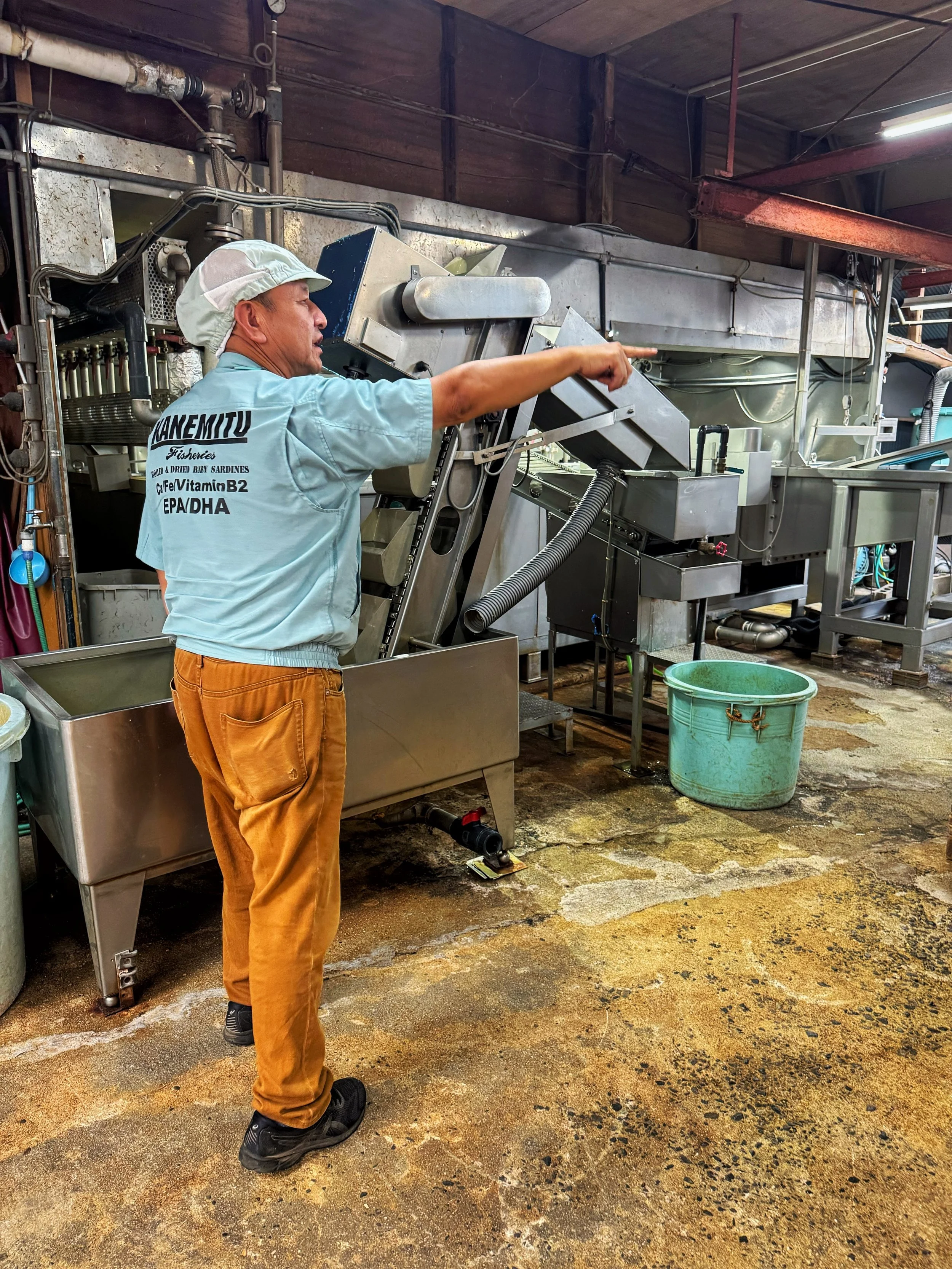
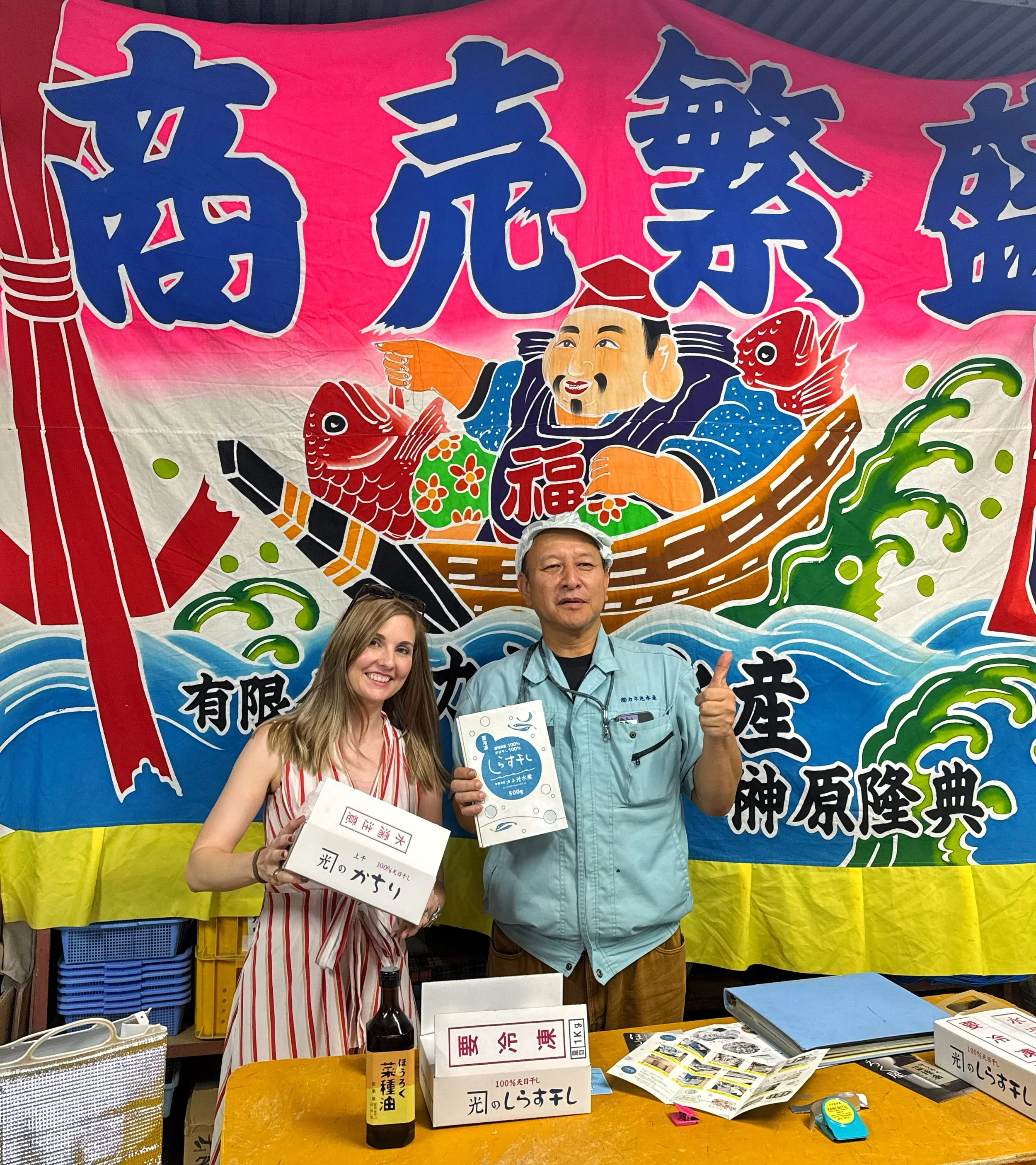
I have eaten shirasu and jako countless times. I had never actually considered how it got onto my plate, though. Kanemitsu Suisan’s shirasu and jako production facility was the final stop before dinner. When we arrived, the place immediately gave me a nostalgic feeling of old Japan. Stepping out of the car, we were greeted by Sakakibara-san who runs the facility. He asked us to call him Jako-chan and eagerly took us into the shop to tell us about their products and how they are made.
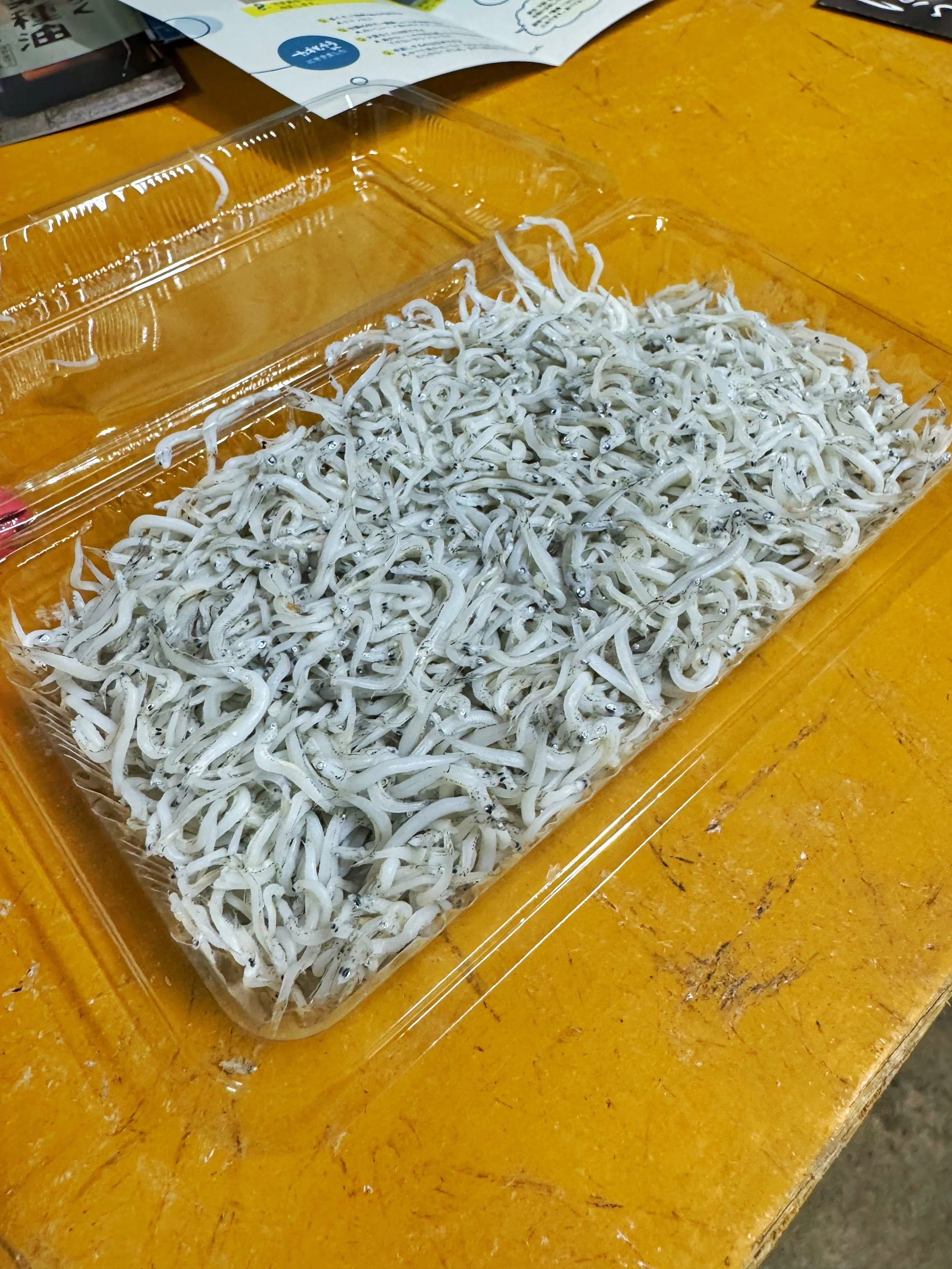
Their dried fish products are dried using the traditional method, relying on the sun and sea breeze. Every day, small whitebait are processed and laid out to dry. Very few production facilities dry seafood this way today.
We toured the facility after talking with Jako-chan. Although production had already finished for the day, he explained and demonstrated each step involved. We even got to see just how cold the walk-in freezers are. It was such a fun experience and one that I never expected to enjoy as much as I did.
Of course, my first questions were about the biggest challenges involved in drying the fish and which part of the process was most difficult. The answer surprised me. Birds are a problem when drying the seafood, but so are people. Fish are sometimes stolen while they are drying, which means someone must keep a watchful eye on the drying racks. I was genuinely shocked that anyone would walk by and steal the fish.
I had never really thought of how shirasu and jako were produced. Learning about the process gave me a new appreciation for these foods. The fact that so few companies still dry fish in the sun makes this method even more interesting.
It also brought me back to something I noticed throughout the day. The people in Hekinan were not only trying to preserve the past and historical methods of production. They were also trying to figure out how to carry it forward. That might mean adapting a product, developing something new, or sharing why the traditional methods are still important. The balance between tradition and change is one of the things I find fascinating about Mikawa.
Sharing a Table in Mikawa
After the tour, I had dinner with several people who are involved in promoting the foods, culture, and crafts of Mikawa. It was enlightening to hear their stories about the generations who came before them and how the region has changed over time. I studied history in graduate school, so I naturally enjoyed soaking up all the information they shared.
Honestly, the most difficult part for me was the Mikawa dialect. To me, it is a bit different from the Owari dialect that I am most accustomed to hearing in Aichi. But sitting around that table and listening to locals talk about Mikawa, I was reminded of Anthony Bourdain’s words I shared at the beginning of this article.
Food is not just something we eat. It can be an invitation. It gives people a reason to sit down together, talk, laugh, and share stories. Even when language and cultural differences exist, there are still commonalities. Connections can be found through food and sitting around a table. That was the most fitting way to end a day spent learning about Mikawa.
Final Thoughts
My trip to Hekinan reminded me of why I started writing again a few years ago. It was not to gain popularity or go viral. I wanted to share genuine experiences and stories from people in Japan, highlight places that many travelers overlook or do not know, and show a different side of Japan. This trip reminded me that while Japan is a small country, there are many stories that still are not being regularly told. Not every interesting place has a unique temple, a crazy story, or viral foods. Sometimes it is a new experience or sitting down with people and talking about where they come from.
Seeing the passion and creativity of others is something that genuinely excites me. I hope to continue spending time in Mikawa and other parts of Japan where I can have these kinds of experiences, meet people, and share their stories. There is still so much of Japan that many travelers, both domestic and foreign, do not know. Even after living in Aichi for years, I learned so many things through this trip to Hekinan.
Which of these places would you like to learn more about or visit on your next trip to Japan?
