
Yufuin and the Hells of Beppu: Are They Worth Visiting?
For years, Oita Prefecture had been on my list of places to visit. In my travels, I prioritized deeply exploring Honshu before venturing farther south to Kyushu. On my first trip to Kyushu, I explored the western side of the island. I finally made my way to Oita this summer and visited two of the prefecture’s most popular destinations, Yufuin and the Hells of Beppu.
Contrary to what some people assume based on places I share, I do not automatically write off or dislike major tourist destinations or places that are popular. I care more about responsible travel, honest experiences, and sharing parts of Japan that are often skipped or glossed over.
Both Yufuin and the Hells of Beppu appear constantly on social media and in travel blogs. After visiting them for myself, I wanted to share what I thought about these two Kyushu hotspots.
Yufuin
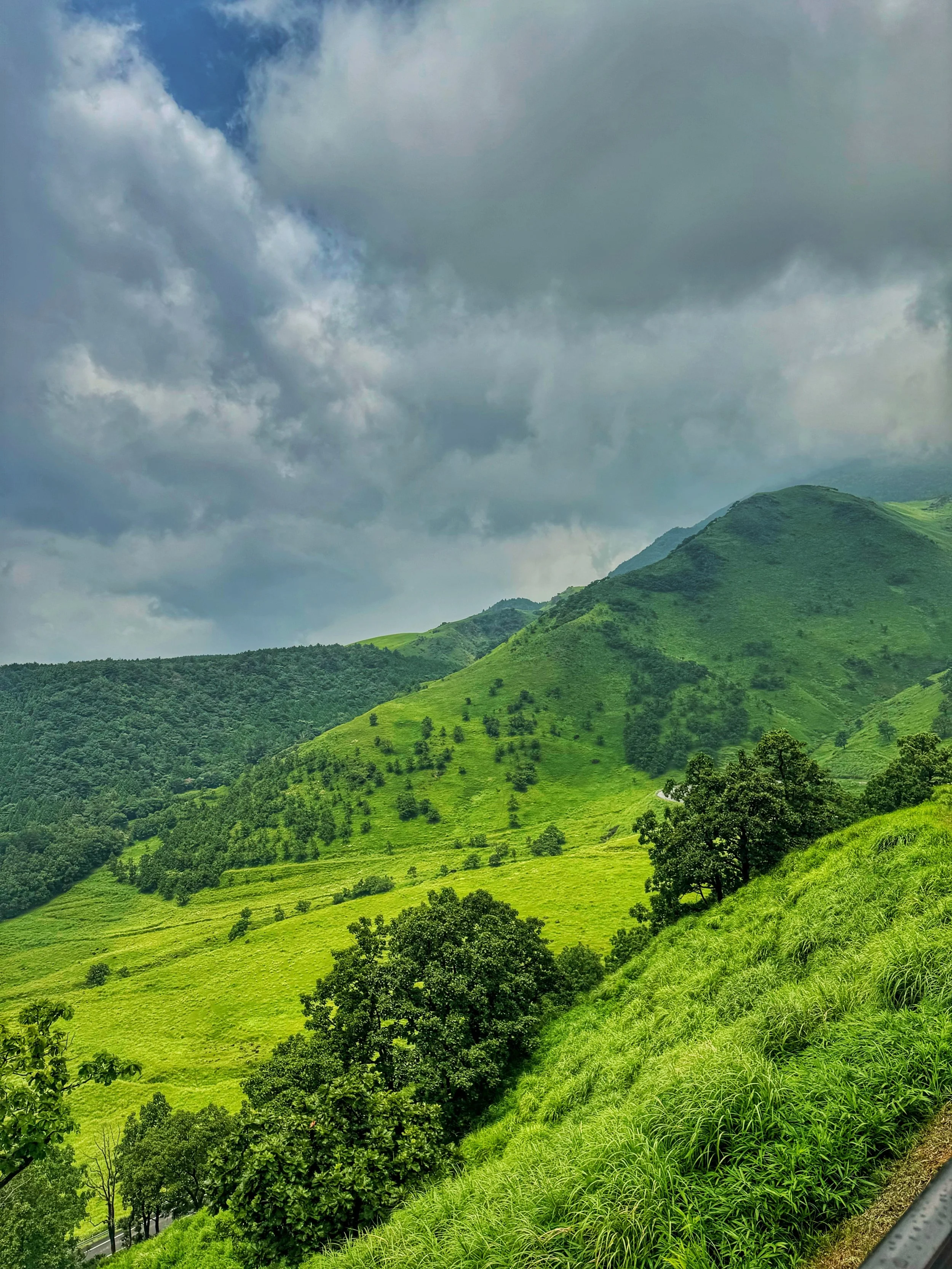
One of the first things that stood out to me about Yufuin was the drive into the area. The mountains were absolutely stunning, especially against the moody sky and rain clouds that hovered overhead. I arrived early in the morning to explore the town.
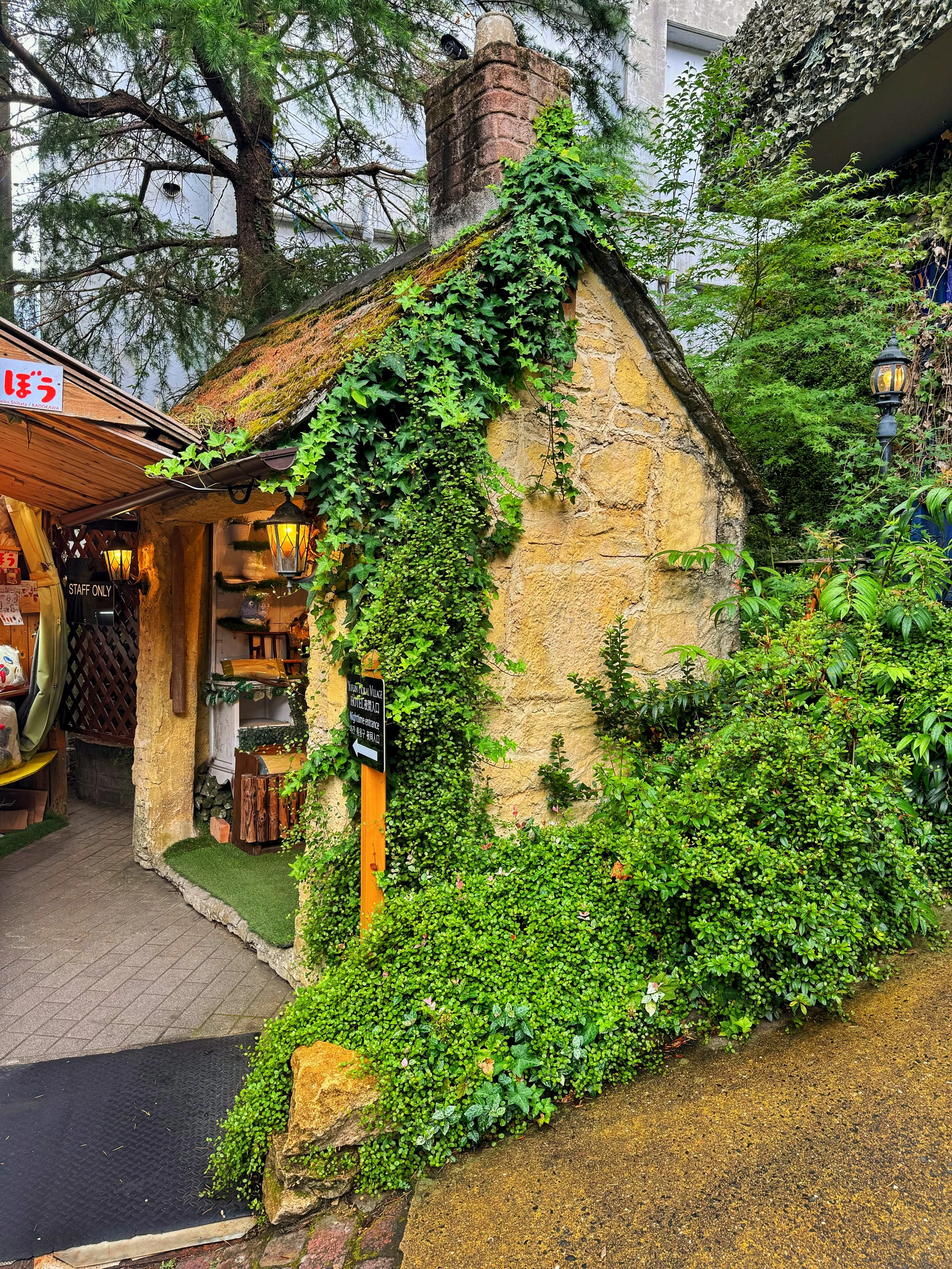
Before visiting, I had seen countless photos and videos of Yufuin. The town often looked as if it had been plucked straight out of the Harry Potter film or a Ghibli movie. I was looking forward to meandering through the streets, but I also wondered whether the videos I had seen were an accurate representation of what I would actually find.
After parking the car, I started walking around town and quickly noticed how many other people were visiting. There were a lot of international tourists, particularly around the main sightseeing streets and Yufuin Floral Village. That surprised me because several other places I had visited in Kyushu seemed to have more domestic visitors or relatively few tourists in general.
I was not immediately impressed with the town. The sheer number of people made it difficult for me to enjoy walking around, and many of the snacks and foods being sold were clearly aimed at tourists. I had hoped to find more food and products that felt distinctive to Yufuin and the surrounding area rather than the kinds of treats I could find in many other tourist destinations.
Yunotsubo Kaido, the main shopping street through central Yufuin, is filled with restaurants, cafes, craft stores, and souvenir shops. It is also one of the busiest parts of town.
When I reached Yufuin Floral Village, I was surprised by how many people were packed into the narrow streets. The area was very cute, and I could understand why people enjoy photographing it. The buildings have a distinctly storybook or fantasyland appearance, which is part of the appeal.
For me, though, the crowds made it difficult to fully enjoy the views or browse the shops. The goods were charming, but I was again left wondering where the connection to the region was. I very rarely visit somewhere in Japan and find nothing that I truly enjoy. Yufuin’s downtown area was one of those rare exceptions.
Lake Kinrin and the mountains surrounding the town were the places I preferred. Once I moved away from the busiest streets, it was easy to appreciate the area more. The combination of the lake, mountain scenery, and hot spring culture is a much bigger part of Yufuin than the busy shopping streets might suggest.
I can understand why people enjoy the distinctive look of Yufuin Floral Village and the atmosphere of the main shopping area. They simply were not places for me. That experience also reminded me why I hesitate to give people a universal list of things they must see in Japan. Travel is, or at least should be, personal. There are places I might love that someone else could dislike, and places that leave me cold might become someone else’s favorite memory. It also reminded me that it is important to share genuine travel experiences and not just highlight reels or the best angles of places. I always try to be aware and provide a realistic experience from my own perspective.
Even if downtown Yufuin is not your thing, there is much more to explore around the area, including the mountains, hot springs, and lakes. You do not have to spend your entire visit wandering the busiest streets if that is not your preference.
The Hells of Beppu
Arriving in Beppu, I was not really sure what to expect. Some onsen towns greet your senses with smells and clouds of steam before you even arrive. Others are a bit less obvious. Beppu definitely falls into the latter of the two.
Parking for the Hells of Beppu was unexpectedly easy. Finding my way around, however, was another story. Because I did not want to know too much before visiting, I had done very little research. I assumed there would be one central entrance where I could buy a ticket for all seven locations. That is in fact not how it works.
The Hells of Beppu are divided between two areas, with five in the Kannawa area and two in the Shibaseki area. The two areas are about three kilometers apart, so driving or taking a bus is the easiest option. You can purchase admission to individual locations or a ticket book for all seven at any one of the Hells entrances. Once I figured out where to buy tickets, everything else was straightforward.
There are seven “hells” in total, and each has its own appearance and character. Some are striking because of their color while others are interesting because of the way the mud or water behaves. The Hells of Beppu are as follows:
Umi Jigoku, or Sea Hell
Oniishibozu Jigoku, or Monk’s Head Hell
Kamado Jigoku, or Cooking Pot Hell
Oniyama Jigoku, or Demon Mountain Hell, also known as Crocodile Hell
Shiraike Jigoku, or White Pond Hell
Chinoike Jigoku, or Blood Pond Hell
Tatsumaki Jigoku, or Tornado Hell
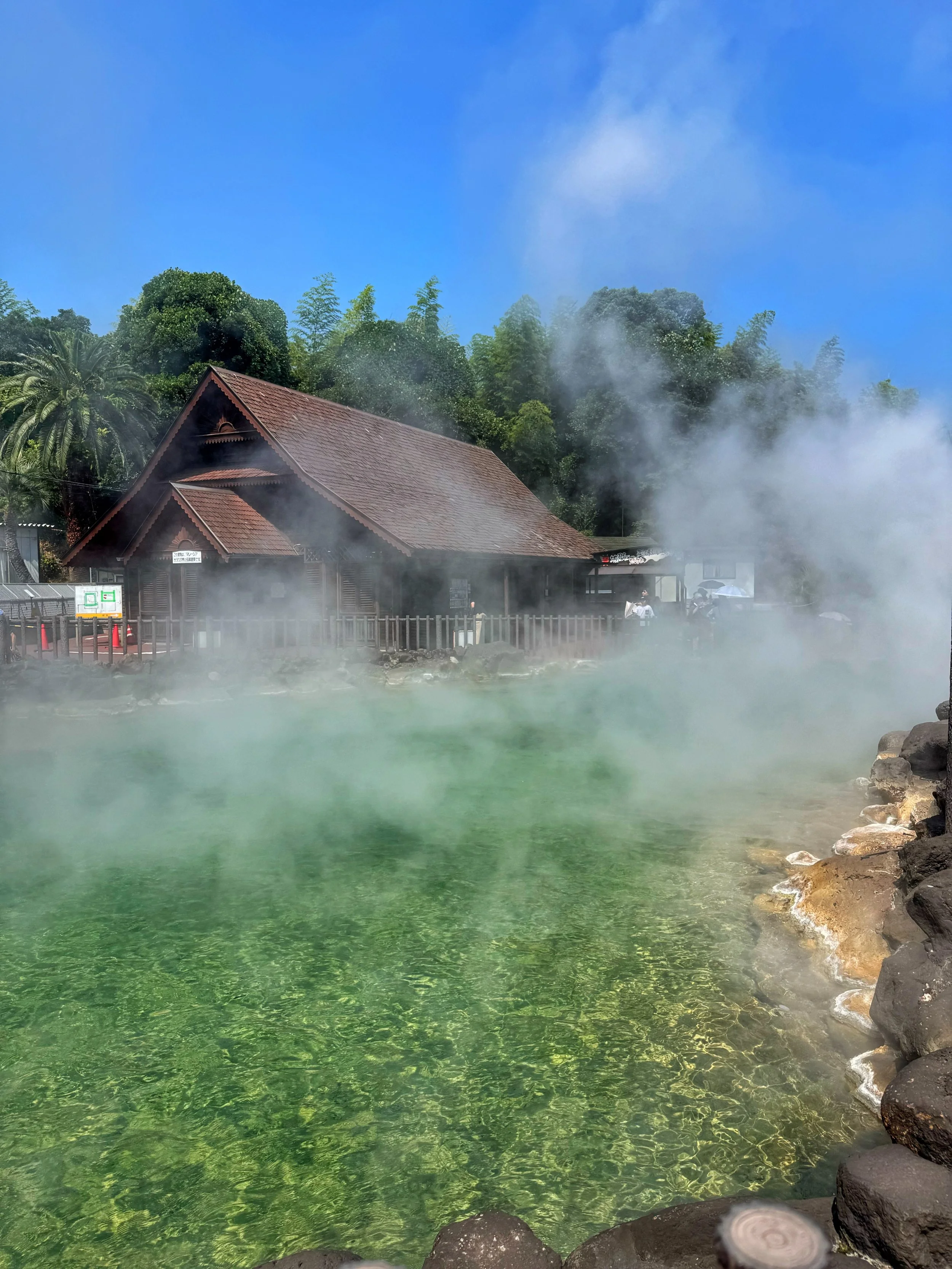
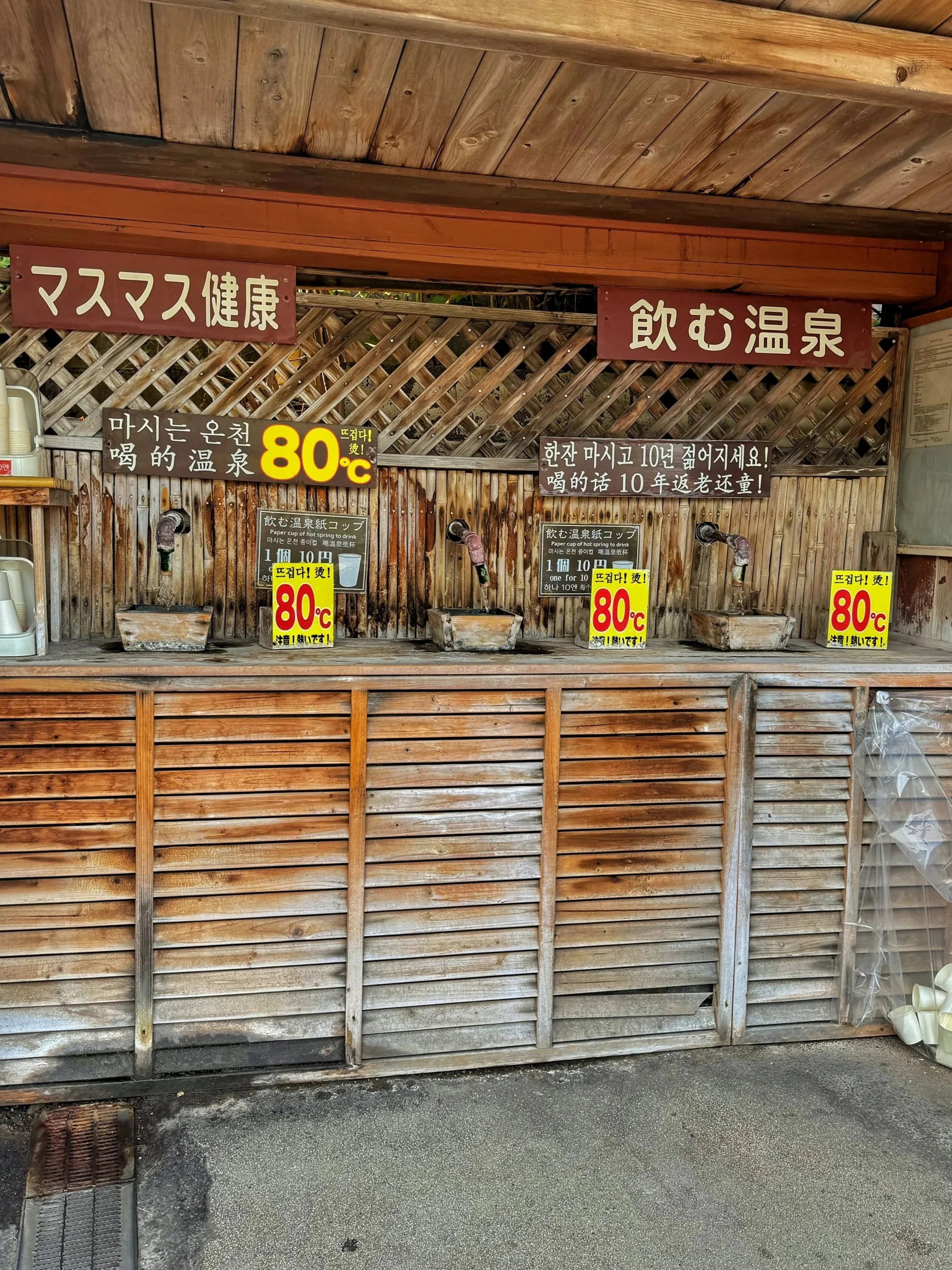
The name “jigoku” or “hell” comes from the area’s history of boiling water, steam, and other geothermal activity. The Hells are not bathing facilities, and temperatures at some sites reach nearly 100°C. Some of the sites have designated footbaths, allowing visitors to experience heated water without touching the geothermal pools themselves. Others offer food cooked with the boiling water, and at Kamado Jigoku, you can even pay to try a cup of hot spring water from a designated fountain. The water is around 80°C, so it is definitely more of an experience than something you casually drink.
As you visit each place, make sure you get a stamp on your map. It is the perfect addition to a travel scrapbook or junk journal, and each stamp has a design that reflects the theme of each of the individual Hells.
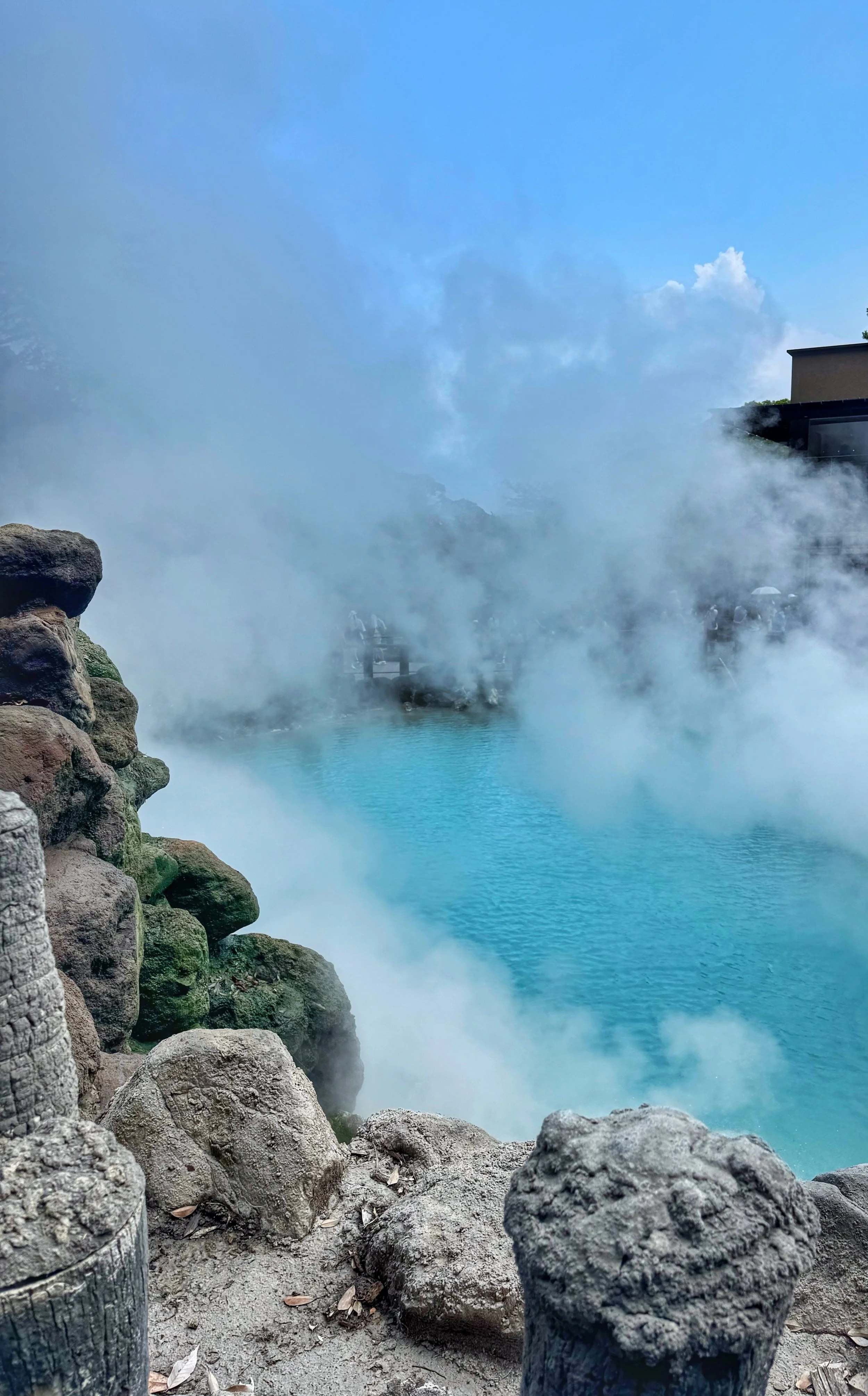
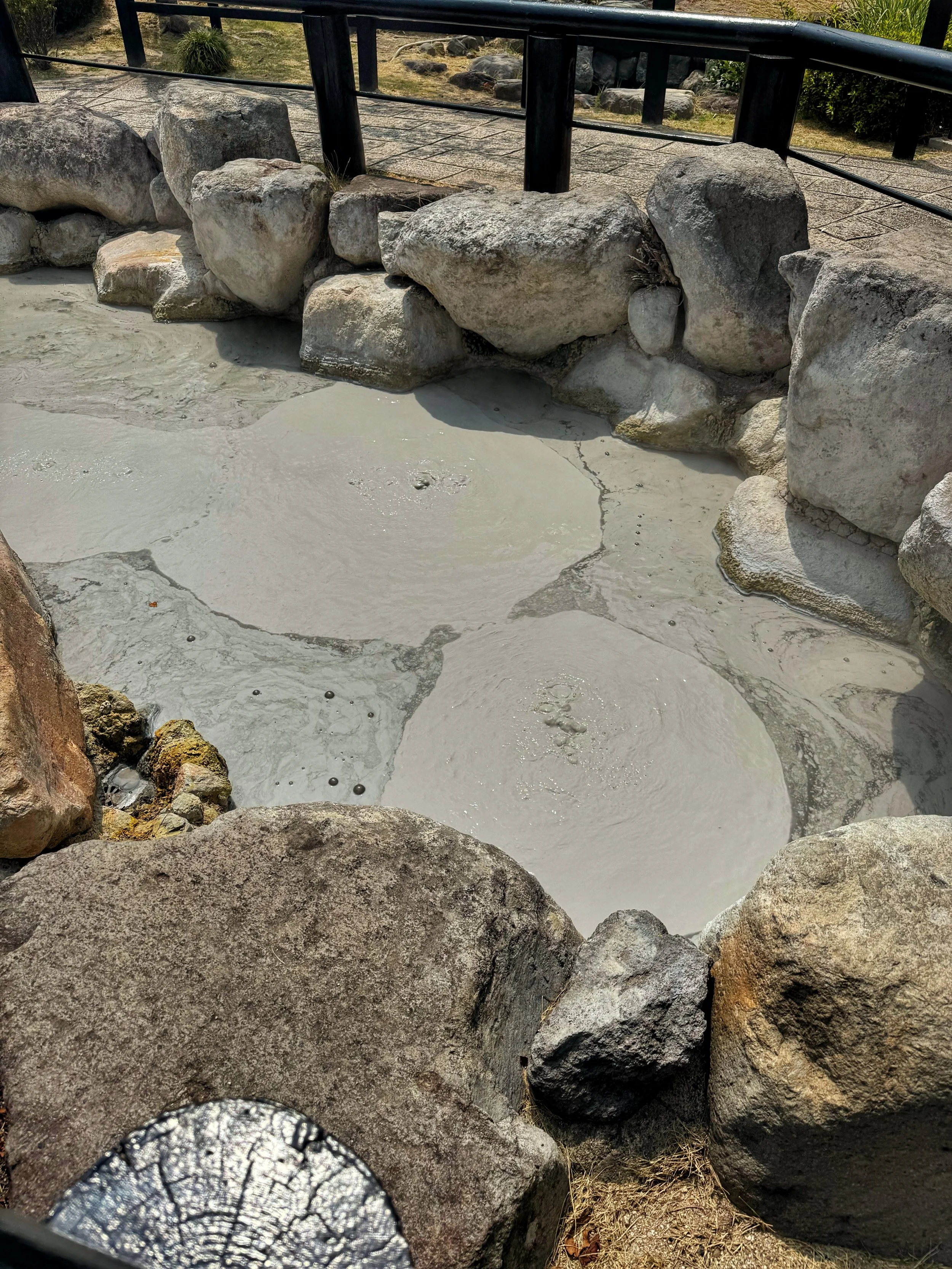
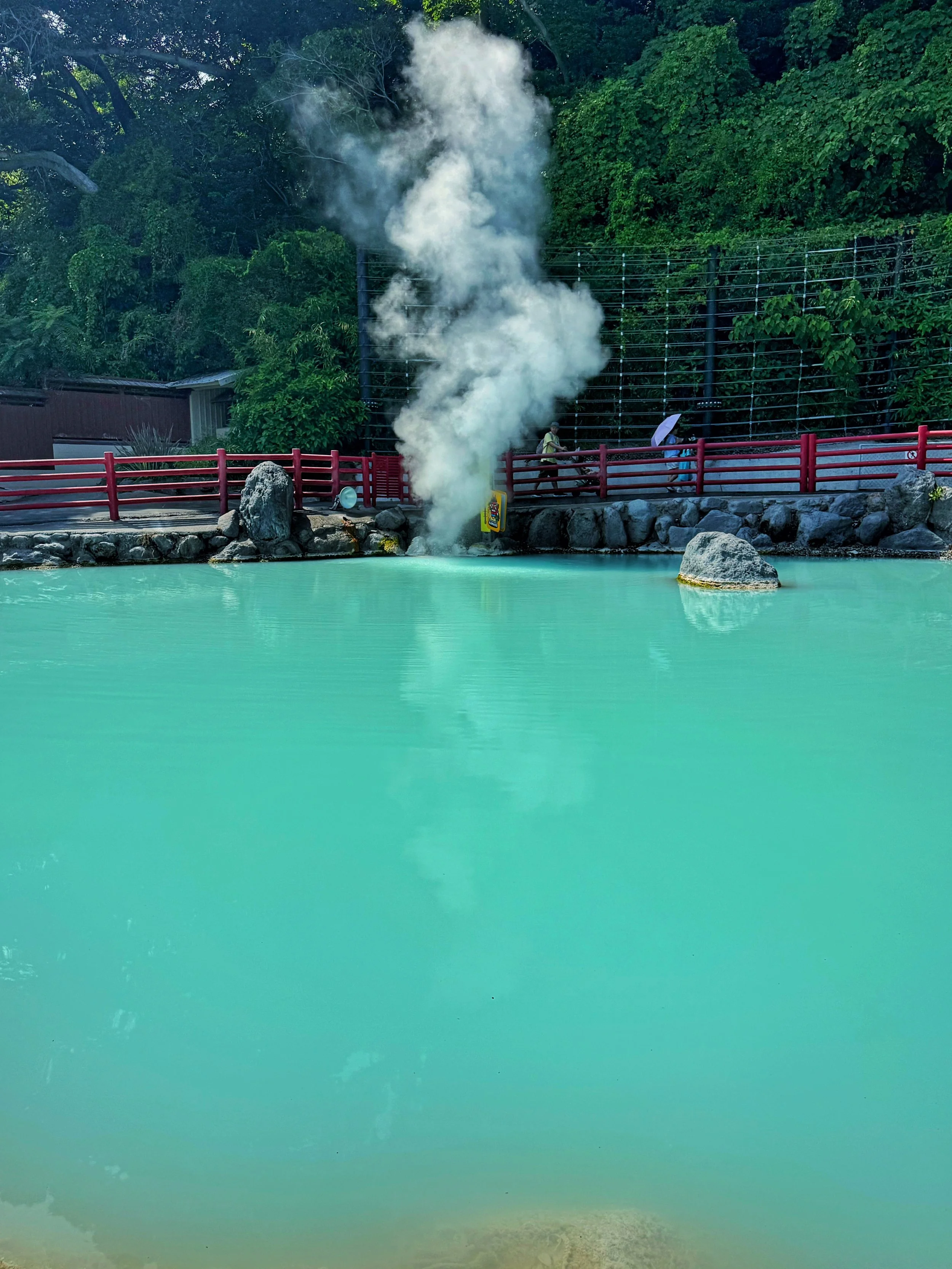
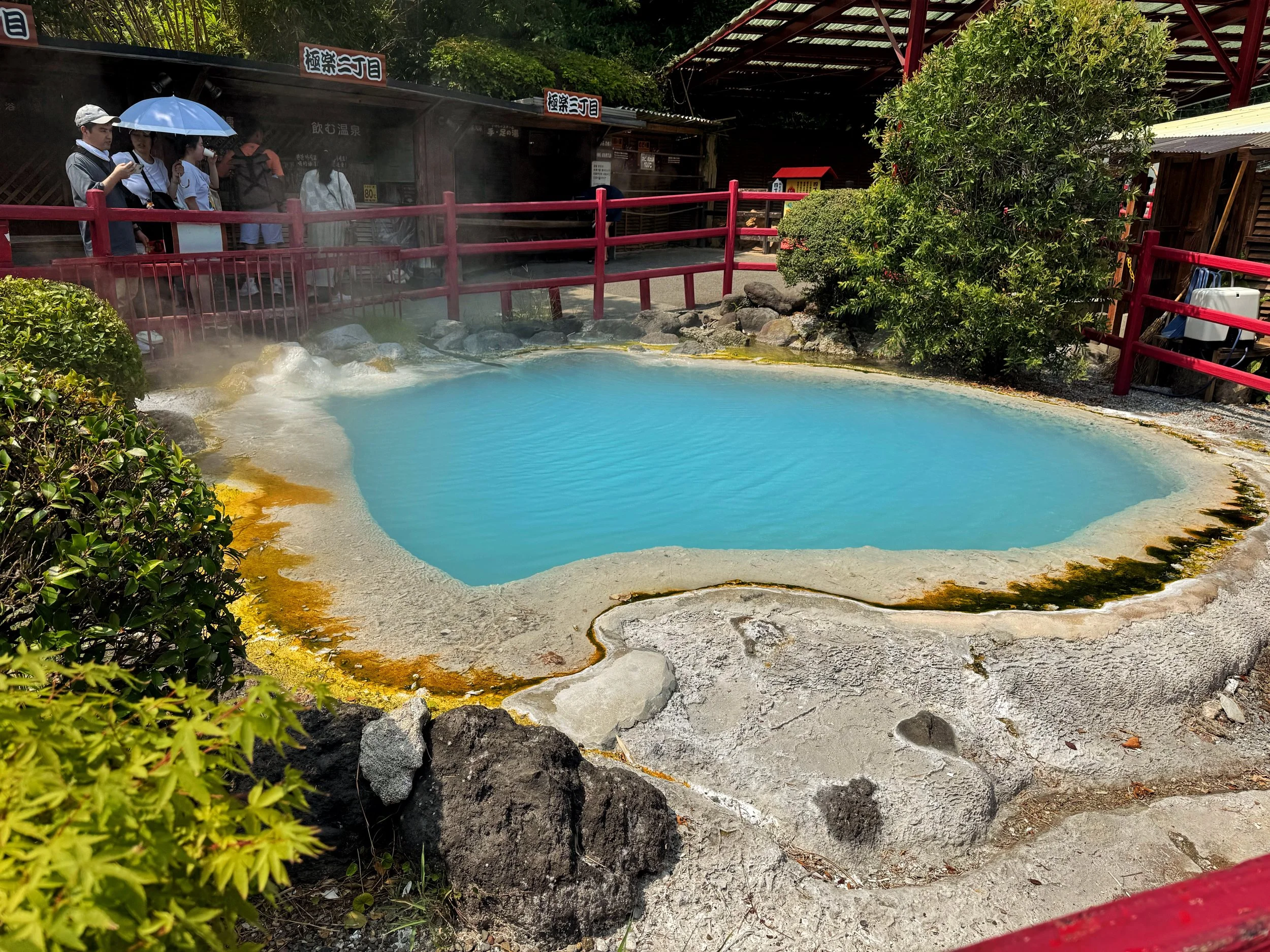
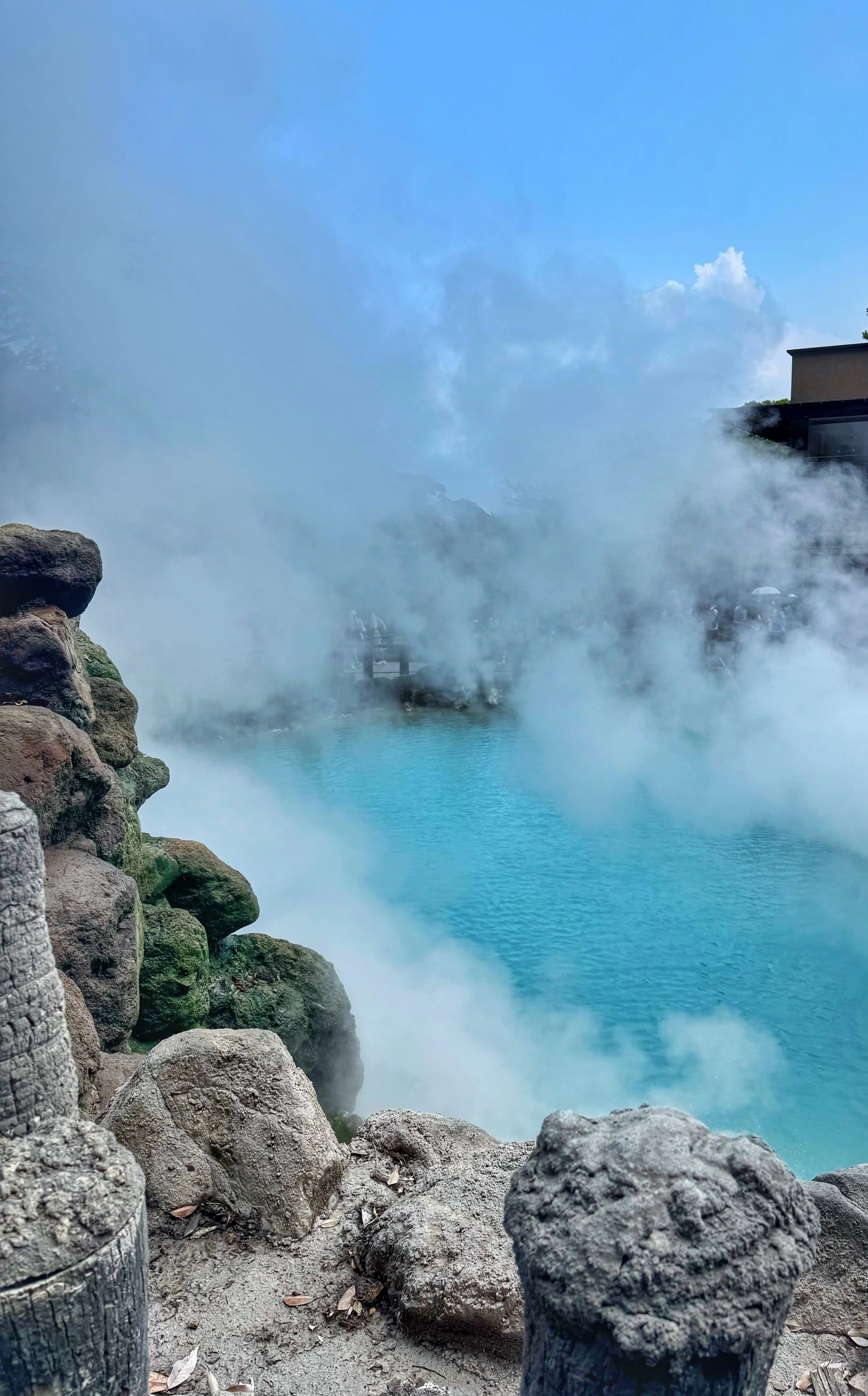
One of the things I enjoyed was how different each site felt. Umi Jigoku is known for its deep cobalt-blue water and gardens. Oniishibozu Jigoku has boiling gray mud that forms rounded bubbles that resemble shaved heads. Kamado Jigoku contains several different geothermal features in one location. Tatsumaki Jigoku is a geyser that erupts at intervals. Chinoike Jigoku has a red, almost blood-like, appearance from the hot clay and minerals in the area. The most surprising thing to me was discovering that there is also a crocodile facility at Oniyama Jigoku.
Crocodiles have been kept and bred there for over 100 years and the facility uses the hot spring heat to maintain a warm, tropical environment. I never expected to see that at a hot spring, and it was one of those shocking moments for me.
Out of all the Hells, my favorite was Umi Jigoku. The thick steam and beautiful blue water surrounded by the gardens were perfect for a peaceful walk. The atmosphere was not something I expected from a place called Sea Hell. It did not feel like a typical image of hell at all.
The contrast with Chinoike Jigoku was especially striking. Before visiting, I expected Chinoike Jigoku to be my favorite because of its deep red color and because it looks different from many hot springs I have seen elsewhere in Japan. However, it was not the one that caught my attention the most. It was interesting but was reminiscent of ponds in Alabama that were dug in areas rich in red clay or iron.
That was a good reminder that photographs and videos can only tell you so much about a place. The way a place looks online can be affected by editing, weather, season, lighting, or even the time of day. I think it is important to visit places without placing too many expectations on them. If I already know exactly what a place is supposed to look like, it becomes much easier to overlook what is in front of me.
Should You Visit Yufuin or the Hells of Beppu?
As I say all the time to people, that is a personal decision.
The nature around Yufuin was absolutely beautiful, but I did not love the Yufuin Floral Village or the busiest parts of downtown. I can understand why people enjoy the architecture and photo opportunities, and I imagine the experience would be different with fewer people around.
The mountains surrounding the town were my favorite part. Especially on a rainy day, they gave the landscape an almost otherworldly feeling. If you enjoy nature, hot springs, and mountain scenery, you might want to explore Yufuin. Just do not assume that the videos online tell the full reality of the downtown area.
The Hells of Beppu were definitely a well-known tourist attraction, but I enjoyed them much more than I expected. If you are in Beppu or have time to add them to your itinerary, I think they are worth seeing. Just do not go expecting a relaxing onsen experience. The Hells are geothermal attractions to observe rather than baths to soak in. What I enjoyed most was seeing how different each location was and learning about the natural processes behind them. As a branding and marketing nerd, I also enjoyed seeing how each of the Hells was marketed and what properties or elements were highlighted. If you are short on time, you do not need to visit all seven. Each has something different to offer, but you can choose the ones that interest you most.
After spending time around the Hells of Beppu, I would recommend leaving some time to experience Beppu itself. You could book an onsen resort and enjoy a relaxing soak, or head into downtown Beppu.
Do Not Skip Downtown Beppu
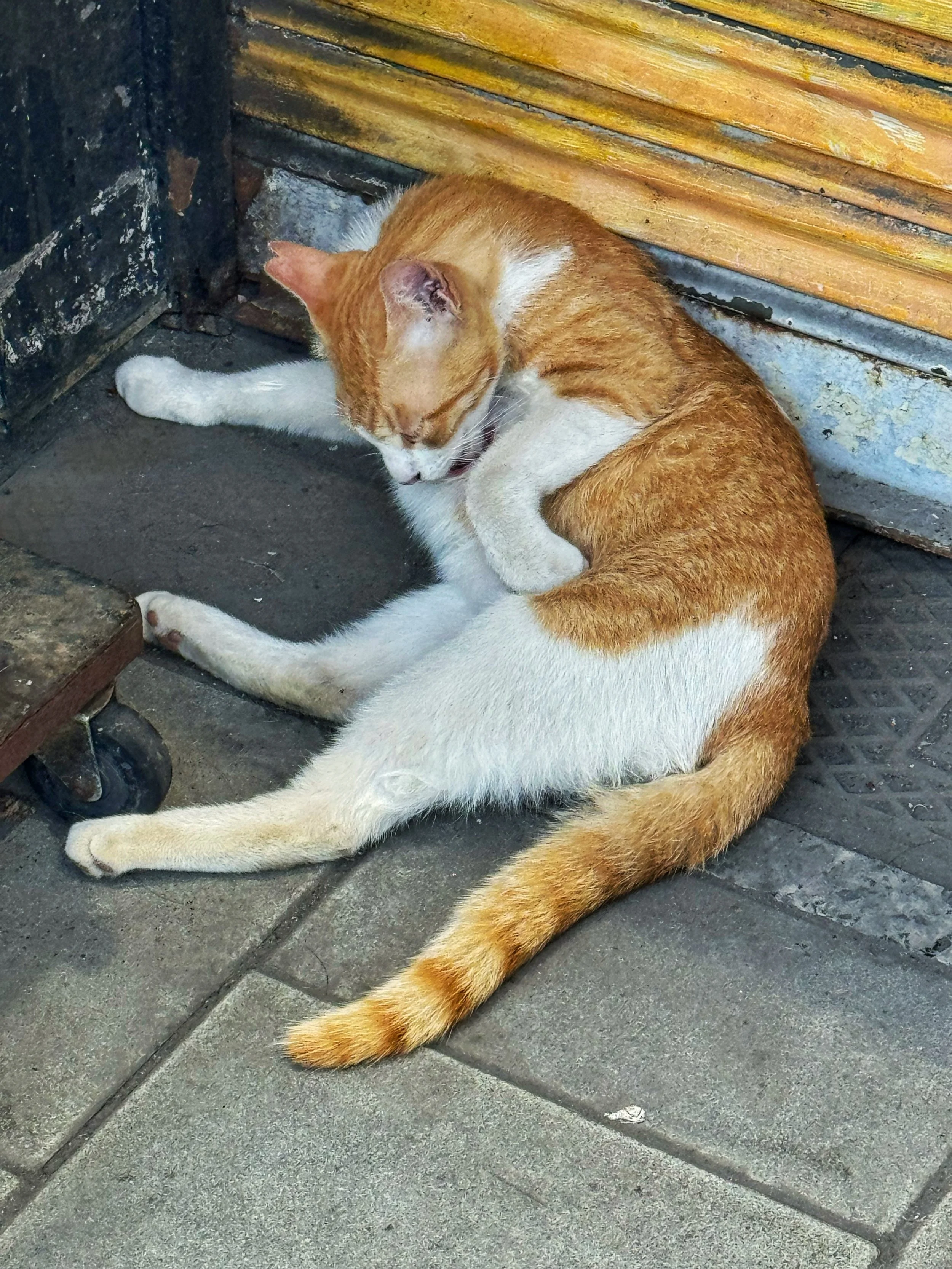
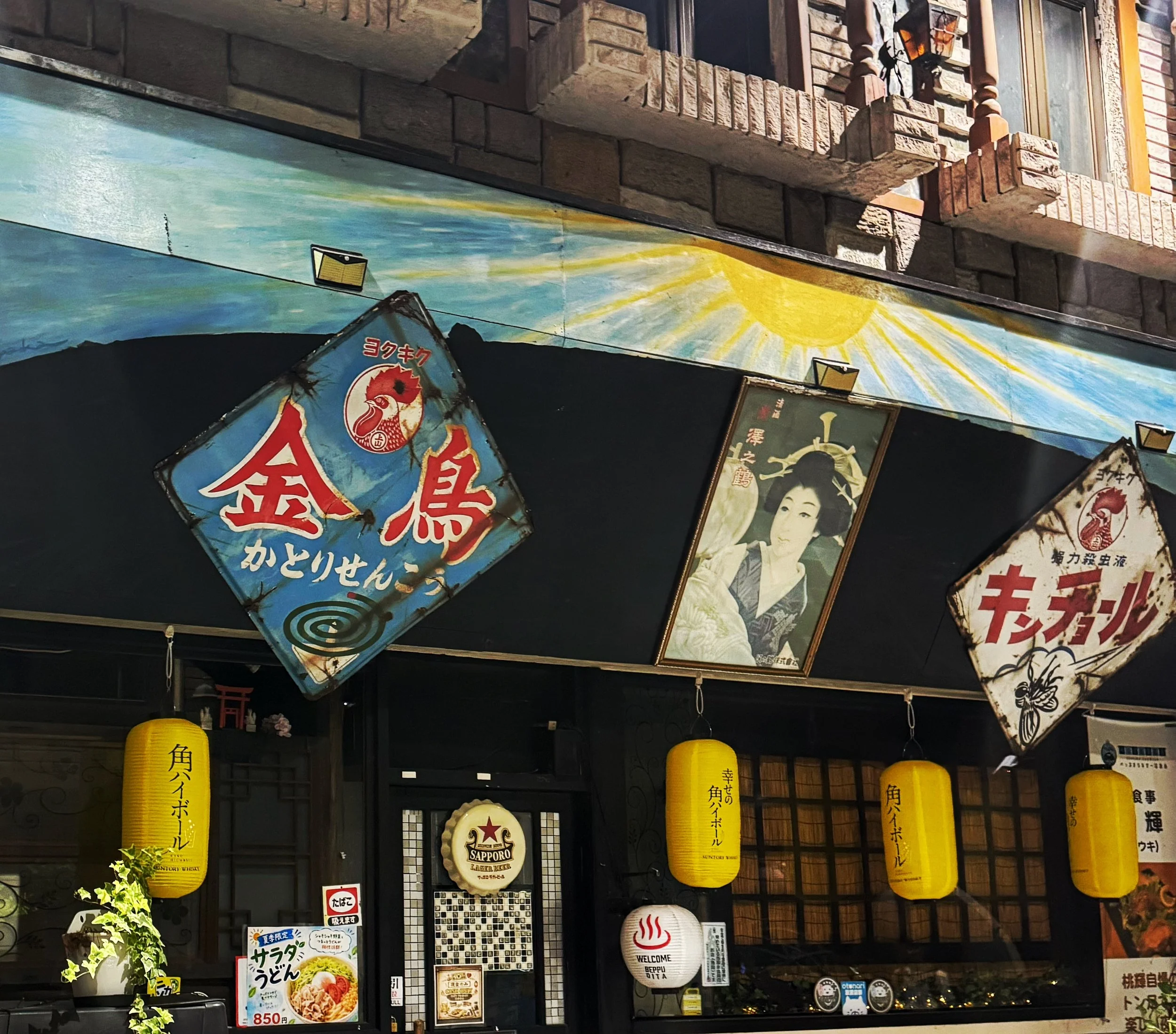
Downtown Beppu ended up being one of the highlights of my visit to Oita. Parts of the city have a distinctly Showa Era/early Heisei Era atmosphere. Older buildings, retro signage, and a slightly quirky feeling made it feel more alive and interesting than I expected. Additionally, there are many lively restaurants, bars, and cafes to enjoy. Keep an eye out for some of the retro posters hanging around town, and if you are lucky, some of the cats that have made the shopping streets their home. After spending so much time in the more heavily photographed parts of Oita, I enjoyed wandering around a part of Beppu that felt much less prominent online or designed for tourists.
Final Thoughts
This trip to Kyushu was a bit different than some of my other travels. I did not skip the major tourist attractions. Instead, I spent time in them and decided what I liked and what I did not. The experiences reminded me of several things about the way I travel.
I rarely go somewhere with a long list of expectations. I would rather arrive and let a place surprise me. I still do my research but try not to be persuaded by things I see in advance. At the same time, the rise of social media and travel content makes it incredibly easy to see the same highlight reel of a destination again and again. Sometimes the reality is even better, and other times it is worse. Sometimes you discover that the thing many other people love simply is not for you.
I enjoyed Oita and would absolutely visit again. The next time, I will explore some different towns, but I would also happily return to downtown Beppu.
For me, that is part of the value of traveling. You do not have to love everything just because other people do. You do not have to visit every Insta-famous location, but you also do not have to skip a place just because it is popular. Sometimes you just have to go and see for yourself. I recommend doing that with an open mind, though.
If you have been to Oita, what’s your favorite spot? What are some of your favorite tourist destinations in Kyushu?
