
Fukusaki: Japan’s Yokai Town Full of Folklore
Imagine walking by a pond and seeing a kappa slowly rise out of the water or hearing a creak before an oni flies out of a shed. It sounds like something you would only see in a movie or at a theme park. However, you can experience both and many more interesting sights in Fukusaki, Hyogo Prefecture.
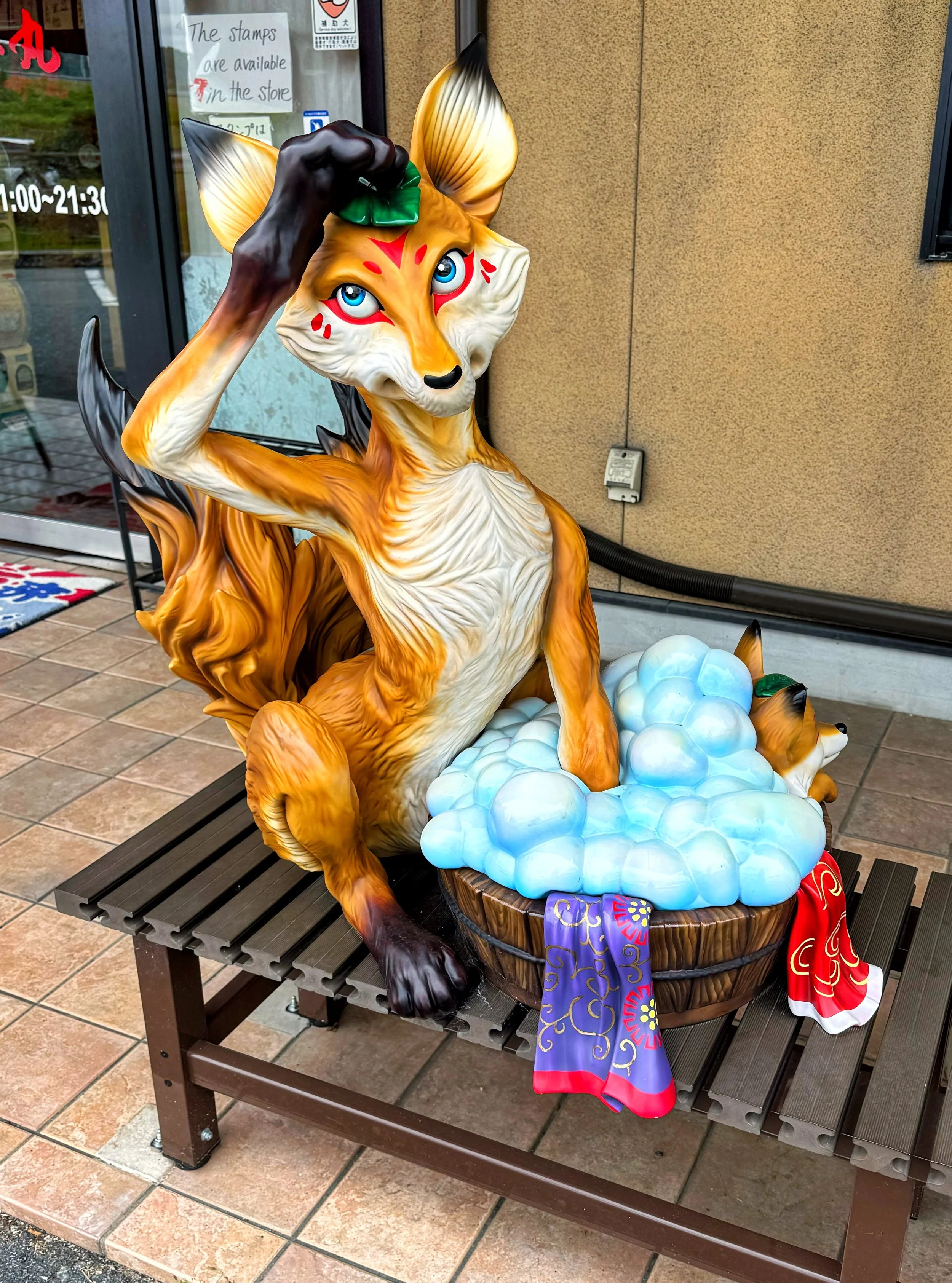
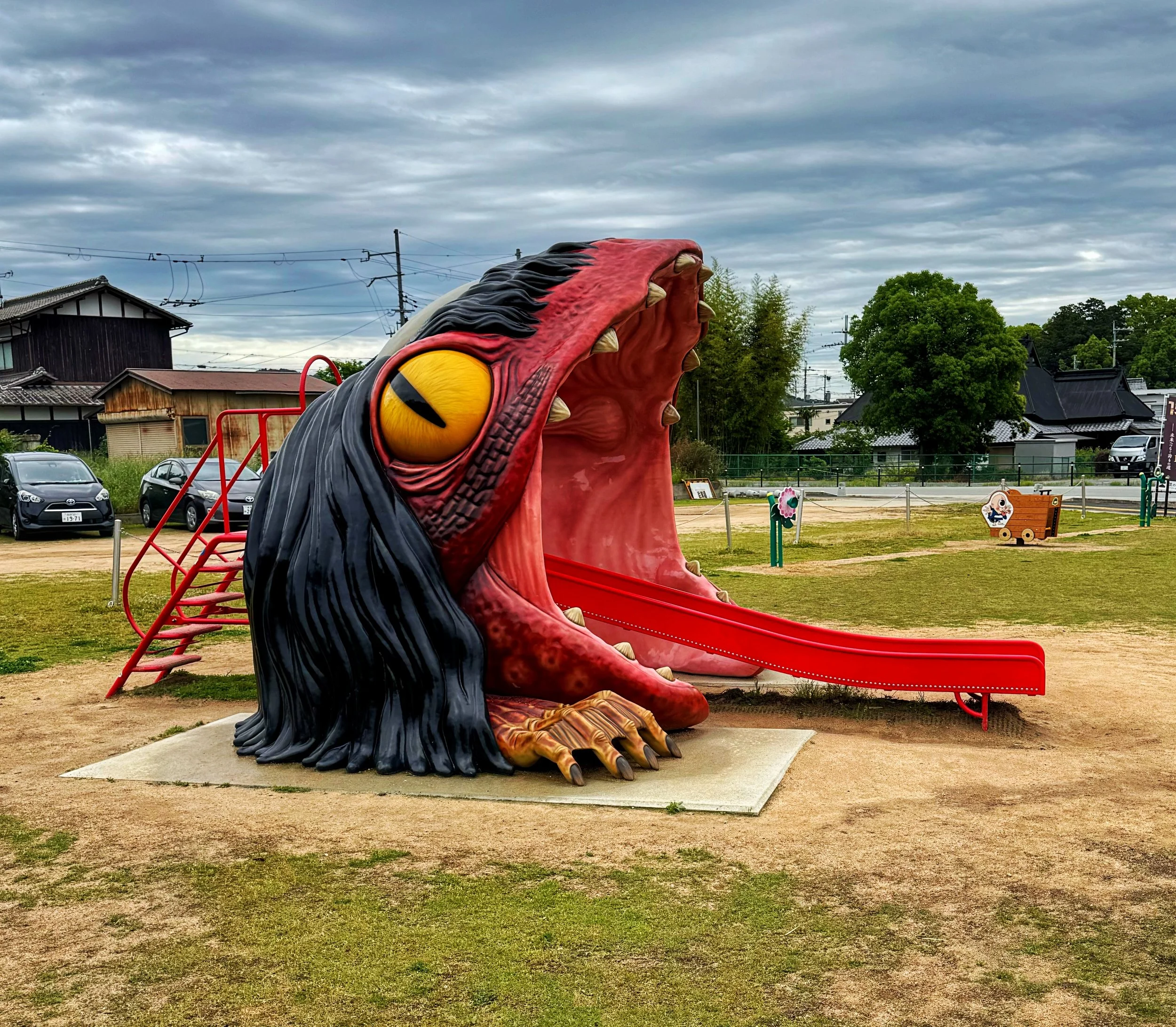
Fukusaki is the hometown of Kunio Yanagita, the writer and folklorist often called the father of Japanese folklore studies. During his life, he wrote Seventy Years in My Hometown (故郷七十年), and in it, he described a kappa who lived in a local river. Today, the town honors his legacy with yokai-themed attractions, including a museum, park, and dozens of yokai benches scattered throughout the area. Exploring them makes for a fun and unique cycling adventure through rural Japan.
What are Yokai?
Yokai (妖怪) are supernatural creatures and spirits from Japanese folklore. They are described as having animal-like, human-like, or natural forms while others have no specific image or are shapeshifters. Historically, yokai were often used to explain strange or unexplainable events. They are somewhat similar to nymphs, imps, or ghosts in other cultures.
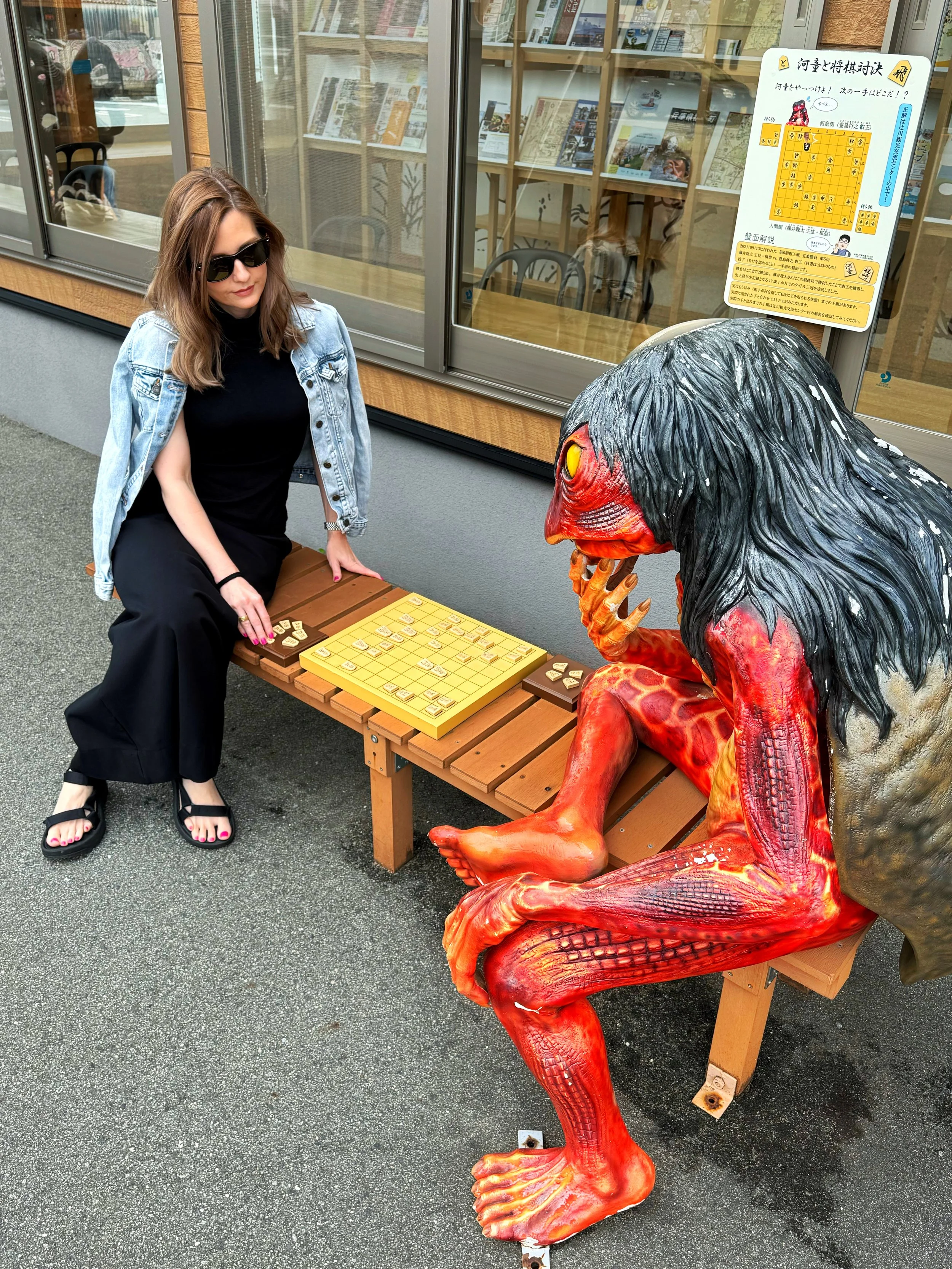
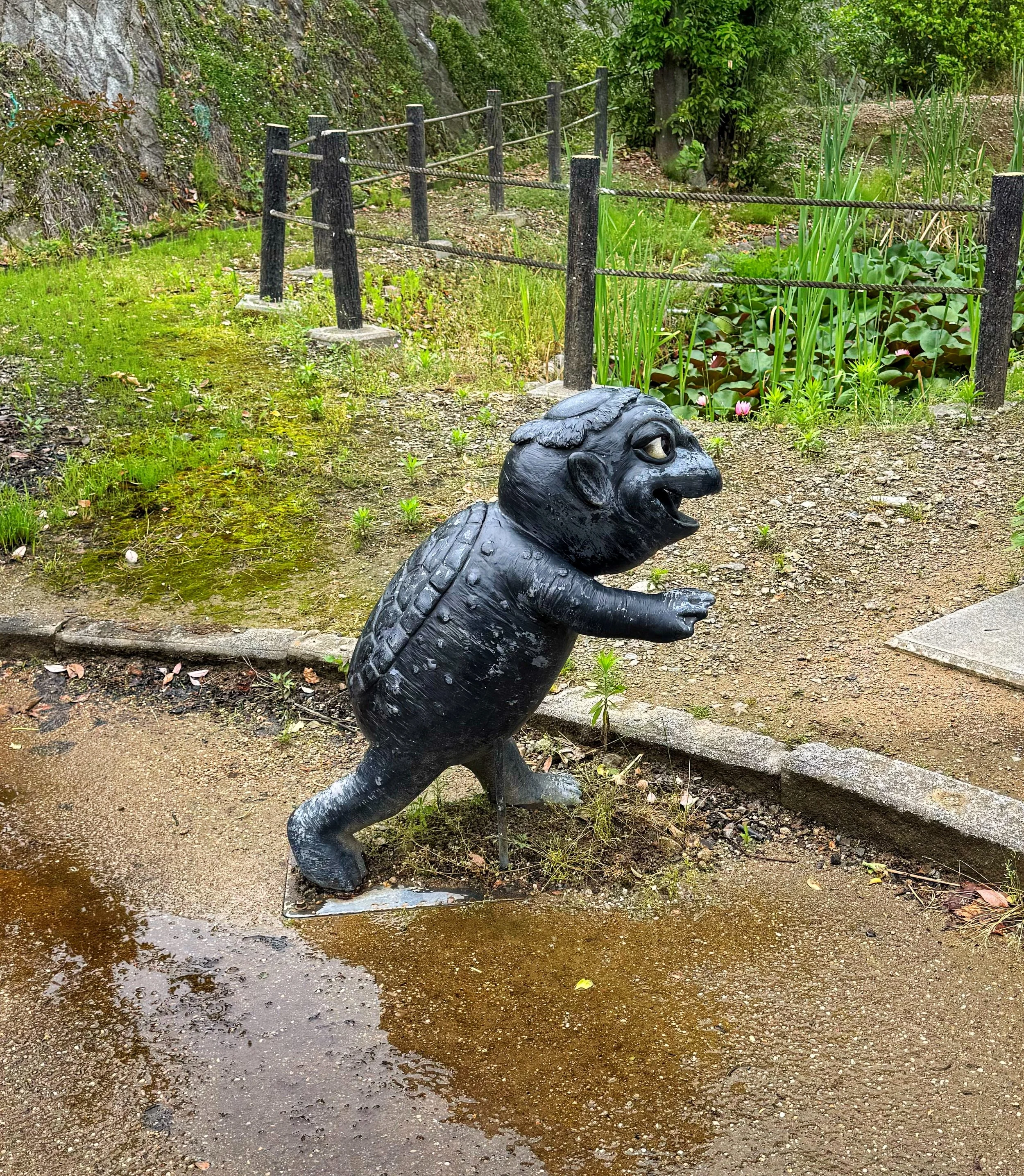
One of the most famous yokai is the kappa. Kappa are amphibious creatures with scaly skin, a turtle-like shell on their back, and a small dish of water on top of their heads. Kappa are known for being incredibly polite and mischievous. In some stories, they simply prank people or challenge them to games. In darker lore, they attempt to drown people or steal their shirikodama. The shirikodama is a mythical ball located in the anus that is said to contain a person’s soul.
According to legends, kappa can be defeated by bowing to them because they will bow in return due to politeness and spill the water. The water spillage weakens them and allows the person to escape and in some versions, makes the kappa indebted to the person.

Meet Gajiro the Kappa
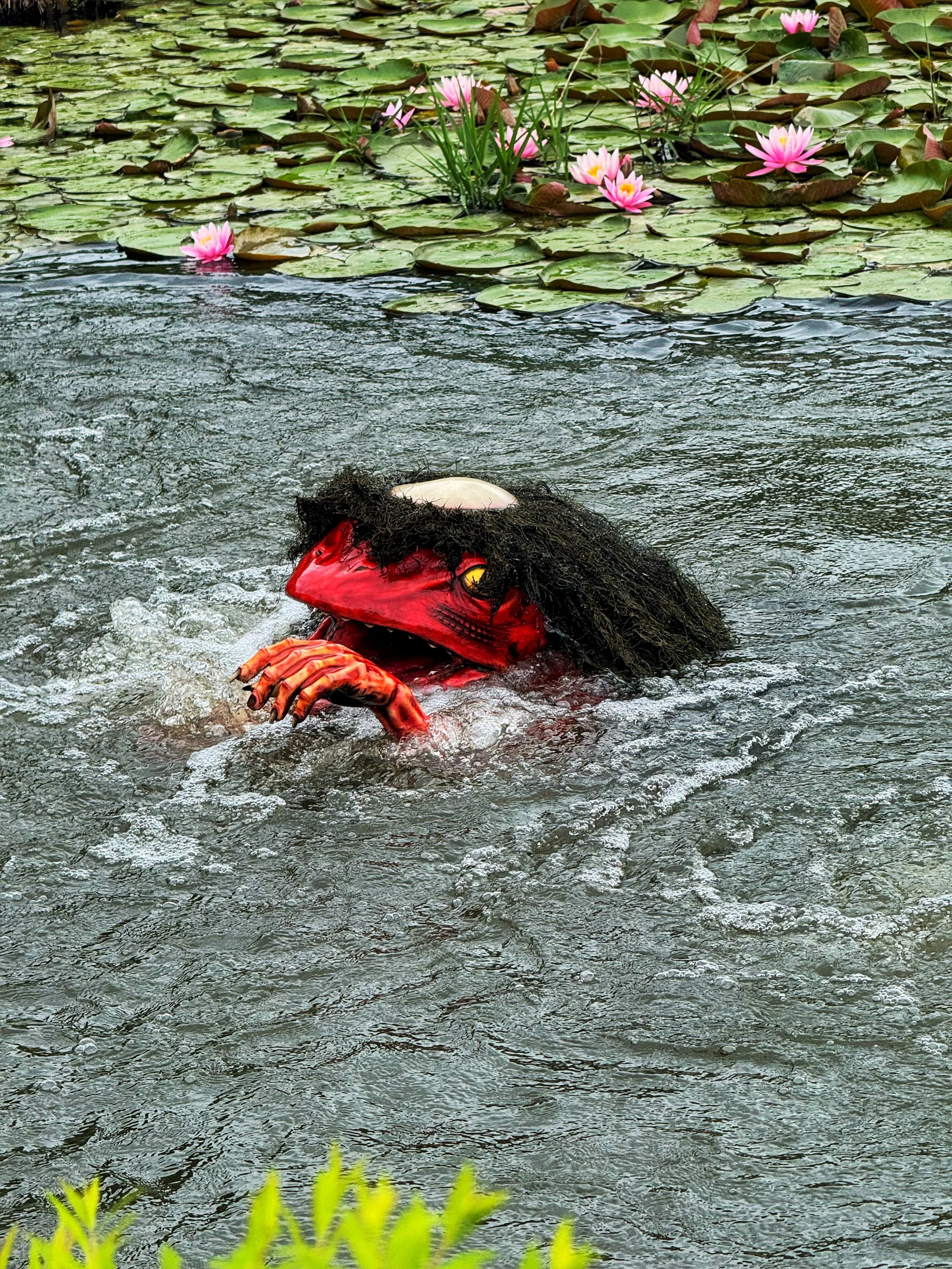
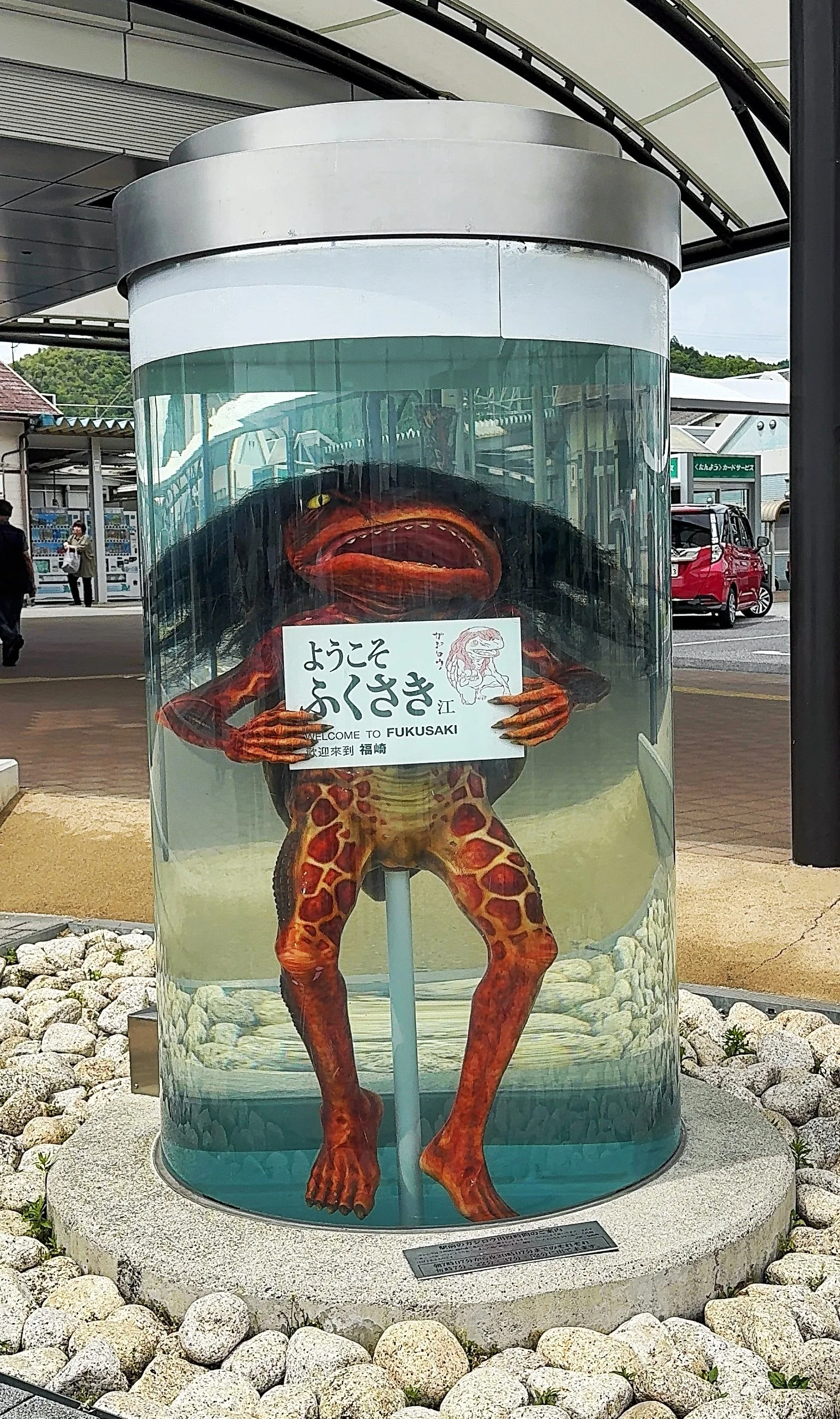
Gajiro is Fukusaki’s famous kappa mascot inspired by Yanagita’s folklore research and studies. Unlike cute modern mascots, Gajiro has a much darker personality. As stated in the lore, Gajiro would often lure people to the river to drown them or steal their shirikodama.
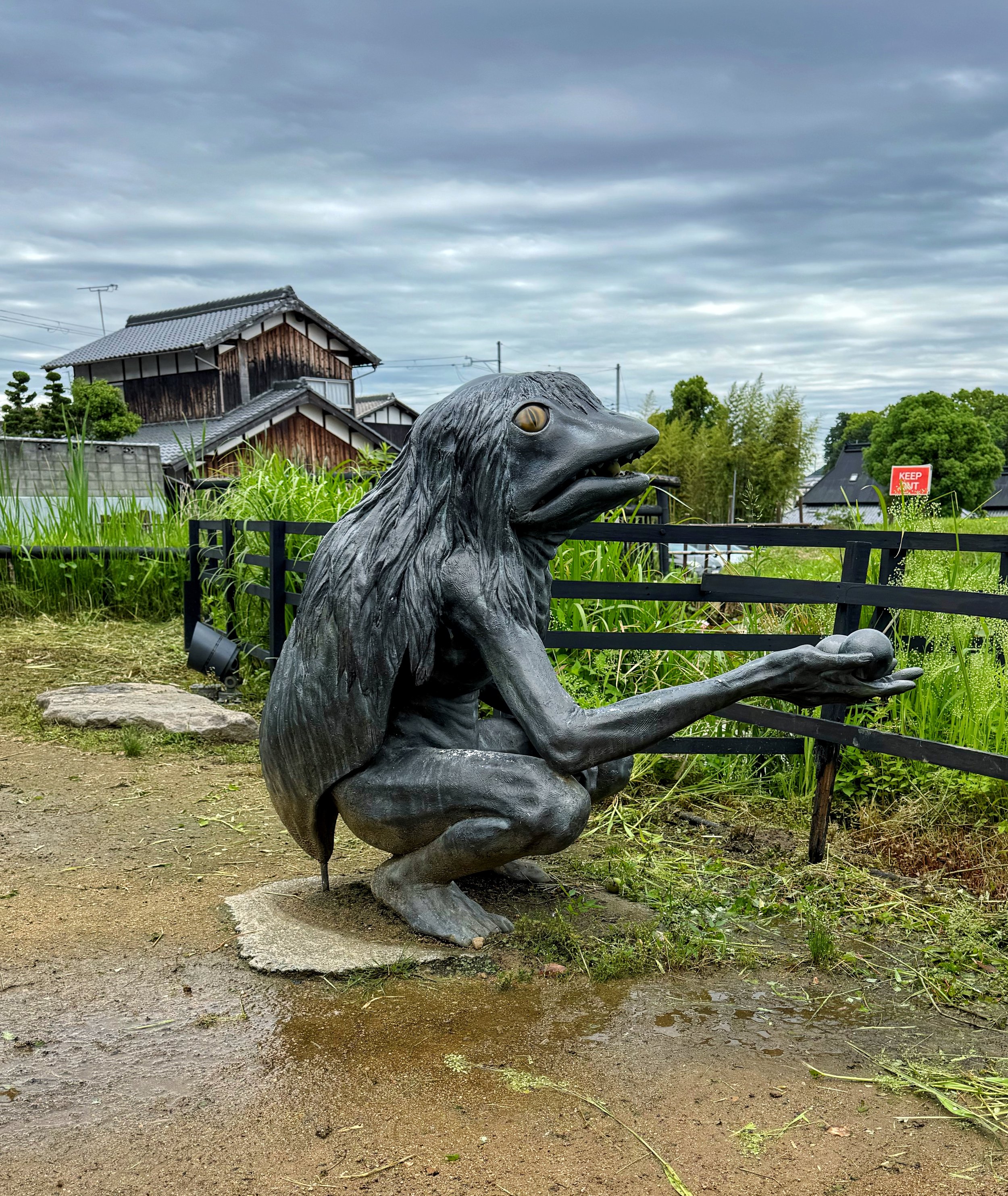
If you visit Fukusaki’s Tsujikawayama Park, you can see Gajiro pop up out of the pond several times a day. Nearby, his brother Gataro sits watching from the edge of the water. The moving yokai displays are surprisingly well done and make the park one of the most unique attractions in the area.
Exploring the Yokai Benches
If you arrive by train, make sure not to miss the Gajiro display outside the station. If you arrive by car, I recommend starting the journey at either the tourism center, the station area, or Tsujikawayama Park.
While it is possible to explore some areas on foot, renting a bicycle is probably the best option. The yokai benches are scattered throughout town, and some locations are not close together or have limited parking.
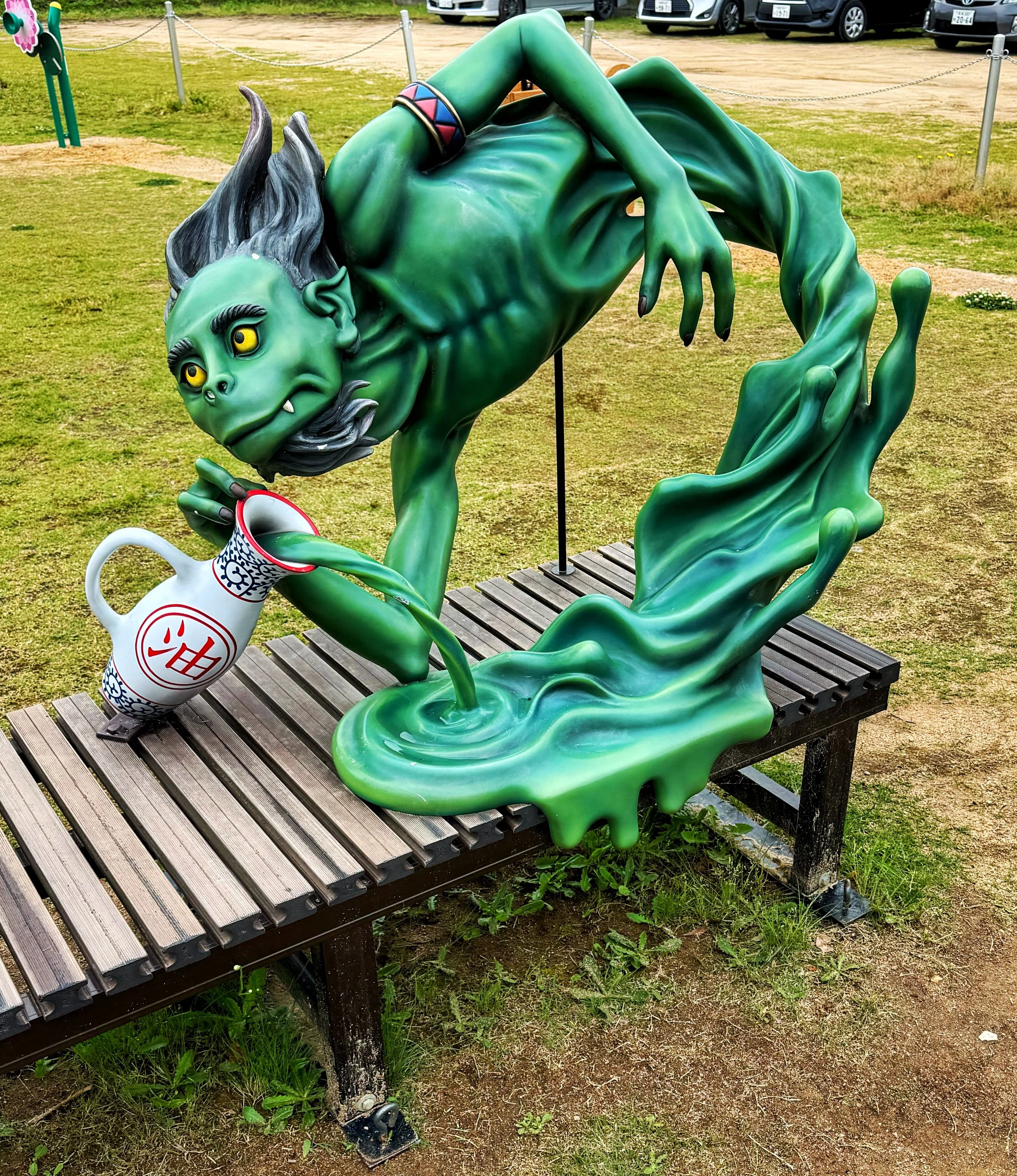
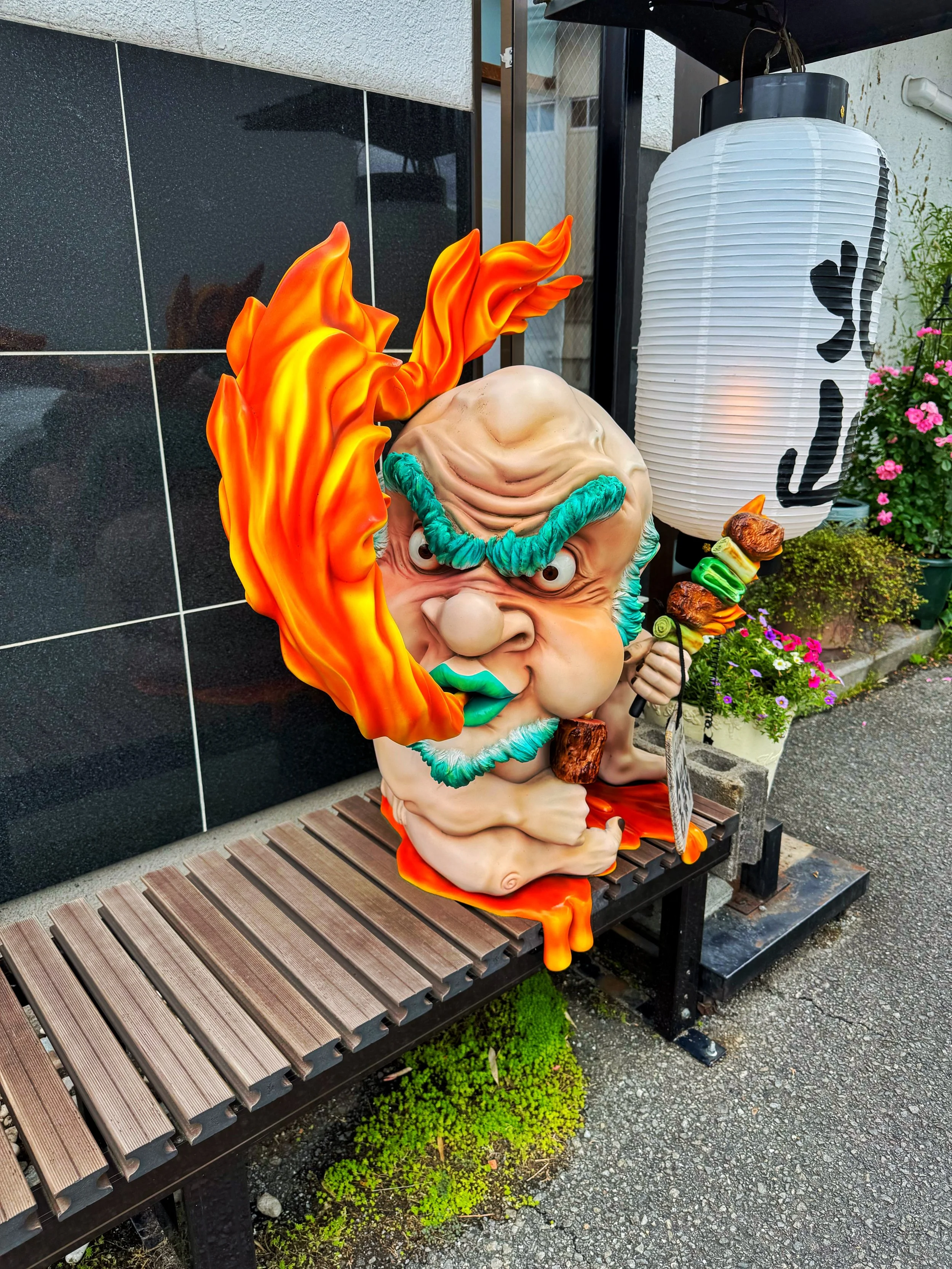
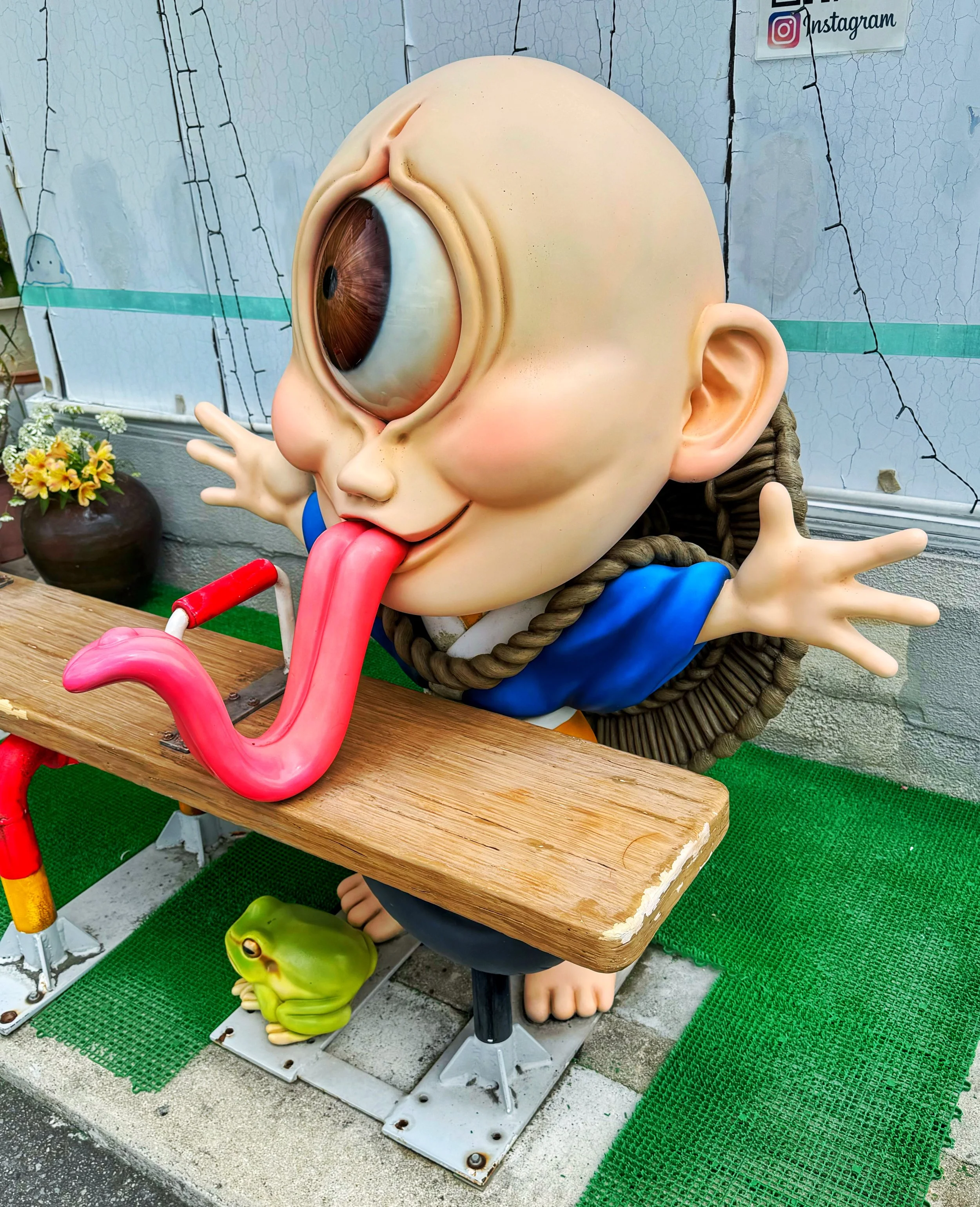
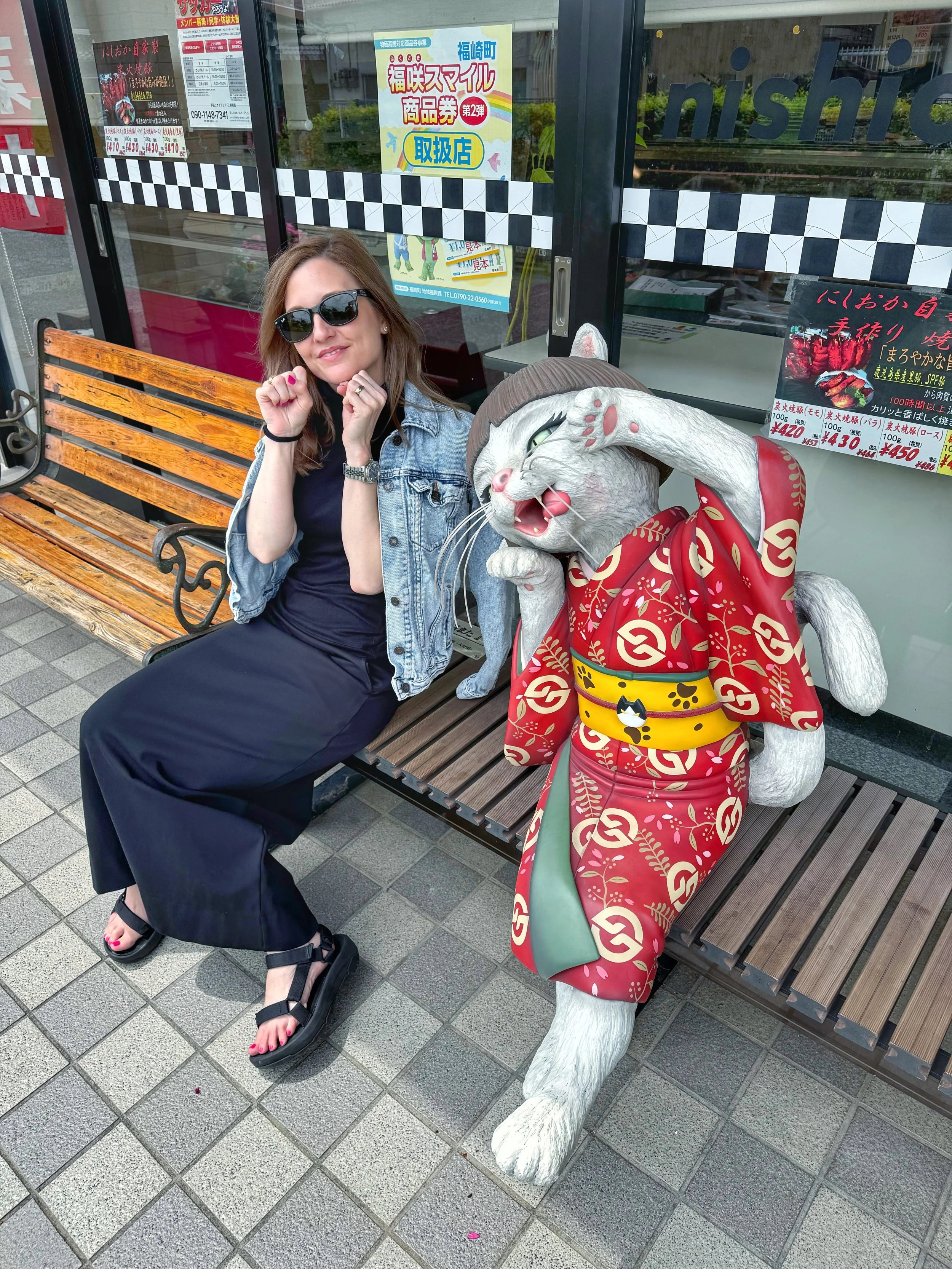
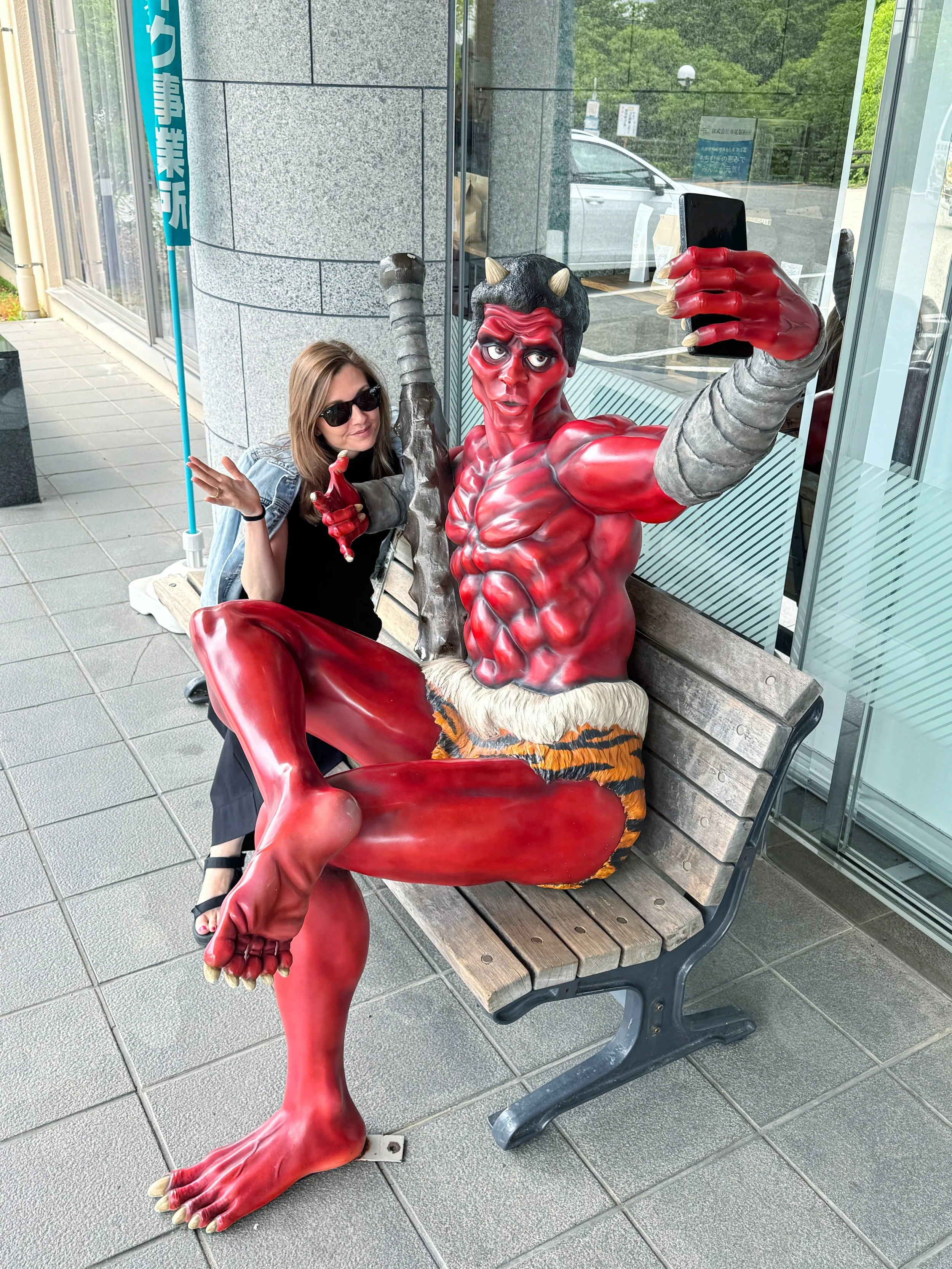
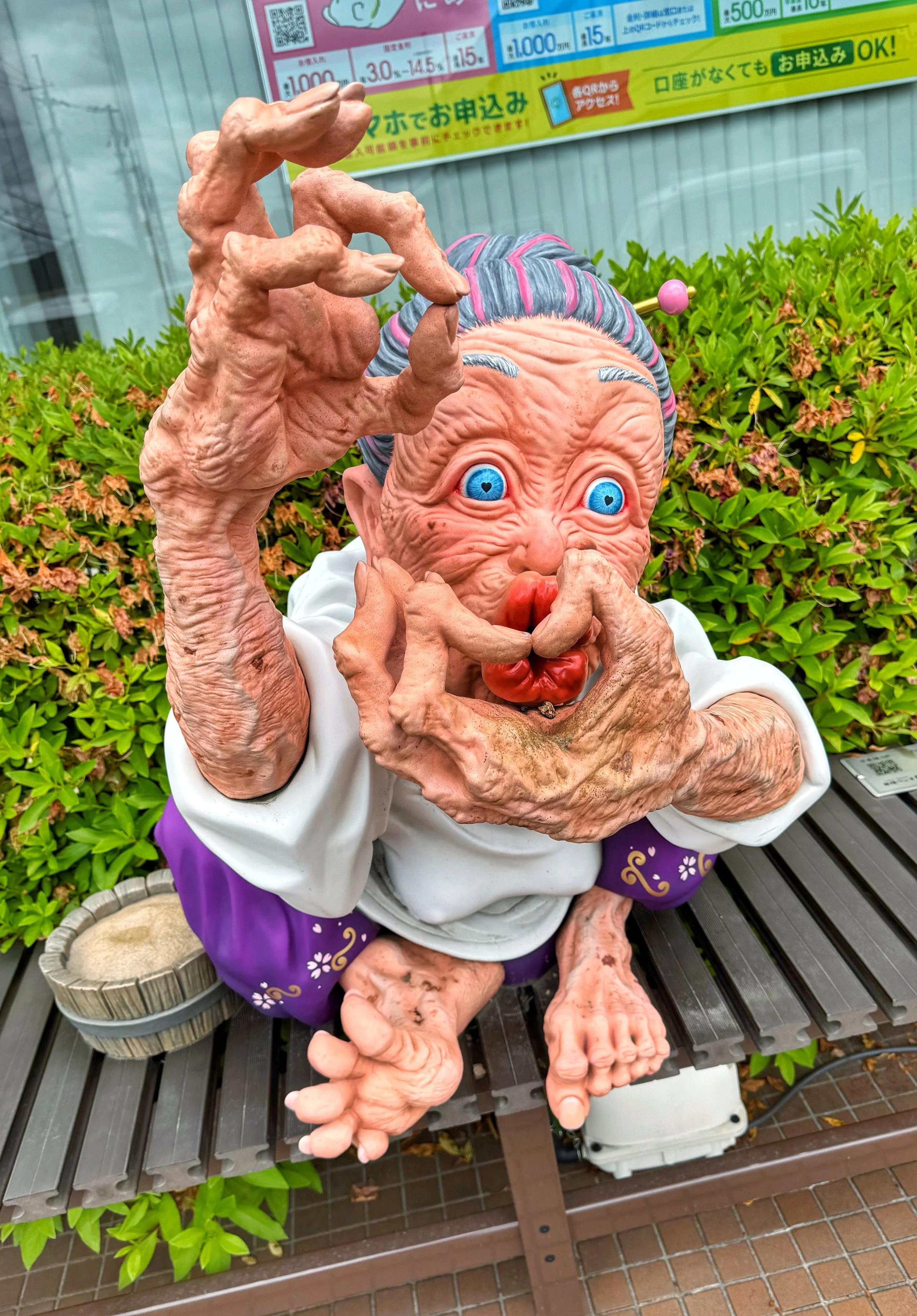
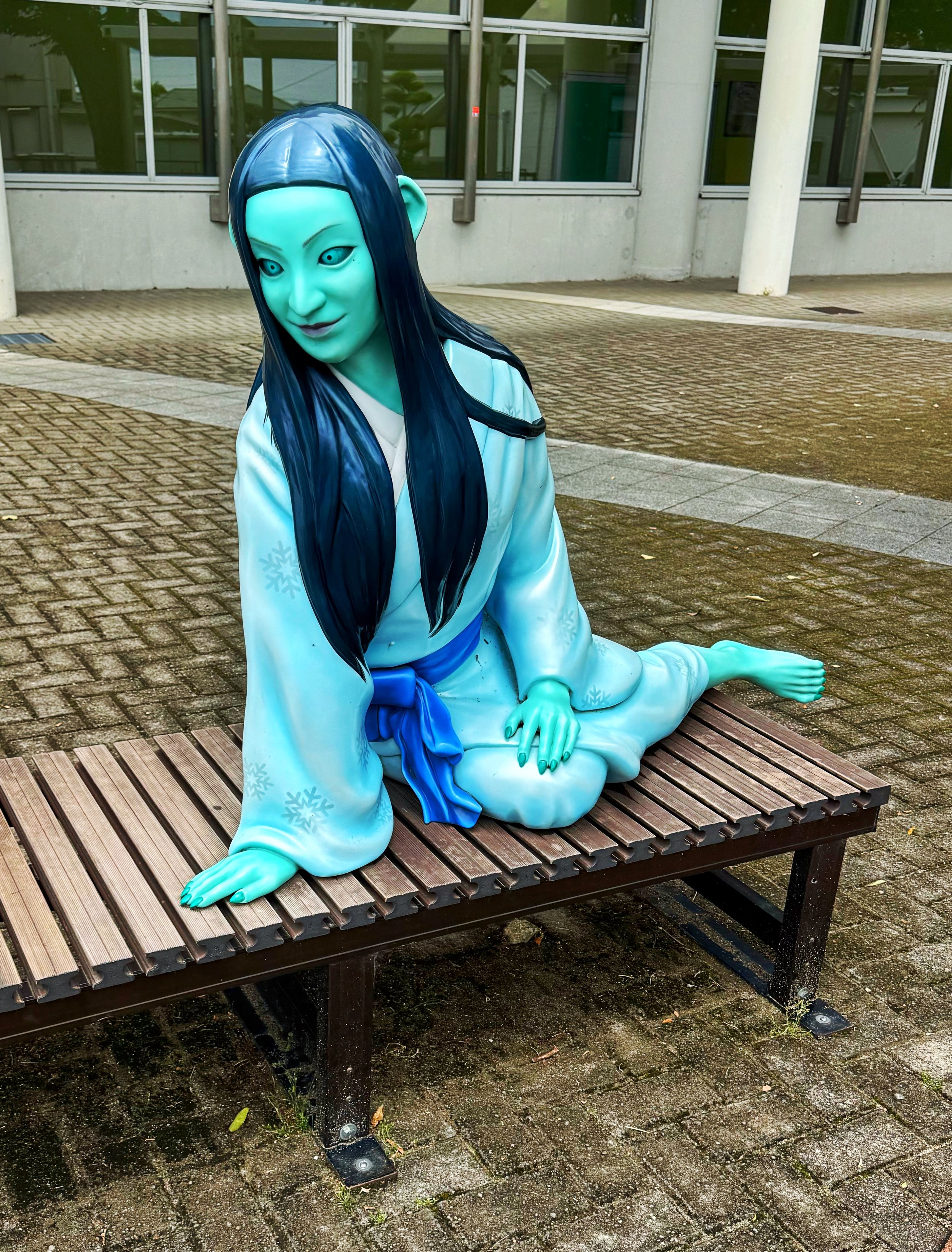
The yokai benches are great photo opportunities and are genuinely interesting to search for. Each one features a different yokai from Japanese folklore. If you visit the tourism center, you can pick up maps and information about the benches as well as about yokai in general.
Some of my personal favorites were the oni, the abura-bo, the nekomata, Gajiro, and the tengu benches. Additionally, I really enjoyed seeing the Gajiro animatronic at the park.
Other things to Do in Fukusaki
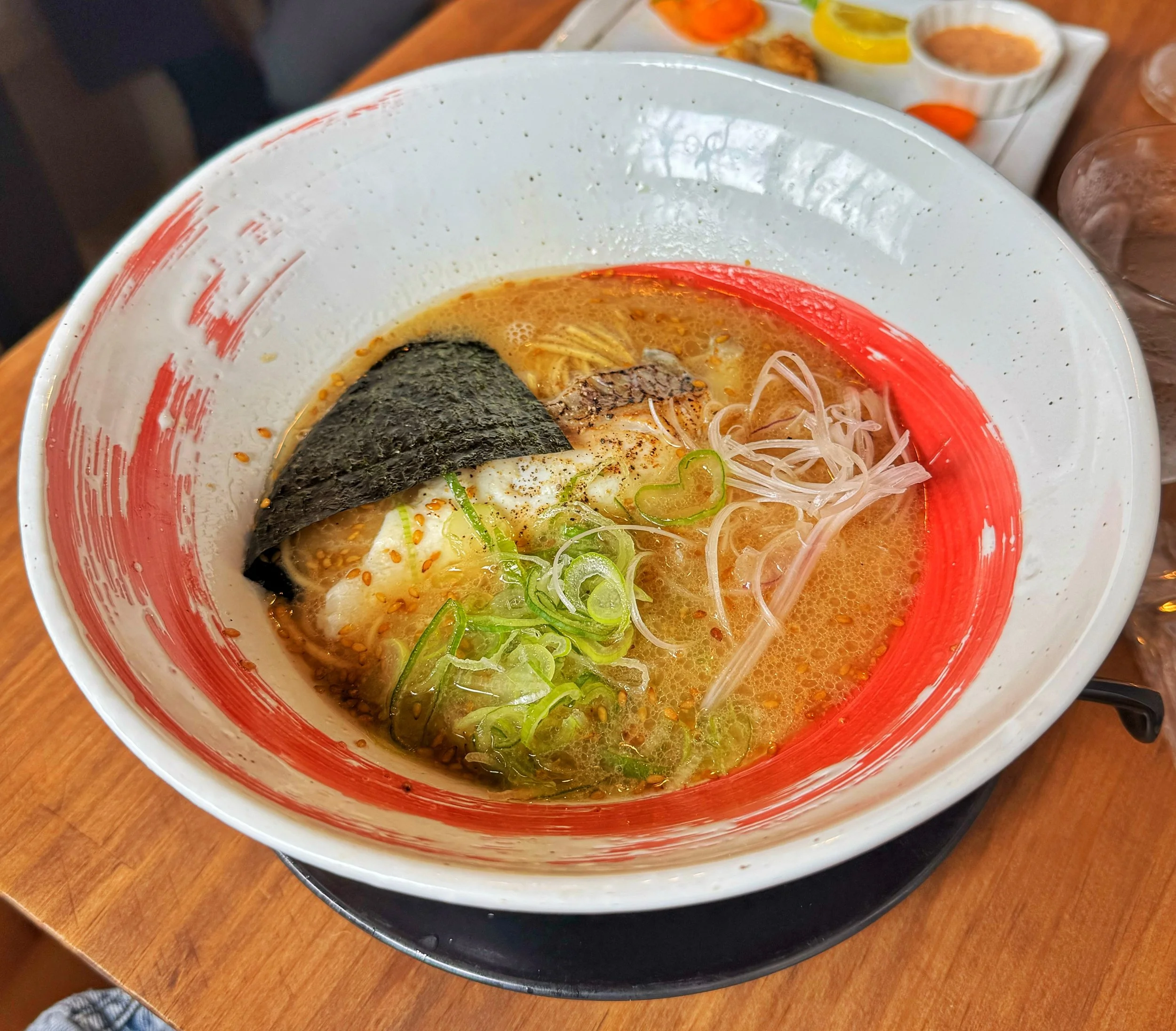
Beyond the yokai attractions, Fukusaki also has several places worth visiting if you want to learn more about the town’s history and culture. The Kunio Yanagita Folk Museum provides more information about Kunio Yanagita, folklore studies, and the town’s history. Around town you can also find cafes and shops that incorporate yokai themes into their menus and decoration. For lunch, I recommend trying the local soba or barley-based dishes. Both are specialties in the area.
Is Fukusaki Actually Worth Visiting?
Fukusaki had been on my list for years because I like unique folklore, yokai, and unusual places in Japan. Yet, I never found time to visit before recently. It is not exactly close to Aichi, and I rarely travel through that area of Hyogo Prefecture. Last week, I finally decided it was time to go.
Honestly, Fukusaki is worth visiting for either a half-day or even a full-day trip if you plan it right. The cafes are charming, the attractions are genuinely unique, and the restaurants offer foods you would not normally find in larger cities.
One thing I really appreciated was how friendly all the locals are. I ended up chatting with several people about the town’s history and what they love about living there. Unlike areas struggling with overtourism, many people in Fukusaki seemed happy to see visitors exploring the town.
If you enjoy Japanese folklore, rural towns, hidden gems, or places away from heavy tourist crowds, Fukusaki is definitely worth adding to your itinerary.
Places to Visit Near Fukusaki
Himeji
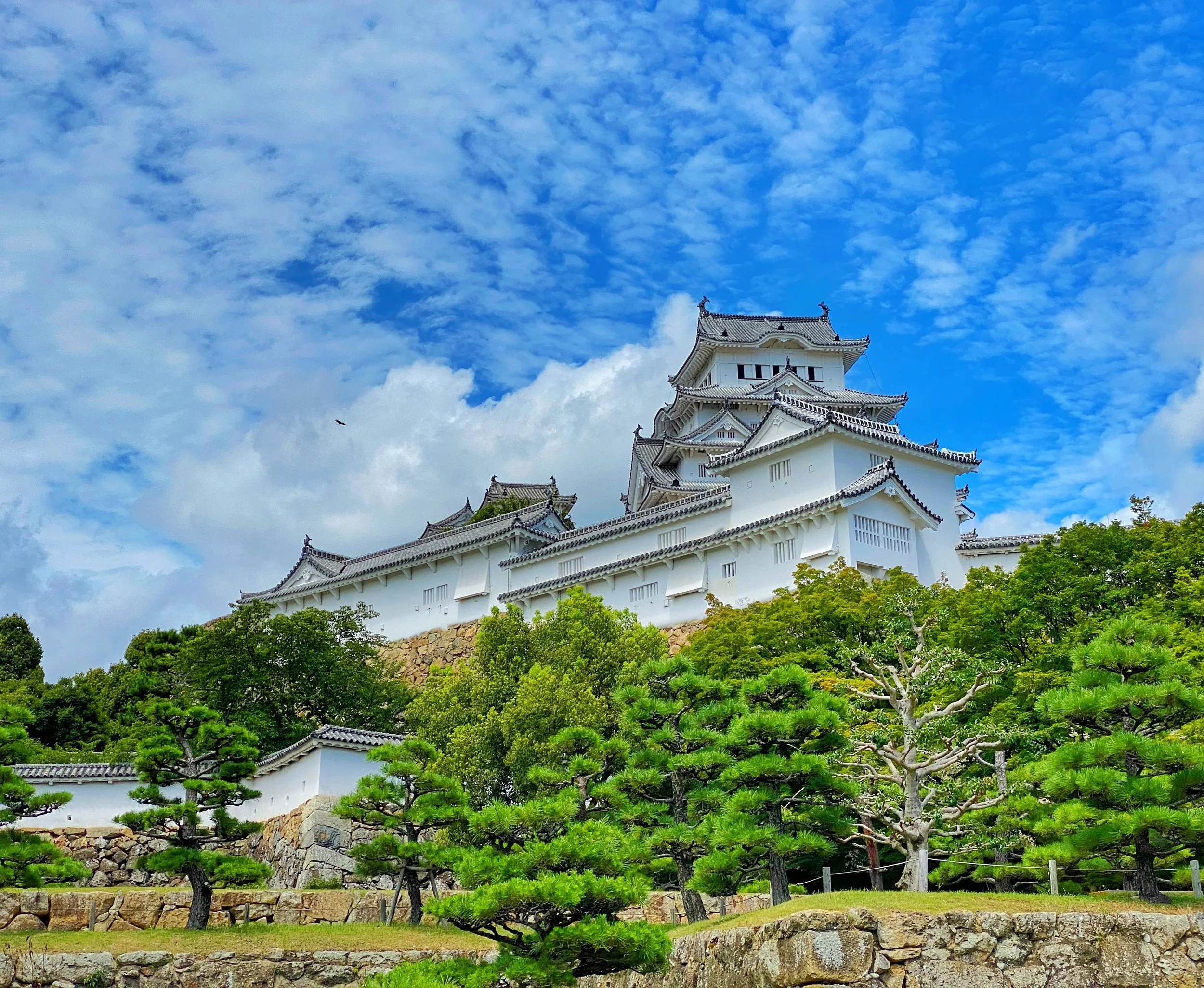
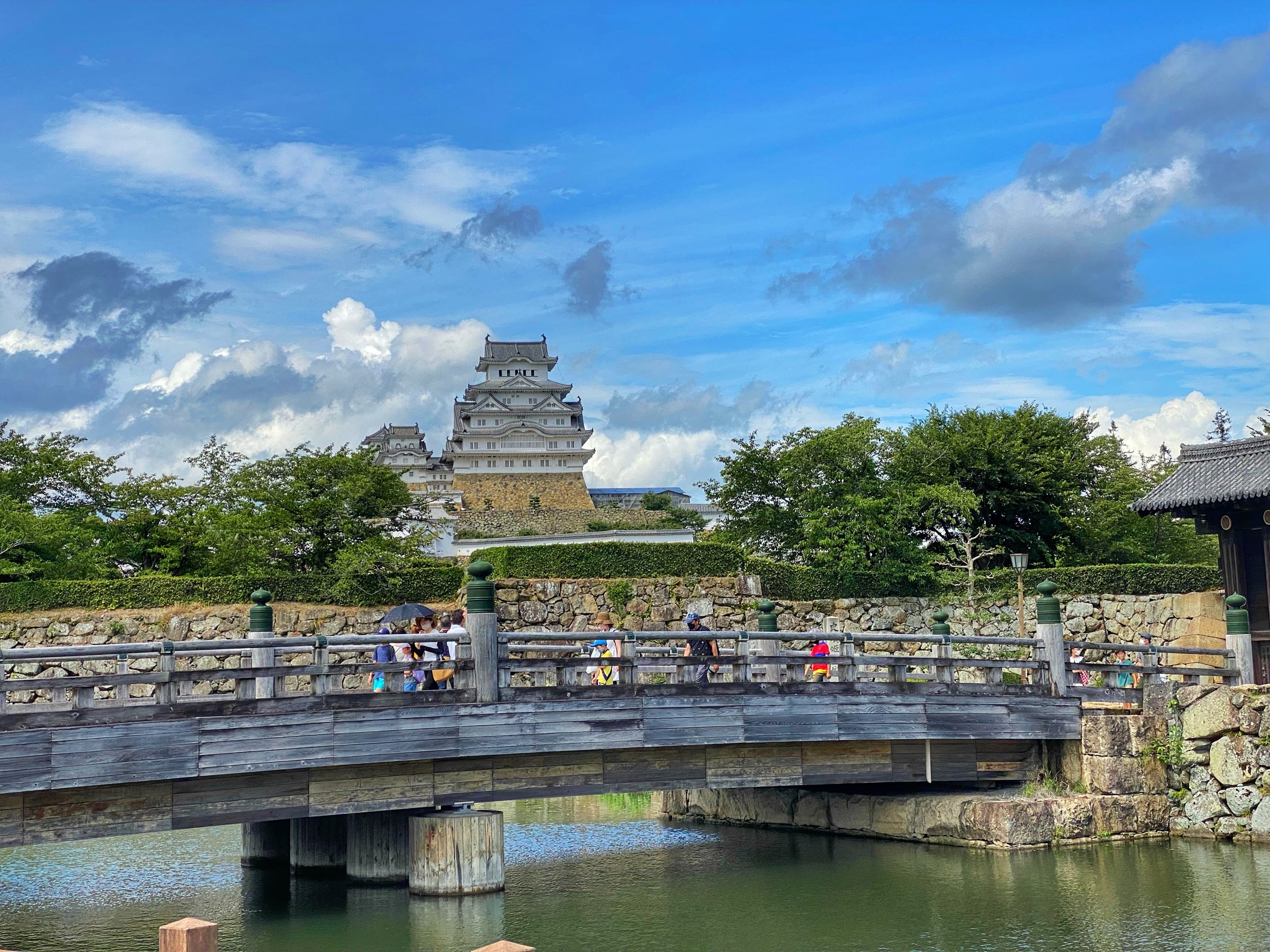
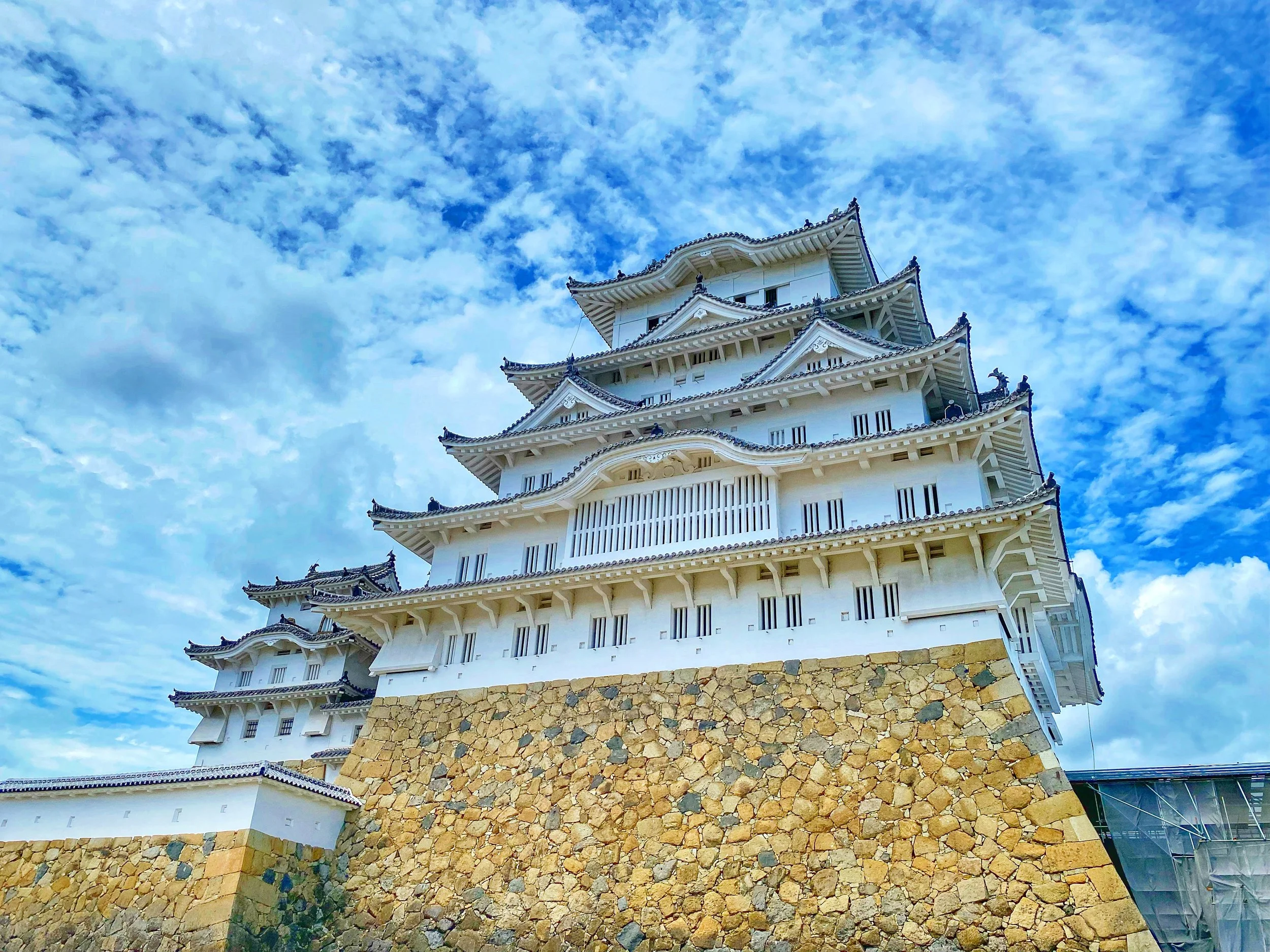
Himeji Castle is one of Japan’s twelve surviving original castles and one of the country’s most famous landmarks. It’s nicknamed the White Heron because of its bright exterior and is incredibly impressive in person.
The castle is easy to explore in a half day and offers an excellent look into Japan’s feudal history. Spring is the busiest season due to cherry blossoms, but it remains popular year-round.
Shiso
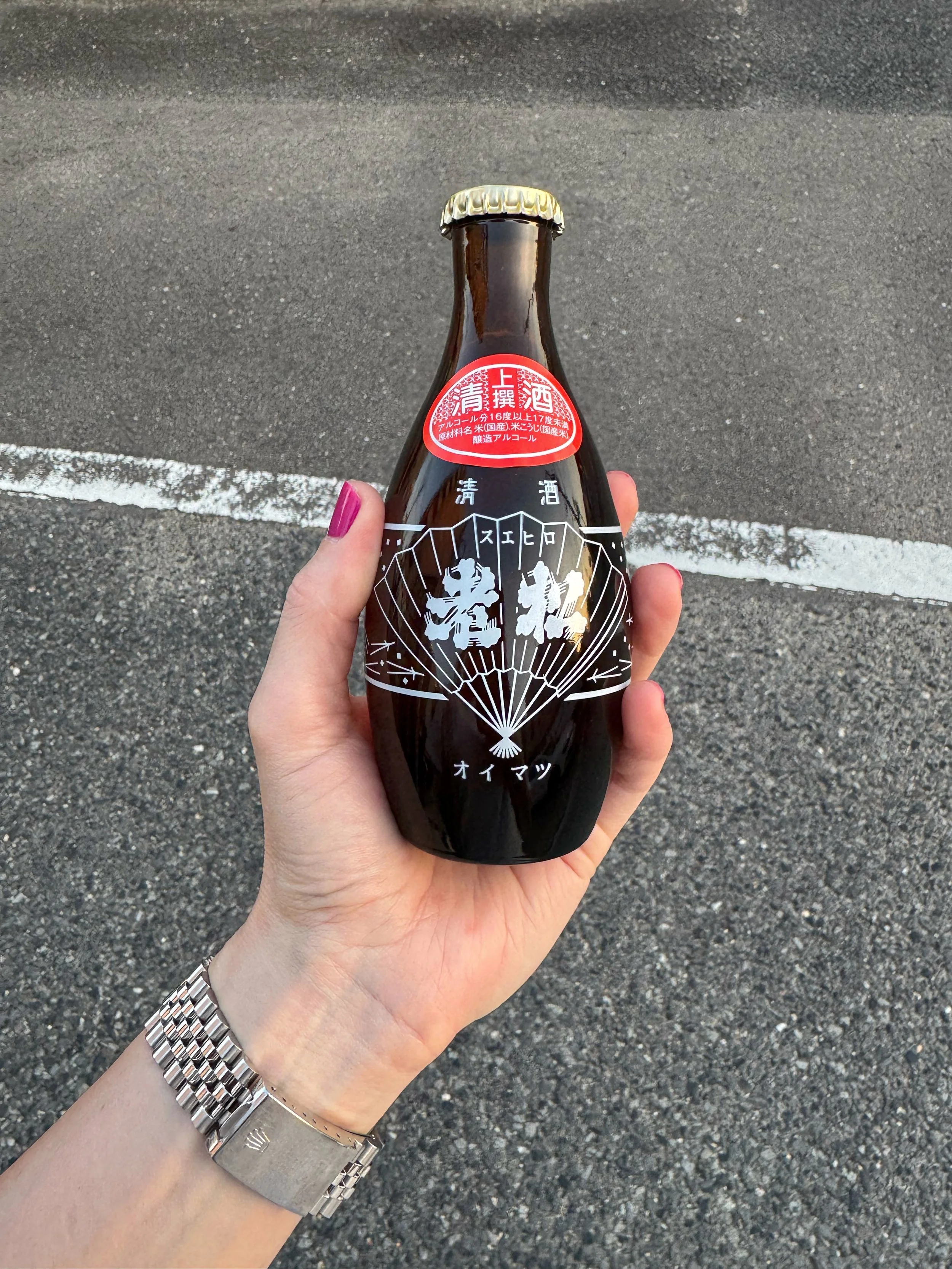
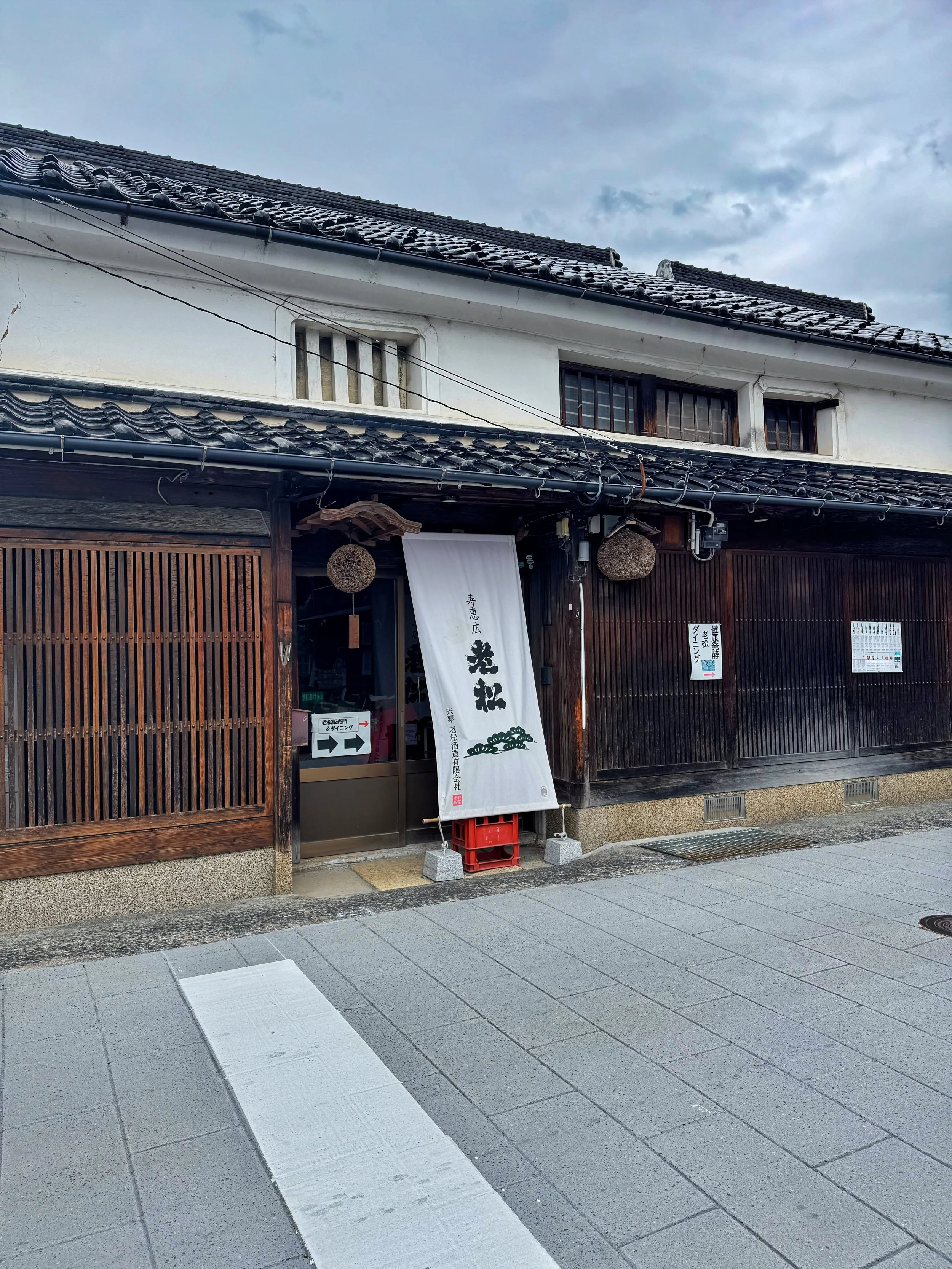
Shiso is another underrated area in Hyogo Prefecture known for nature, outdoor activities, and sake breweries. Throughout the area, you can also find ryokan, local cafes, and small independent shops.
I would recommend spending part of the day in Fukusaki before heading to Shiso in the afternoon. Visit a brewery, enjoy the outdoors, and stay overnight in a local accommodation to experience a quieter side of Japan.
Kinosaki Onsen
Kinosaki Onsen has become increasingly popular with international tourists in recent years. This traditional onsen town is known for its onsen, ryokan, and charming streets.
If you stay overnight, remember that many businesses close relatively early in onsen towns, so it is important to plan meals and activities ahead of time. Kinosaki is an excellent place to relax and recharge during travel.
Access
Fukusaki is about three hours by car from Nagoya, about an hour from Kobe, and approximately two hours from Osaka. By train, Fukusaki is roughly 1 to 1.5 hours from Osaka and about one hour from Kobe, depending on connections.
Final Thoughts
Fukusaki makes a great day trip from Osaka or Kobe, a fun stop between Himeji and Kinosaki, or a unique half-day trip for anyone interested in Japanese folklore. The surrounding areas are especially appealing for travelers who enjoy nature and places away from Japan’s major tourist crowds.
If you have visited Fukusaki or want to add it to your Japan itinerary, let me know in the comments.
