
When many people outside of Japan think about miso, white miso or blended varieties probably come to mind. Those tend to be the types more commonly found in supermarkets and restaurants overseas. But did you know that there are several distinct varieties of miso found throughout Japan? Some are made primarily from soybeans while others combine other ingredients. Their colors range from a pale cream to a deep reddish brown that is almost black.
What is Hatcho Miso?
In Aichi Prefecture, Hatcho miso is a staple in many local kitchens and is used in a variety of regional dishes. This miso is a deep brownish-red color that can sometimes appear almost black. Unlike many other miso varieties, Hatcho miso is made with soybeans, water, and salt and it does not typically contain any rice or wheat koji, and it is fermented for two to three years.
Hatcho miso is produced in Okazaki, Aichi Prefecture, and the two most well-known producers are Maruya and Kakukyu. The name for this style of miso comes from Hatcho-machi, the neighborhood where the breweries are located. Throughout history, this food has been valued for not only its flavor but also its health benefits.
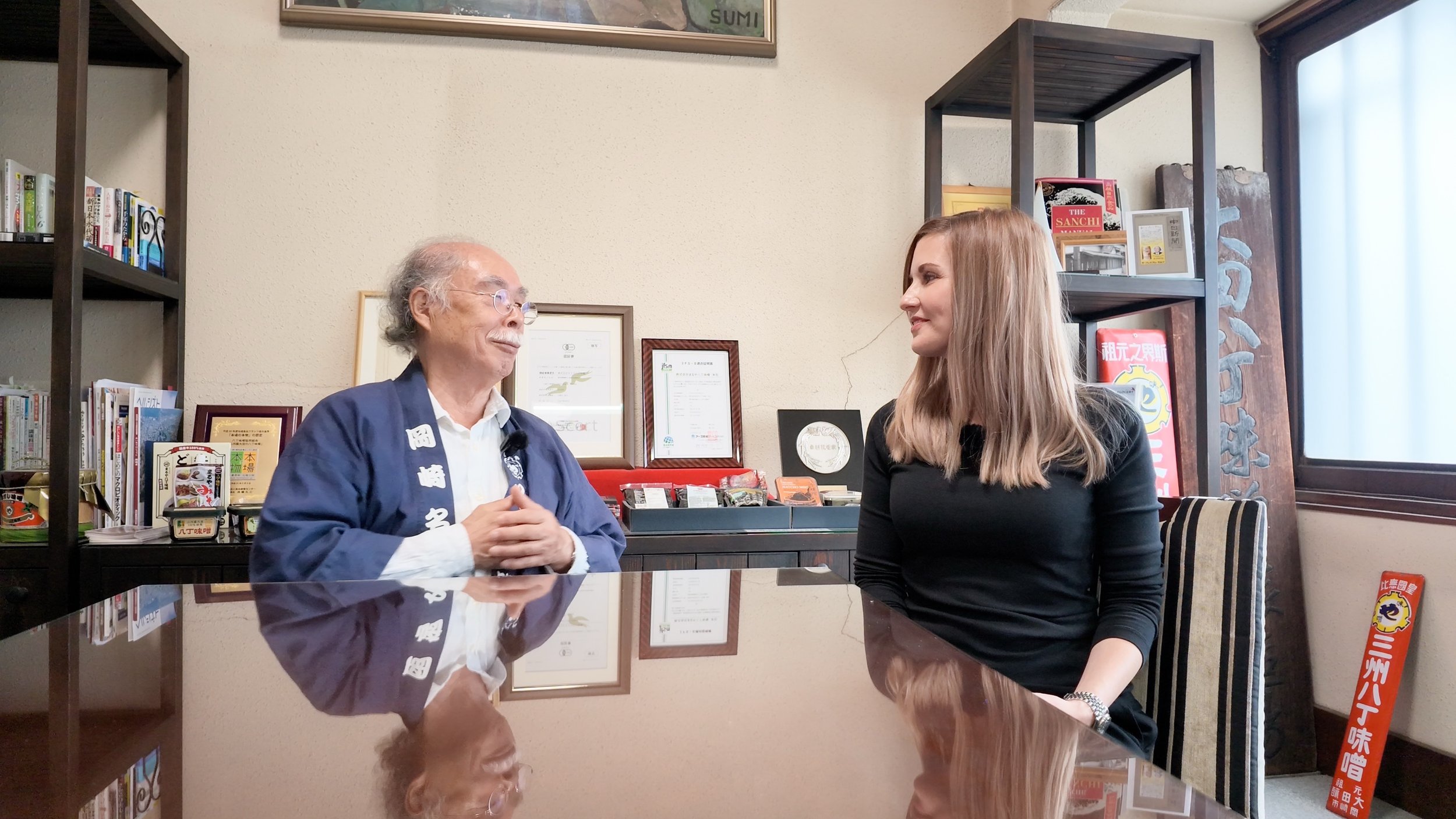
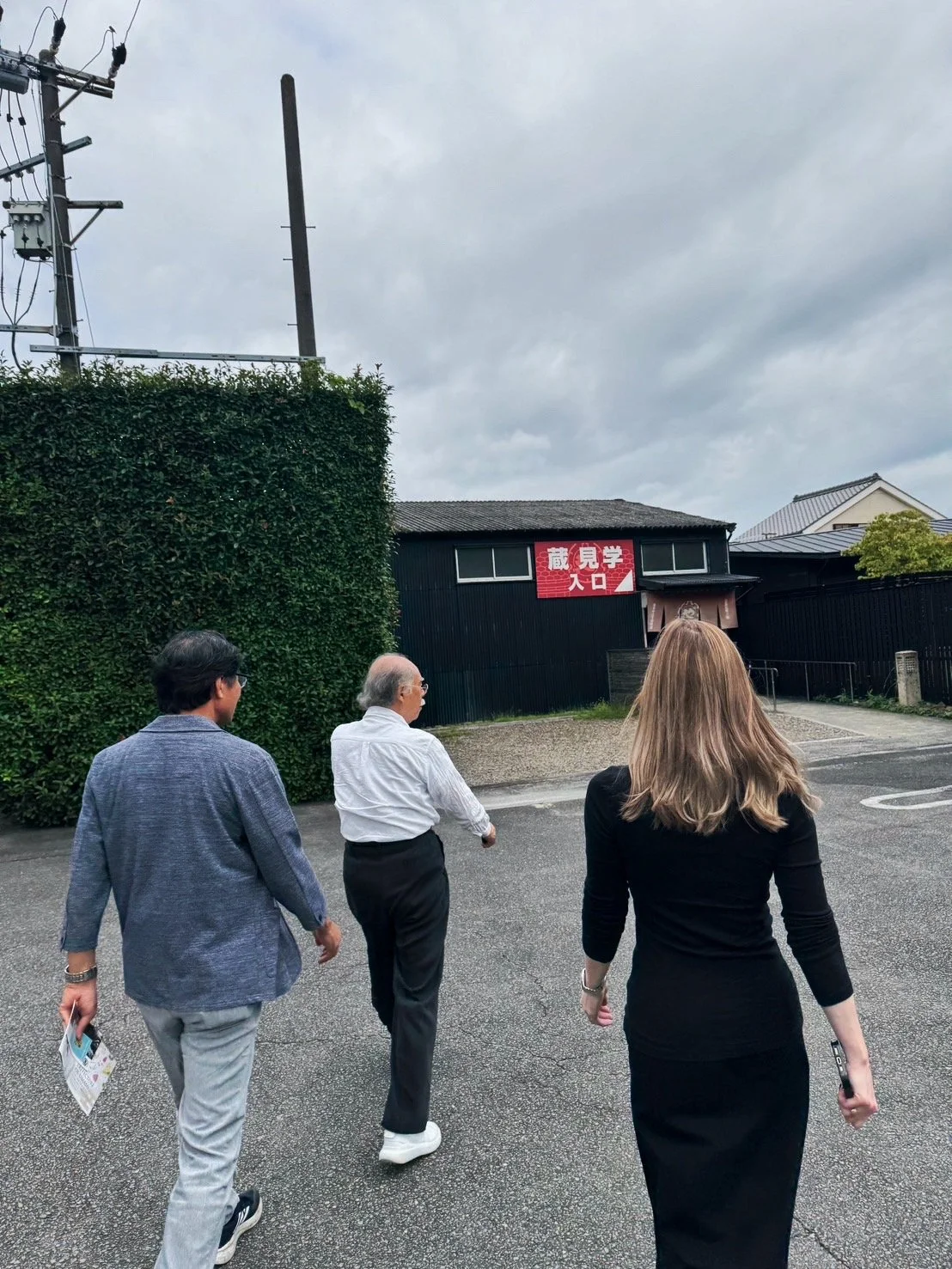
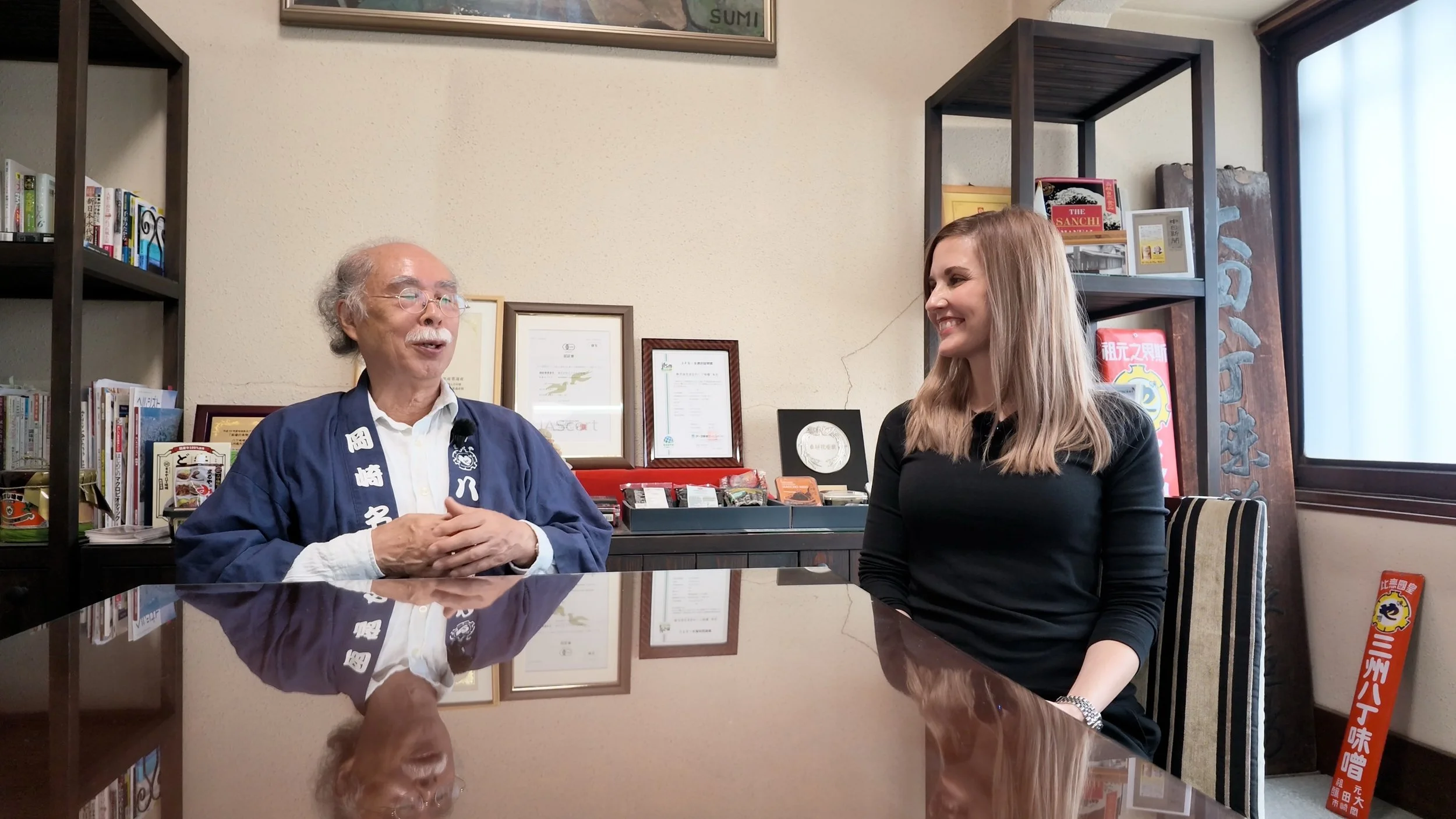
Since Hatcho miso is one of my favorite ingredients to cook with and eat, I was exceptionally excited when President Nobutaro Asai of Maruya Hatcho Miso agreed to an interview. To make the visit even more special, he offered us a personal tour of the facility. Afterward, we chatted over lunch at a nearby tonkatsu restaurant where we all had misokatsu. If you are unfamiliar with misokatsu, it is a fried pork cutlet served with or covered in a Hatcho miso sauce. It is a delicious example of how this ingredient is used in Aichi’s food culture.
Touring Maruya’s Hatcho Miso Brewery
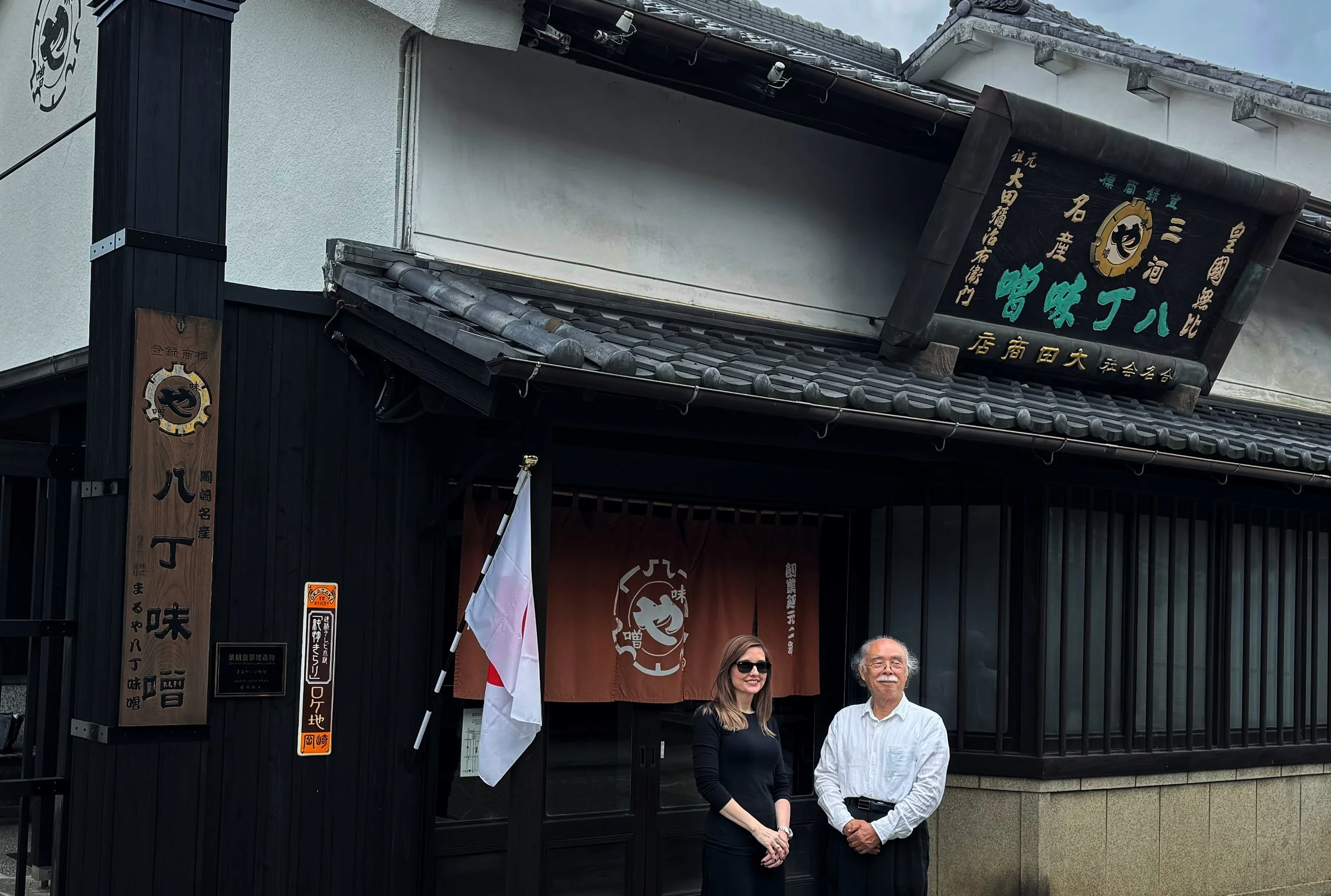
When we arrived at Maruya’s office, the staff provided us with a pamphlet about their miso, and we also had the chance to look through another booklet featuring foods produced throughout Aichi Prefecture. I was quite nervous because it was one of the first interviews that I was planning to do in this series, and unlike others I plan to interview, I had never actually met President Asai. As he bounded through the door and greeted us in perfect English, my nervousness subsided slightly.
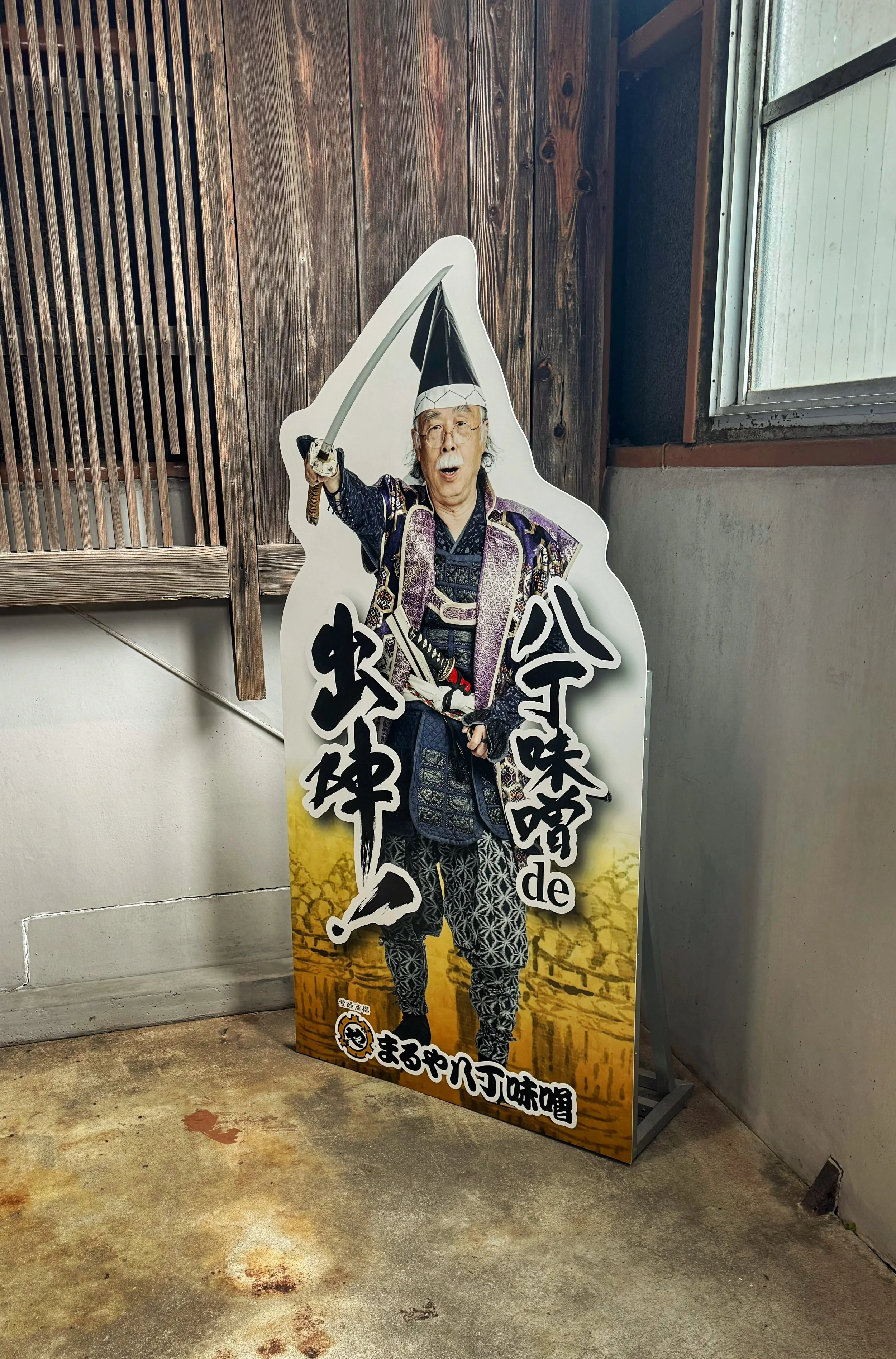
President Asai is affectionately known as the Hatcho Miso Shogun and even has a costume that he wears when promoting Maruya’s miso. He told us it had been quite a hit in Germany and other European countries. He is very jovial and speaks quite quickly in both English and Japanese. You would never guess he is in his mid-70s when you see his energy. His knowledge about fermented foods, especially about Hatcho miso, is extensive, and his enthusiasm for sharing that knowledge is immediately apparent.
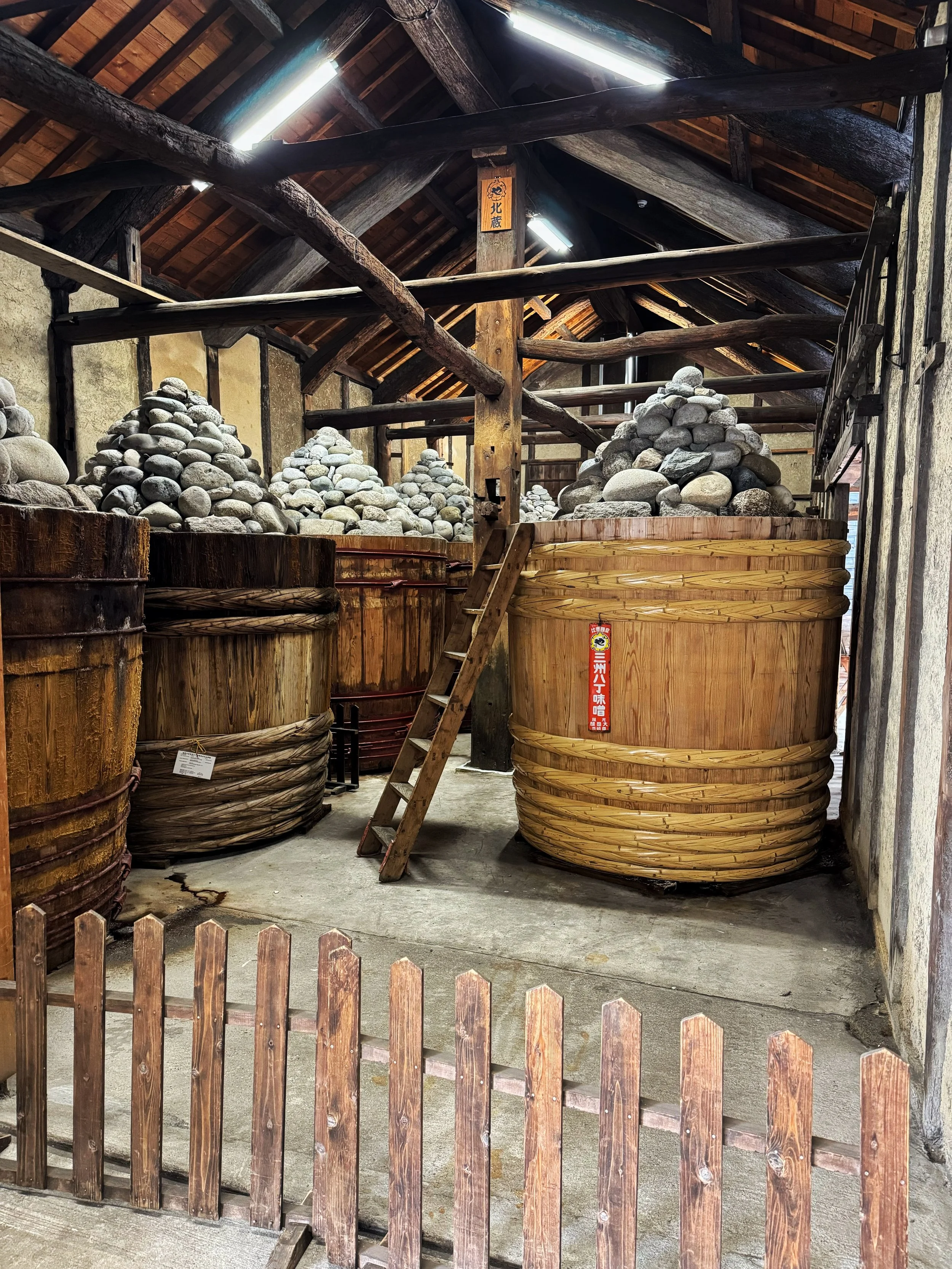
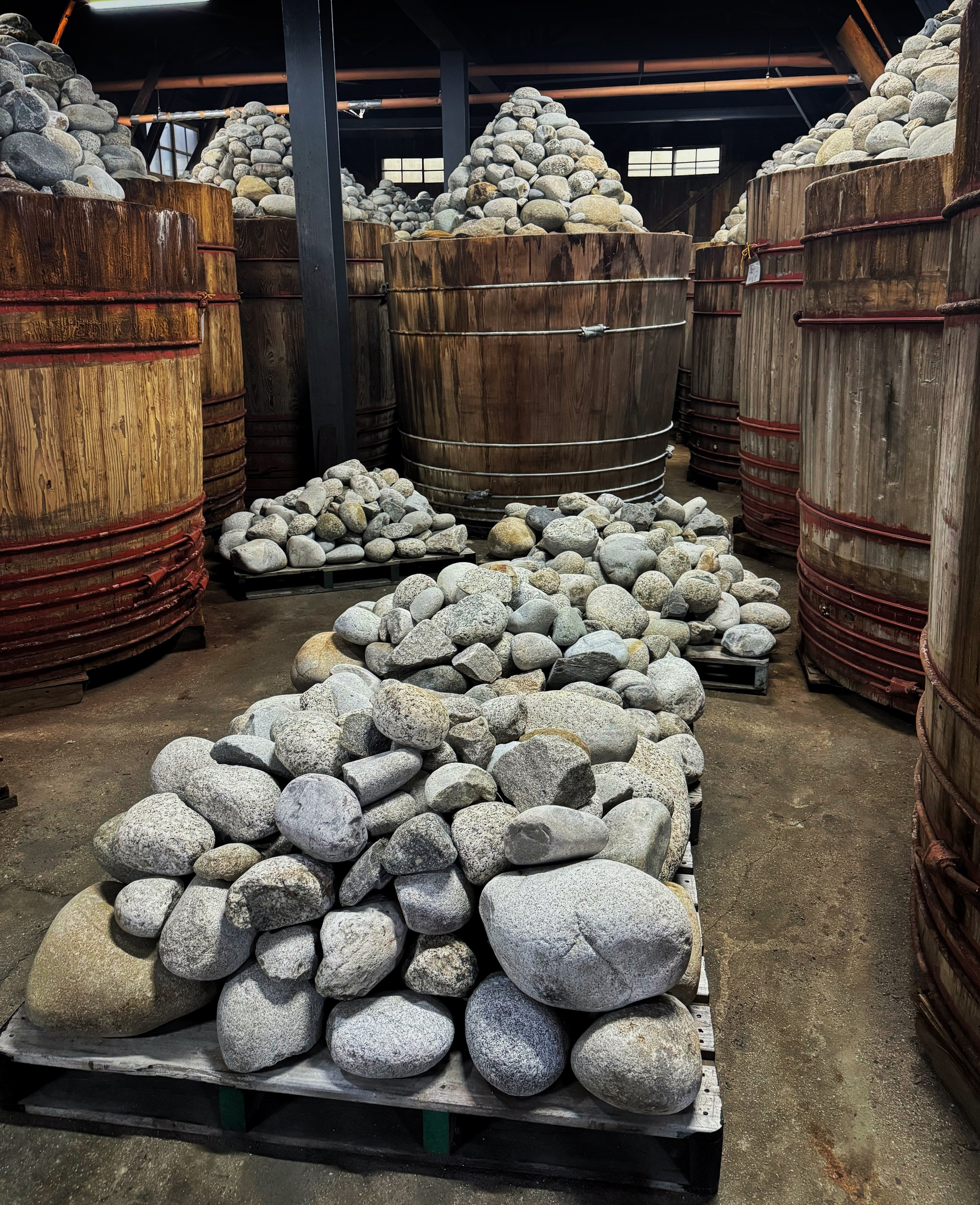
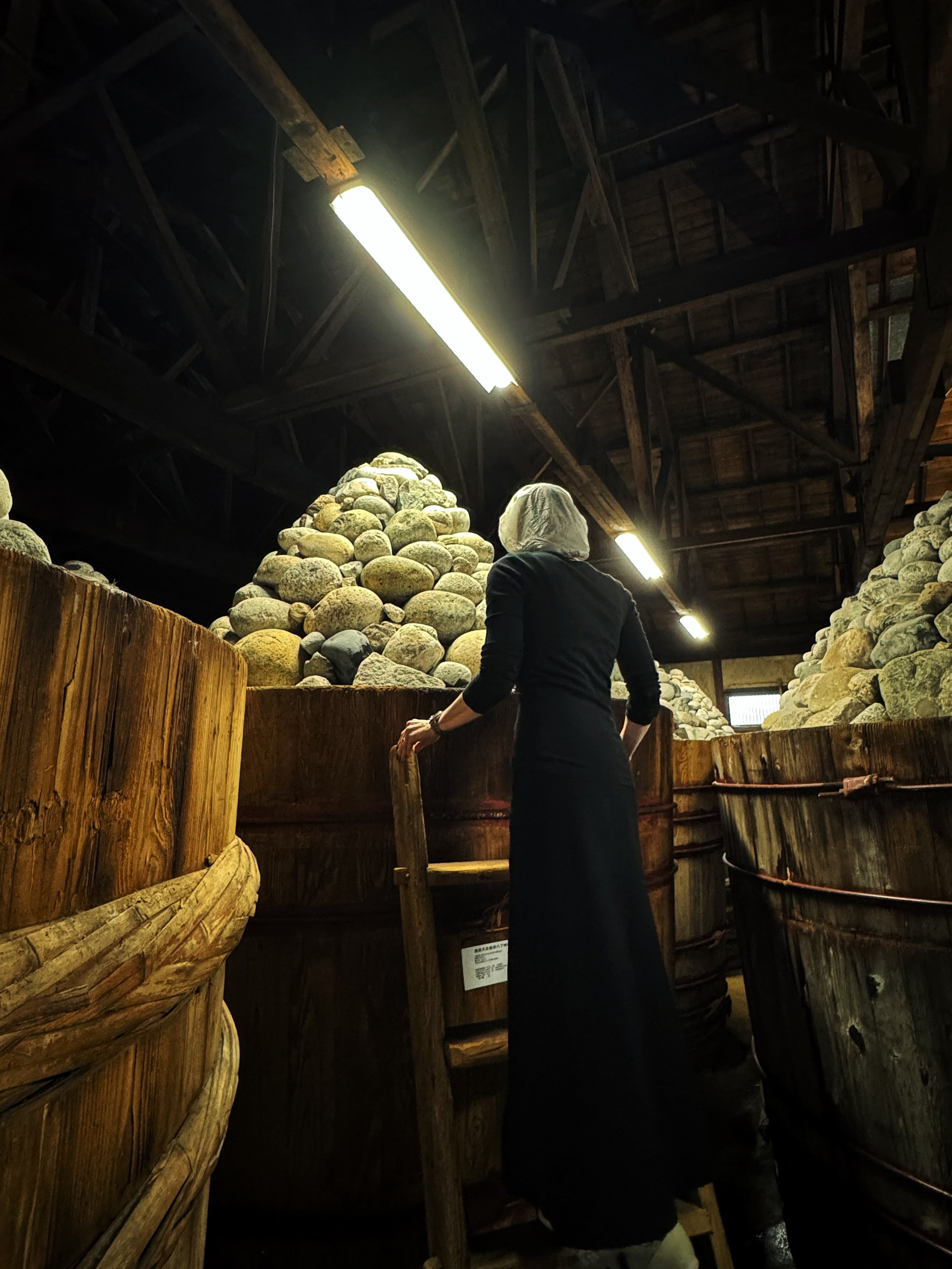
We began with a tour of the brewery before the interview. As we walked through the facility, President Asai explained the process of making Hatcho miso, the challenges associated with production, and the role the brewery plays in the community. The soybeans are fermented in large wooden vats beneath a meticulously stacked pile of stones. The fermentation process takes two to three years depending on the depth of color and flavor desired. The stones are selected and arranged according to their size and shape, because as the miso ferments and settles, the position of the stones can shift. A stable arrangement is essential to keeping the vats properly weighted throughout the fermentation process.
Production is also limited by the time required for fermentation. The miso is in such demand that it sells out almost as soon as orders are accepted. Some of the miso is left to ferment slightly longer to create a deeper flavor. I was lucky enough to get to look at the barrels and enter the special aging room. The aroma was incredible, and it was fascinating to see the miso aging in a traditional environment. It was one of those experiences that gives you an even greater appreciation for the work involved in producing something you might otherwise just pick up at the supermarket.
After the tour, we returned to the office to begin our interview.
The History of Maruya Hatcho Miso
According to President Asai, Maruya’s brewing business dates to around 1337. Much of its early history was passed down orally, so there are some details that are difficult to confirm. They believe the miso being brewed was similar to what is produced today, although they cannot say for certain.
The name Hatcho miso comes from Hatcho-machi, the neighborhood located approximately eight cho (870 meters) west of Okazaki Castle. When Tokugawa Ieyasu moved to Edo (present-day Tokyo), the miso continued to be called Hatcho miso from where it was produced. Since that time, the brewery has expanded and other shops have opened. The techniques used to make Hatcho miso have been passed down through generations. Throughout the centuries, several breweries have gone bankrupt and closed, but Maruya has remained operational and grown into the business it is today.
How Does Hatcho Miso Differ from Other Varieties?
Miso is generally divided into three traditional categories: rice miso, barley miso, and soybean miso. Hatcho miso has different characteristics and production requirements which set it apart from some of the miso varieties that many people are familiar with. It is made exclusively from soybeans instead of a combination of wheat, barley, and other bases. Even though there are other varieties of soybean-based miso produced throughout Japan, the process to make them and the full list of ingredients for each tend to differ. Part of what makes Hatcho miso distinctive is its relatively low moisture content, firm texture, and extended fermentation period. Maintaining the appropriate salt and moisture levels is important. The result is a dense, reddish-brown paste that is shipped only after fermentation is complete.
According to President Asai, it is not pasteurized, and no preservatives are added in the process, which also sets it apart from other miso varieties. Its relatively low moisture content also contributes to its stability, making it suitable for distribution around the world. Because of its stability and nutrition, it was often used as military provisions and to prevent dehydration during the Sengoku and Edo periods.
One thing that President Asai finds frustrating is the perception among some consumers that miso is essentially all the same, with Hatcho miso simply being a more expensive version. He understands how this impression can develop, particularly when consumers are accustomed to thinking of miso as a single category of product. However, he wants people to understand that not all miso is created alike. Differences in ingredients, fermentation periods, and production methods have a significant impact on the flavor and quality of the finished product. Hatcho miso is not simply a more expensive variety of miso or alternative to others. Instead, it is the result of a distinct tradition and production process that makes it different. There is a great deal of variety within Japanese fermented foods, and each has its own history and characteristics. Without understanding these differences, consumers may overlook the history and craftsmanship behind individual varieties.
The Most Important Part of Making Miso
While many individuals would assume that the ingredients or climate are the most essential things for making Hatcho miso, President Asai has a different answer. For him, the people making the miso are the most important part of the process. He believes that creating a positive work environment and maintaining good relationships with employees directly influences the quality of the finished product. When the employees making the miso enjoy their work and take pride in what they do, he believes the results will naturally be better.
Of course, the ingredients and production process matter too. However, he places particular emphasis on making sure that the employees at Maruya can live comfortably without unnecessary anxiety or worry. President Asai is not entirely sure how his predecessors approached employee relationships, but he suspects they shared a similar philosophy. Looking back on his own time running the company, he credits much of its success to the relationships with his employees and the support he receives from his wife.
It was an interesting perspective, especially coming from someone who has spent so much of his life working to preserve a centuries-old food tradition. Rather than focusing solely on the miso, he sees the well-being of the people behind it as an essential part of its quality.
Challenges When Making Traditional Foods
Like many I have spoken with who work in traditional crafts or food production, President Asai wonders how long these traditions will survive. He sometimes questions whether future generations will continue to value Hatcho miso and whether the company will be able to keep operating. They are familiar worries for people running traditional food and craft businesses throughout Japan. Currently, one of the biggest challenges facing the brewery is that the wooden vats are becoming increasingly harder to get. They take years to make, and there are fewer craftspeople with the necessary skills. Some of the vats being used at Maruya are from the Taisho era and over 100 years old while others are more recent additions. With fewer people crafting them, it is important to extend the life of the ones they have for as long as possible.
In addition to the worries related to traditional crafts and foods, there are also circumstances beyond anyone’s control that could impact the business. A major earthquake or typhoon, for example, could disrupt production. Despite these concerns, he hopes to eventually pass the business on to the next generation. At 77, however, retirement is not something he is considering. He wants to contribute to Maruya in some capacity for as long as he is able. Preserving the production methods is essential, but so is finding people who appreciate the product and want to support it.
What President Asai Wants People to Know
Visitors come to Maruya Hatcho Miso from all over the world, and President Asai also travels internationally to introduce Hatcho miso to new audiences. He enjoys cooking with others, explaining how Maruya operates, and showing visitors around the brewery when they have a genuine interest in learning about the craft. He believes that maintaining a business and respecting your coworkers is something that is good for the mind and body. In his view, this is a strength of Japanese food culture.
President Asai does not necessarily want Maruya to expand simply to dominate the market or capture the largest share of sales. Instead, he wants to reach those who genuinely care about the products they choose to buy and the foods they eat. He enjoys introducing others to the culture of Mikawa, most notably its historical connections to Tokugawa Ieyasu. Promoting Hatcho miso is also an opportunity to introduce people to the region and its history.
The Art of Persistence
One of the most entertaining parts of our conversation was hearing about President Asai’s approach to introducing Hatcho miso to overseas customers. When traveling to other countries, he often tries to arrange meetings or secure reservations at restaurants and shops. Sometimes he is told that the person he wants to meet is too busy. Rather than accepting that as the end of the conversation, he occasionally decides to show up anyway. His reasoning is that the person he wants to meet with might be there and could be interested in talking.
One example involved a visit to Napa Valley in California. He had tried to arrange a meeting with Thomas Keller and a meal at The French Laundry. However, his American hosts advised him against going without an appointment. President Asai disagreed. He felt that there was no harm in going because Thomas Keller might happen to be there. As it turned out, he was right.
When President Asai arrived at The French Laundry, Chef Keller was there. They had an opportunity to talk, and Chef Keller showed him the kitchen and the vegetables that were being prepared for the day. During their conversation, President Asai was treated to some food. He also had the chance to introduce Maruya’s miso to the chef. He compared this experience with an attempt by Suntory, a much larger company, to get its beverages into the restaurant. Despite its size and resources, Suntory had not managed to secure the same opportunity. President Asai chuckled as he told the story. Maruya is a much smaller company, but his determination and willingness to try different approaches helped him get through the door.
His takeaway was simple. If you are serious about a dream and are willing to put in the effort, you should keep trying. Rejection is inevitable, but persistence can sometimes lead to unexpected opportunities. Sometimes, taking a different approach or being willing to take a chance can open doors that money or company size cannot.
A Surprise from the Past
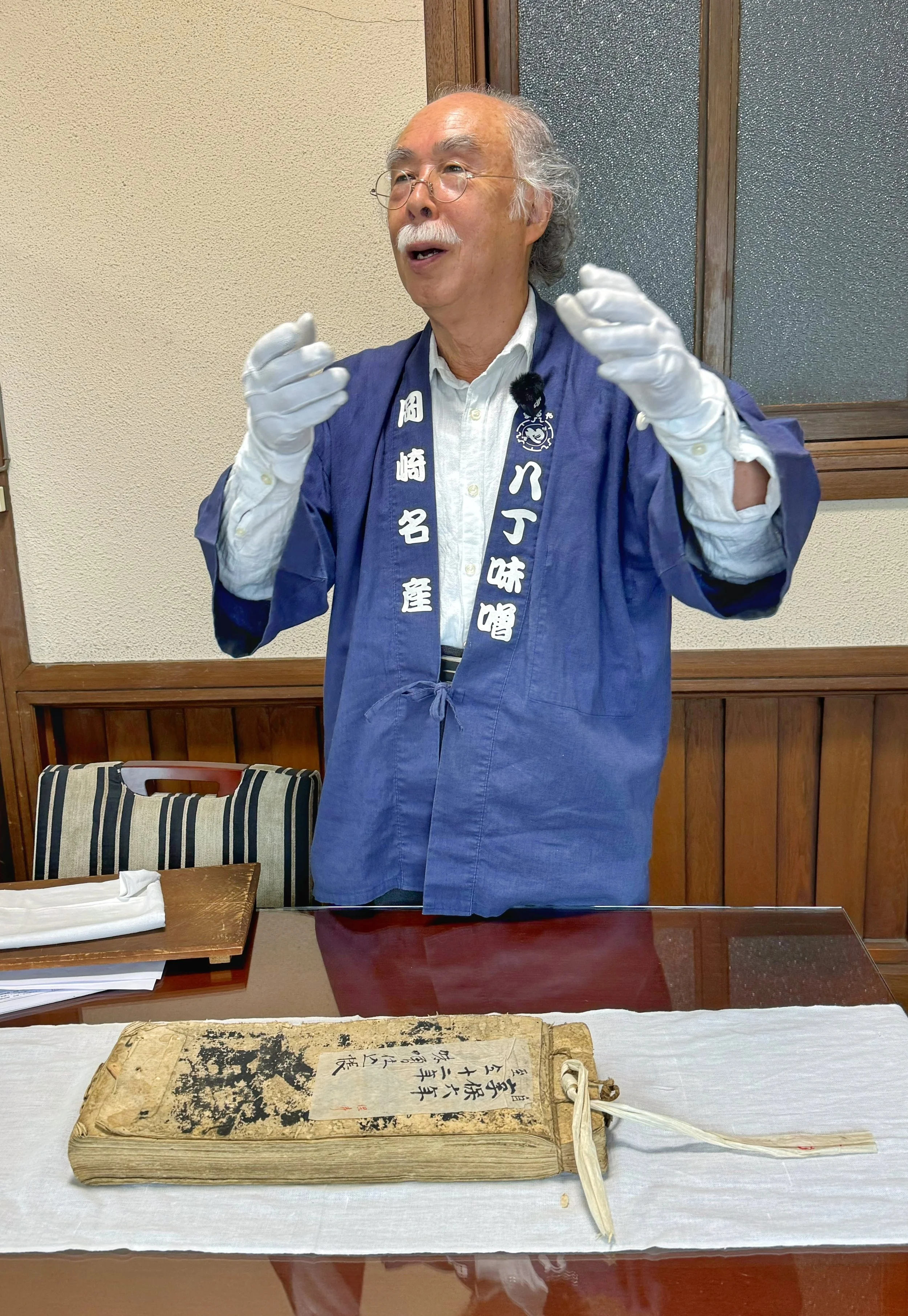
Just as I thought our tour and interview was coming to an end, President Asai surprised us. We had finished filming and were preparing to leave for lunch when he suddenly announced that we needed to wait because he had something to show us. He walked over to the most ordinary-looking cabinet and pulled out a weathered wooden box. After opening it and putting on a pair of white gloves, he explained that most of the company’s historical documents had been lost when a storage facility was destroyed during World War II. However, a printed recipe and a ledger from the 1700s survived. He showed us the documents and explained how the recipe had remained relatively unchanged over the centuries.
As someone who studies history, I was thrilled to see these artifacts up close. Having also briefly studied artifact preservation, I was initially surprised by how they were stored. I learned that the paper used during that period can withstand humidity and changes in climate better than one might expect, so the storage conditions were not as concerning as I had initially thought.
What made the moment particularly memorable was witnessing President Asai’s excitement as he shared these pieces of the company’s past with us. They offered a tangible connection to the producers who had made miso centuries before. It was an unexpected highlight of the visit and a reminder of how much history might be hidden away in an ordinary-looking cabinet. Furthermore, it brought me back to a reason I want to share these stories. Sometimes talking with someone can reveal things you might not experience in other ways and might offer new perspectives on the crafts and traditions.
Final Thoughts
By the time we got into the car to head to lunch, I had a much better understanding not only of Hatcho miso but also the person behind Maruya. President Asai kept sharing stories about running the brewery and his involvement in the local community. The biggest takeaway was his belief that being a small business should never mean accepting unfair treatment from someone larger or more powerful.
He told us about opposing a development project proposed by a very large company (which I will leave unnamed). The proposed building exceeded the height restrictions in Okazaki. While many others were willing to make an exception because of the company’s size and economic influence, President Asai strongly objected. Some of his friends questioned why he would challenge such a large company when he was just one person. His response was that no one should be above the law simply because they have money or influence. A company or person should not be allowed to disregard the rules or inconvenience an entire community just because it has the resources to do so.
Throughout our visit, President Asai had talked about taking care of employees, respecting those around you, and finding ways to keep a business going. This was another expression of that same philosophy. Running the brewery is not simply about producing and selling a good product. It also comes with a responsibility to the employees who work there and the community where it operates.
It also made me think about the conversations I have had with other people involved in Japan’s regional food cultures and other crafts. There is a common concern about what happens next. Many traditional producers are getting older, fewer young people are choosing to enter these industries, and passing down the knowledge required to keep them going is becoming increasingly difficult. Yet, after meeting President Asai, I came away thinking that preserving these traditions involves more than simply passing down production techniques. It means helping others understand why these products matter and creating an environment where future generations want to carry them forward.
A recipe from the 1700s might survive in a wooden box, but that alone cannot guarantee that the food will still be made another hundred years from now. That depends on the future generations who choose to carry the work forward. President Asai is clearly not ready to step aside just yet. He finds ways to share Japanese history and traditions with others whether he is at the brewery, involved in the local community, or traveling abroad.
Perhaps that is one of the most interesting things about meeting the people behind Japan’s regional foods and crafts. You arrive wanting to learn about the product, but you leave with an even greater understanding of the community, the past, and the values that shaped it. Hatcho miso may have been the reason for my visit to Maruya, but my conversation with President Asai gave me plenty more to consider long after I left.
If you would like to learn more about Maruya Hatcho Miso or find out about upcoming events and releases, you can follow the company on Instagram. When visiting Aichi, be sure to join a factory tour or at least try some of the regional specialties. You might discover new foods and gain a better understanding of the people and traditions behind them.
